A resourcefull working-class woman living in Madrid gets her hands dirty in family secrets with the help of a teenage daughter and hairdresser sister.
Oscar Wilde is a married playwright who has occasionally indulged his weakness for male suitors. After much toil, Wilde debuts 'The Importance of Being Earnest' in London, and a chat at the theatre with Lord Alfred 'Bosie' Douglas leads to a full-fledged romance. However, this affair leads to a legal dispute with Lord Alfred's oppressive father, the Marquess of Queensberry, and, given the local anti-gay laws, Wilde is jailed. Wilde's vast intellect helps him survive until he regains his freedom.
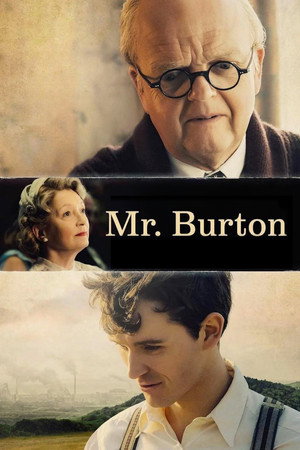
In the Welsh town of Port Talbot, 1942, Richard Jenkins lives as a wayward schoolboy, caught between the pressures of his struggling family, a devastating war and his own ambitions. However, a new opportunity arises when Richard’s natural talent for drama catches the attention of his teacher, Philip Burton.
Led by Donna and Reverend W.C. Martin, 22 families from a rural Black church in the small East Texas town of Possum Trot adopt 77 of the most difficult-to-place kids in the foster system and kickstart a movement in the process.
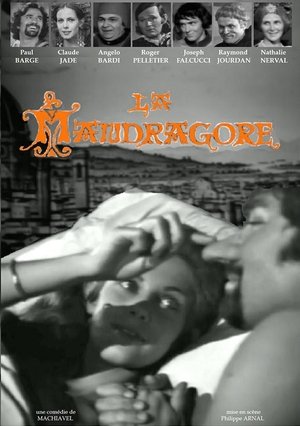
Callimaco, a wealthy young man, falls madly in love with Lucrezia, the beautiful young wife of a much older man, Messer Nicia. But Lucrezia is honest and faithful. Her husband has failed to help her discover love. Lucrezia will resist the combined assaults of her mother, her confessor and her husband for a long time before agreeing to cheat on him. How to approach her?
The film charts the story of Oscar Wilde’s marriage to Lloyd, an author and activist, and the sexual awakening she experienced after she learned that Wilde was homosexual.
The true story of Dr. Hunter "Patch" Adams, who in the 1970s found that humor is the best medicine, and was willing to do just anything to make his patients laugh—even if it meant risking his own career.
In 1920s China, 19-year-old Songlian becomes a concubine of a powerful lord and is forced to compete with his three wives for the privileges gained.
France, 1950s. From the Quartier Latin to Saint-Tropez via New York, a young Parisienne becomes the icon of a whole generation. In 1954, 19-year-old Francoise Sagan shot to fame with her first novel, Bonjour Tristesse. Flamboyant, scandalous and underrated, Sagan lived her life at the furthest edge of excess. She won and lost fortunes at the roulette table, bought and crashed superb sports cars, drank, danced and partied, leaving a trail of lovers in her wake.
Gugu is being thrown out by her husband Themba, who is apparently having an affair with an ex-girlfriend. She crashes at a friend’s house, confronts the ex, and eventually calls in her uncle to mediate with Themba.
It follows the story of Anwar's fight against corruption while in government between the years of 1993 and 1998, which led to his eventual imprisonment and the birth of the reformasi movement.
The film is a series of vignettes from Taiji Tonoyama's life and film clips, interspersed with a dialogue to camera by Nobuko Otowa, addressing the camera as if she is addressing Tonoyama himself, recollecting events in his life. The film focuses on Tonoyama's alcohol dependence and his various sexual relationships, as well as his film work with Shindo.
In this alleged retelling of Lincoln's early life, the President-to-be is rescued by Henry, a Black man and freed slave who has lost his papers. Locals with a grudge against Lincoln and a hatred of African-Americans frame Henry for stealing, and it's up to Lincoln to defend the man and find the vital clue that will set him free.
A destitute Frank Sinatra pursues sultry starlet Ava Gardner while campaigning for the lead in 'From Here to Eternity'.
An Islamic faithfull returns from his holy pilgrimage to Mecca with the venerated title “el hadji”. On his return he falls in love with his daughter’s friend Santou, who is already engaged to be married to Garba. El Hadji however already has two wives and his second wife, Gaika, cannot stand the idea of another younger wife entering her house. She plots to kill Santou.
Two escaped cons' only prayer to escape is to pass themselves off as priests and pass by the police blockade at the border into the safety of Canada.
The story is set at the beginning of the 20th century in Sicily. Salvatore, a very poor farmer, and a widower, decides to emigrate to the US with all his family, including his old mother. Before they embark, they meet Lucy. She is supposed to be a British lady and wants to come back to the States. Lucy, or Luce as Salvatore calls her, for unknown reasons wants to marry someone before to arrive to Ellis Island in New York. Salvatore accepts the proposal. Once they arrive in Ellis Island they spend the quarantine period trying to pass the examinations to be admitted to the States. Tests are not so simple for poor farmers coming from Sicily. Their destiny is in the hands of the custom officers.
37-year-old Italian-American widow Loretta Castorini believes she is unlucky in love, and so accepts a marriage proposal from her boyfriend Johnny, even though she doesn't love him. When she meets his estranged younger brother Ronny, an emotional and passionate man, she finds herself drawn to him. She tries to resist, but Ronny, who blames his brother for the loss of his hand, has no scruples about aggressively pursuing her while Johnny is out of the country. As Loretta falls for Ronny, she learns that she's not the only one in her family with a secret romance.
A native of Sennwald, Anna Göldi arrived in Glarus in 1765. For seventeen years, she worked as a maidservant for Johann Jakob Tschudi, a physician. Tschudi reported her for having put needles in the bread and milk of one of his daughters, apparently through supernatural means. Göldi at first escaped arrest, but the authorities of the Canton of Glarus advertised a reward for her capture in the Zürcher Zeitung on February 9, 1782. Göldi was arrested and under torture, admitted to entering in a pact with the Devil, who had appeared to her as a black dog. She withdrew her confession after the torture ended, but was sentenced on June 18, 1782 to execution by decapitation. The charges were officially of "poisoning" rather than witchcraft, even though the law at the time did not impose the death penalty for non-lethal poisoning.
Denied education for being 'unfit', Hoshiar Singh later seeks to become a teacher. The system throws obstacles at him, leading him to create an innovative teaching approach and lifestyle.