"Politics for Austria," "Fairness," "We provide security"-election slogans that promise a return to bygone morals, adorn the city of Vienna before the Austrian national parliamentary elections in 2017. The mistrust with regard to supposed political elites, coupled with promises made by the right wing populist parties, polarize Austrian society. INLAND offers intimate insight into the lives of its protagonists and thereby draws a genre picture of their fears and hopes in complex times.
The film "Eternal Mission" tells about the tumultuous fate of the delegation of the Azerbaijan Democratic Republic sent to the Paris Peace Conference in January 1919 under the leadership of Alimardan Bey Topchubashov, the Speaker of the Parliament.
Filmmakers Laura Mulvey and Mark Lewis use rare archival footage and interviews with artists, art historians, and museum directors to examine the fate of Soviet-era monuments during successive political regimes, from the Russian Revolution through the collapse of communism. Mulvey and Lewis highlight both the social relevance of these relics and the cyclical nature of history. Broadcast on Channel Four as part of the 'Global Image' series (1992-1994).
The spring of 1950 was also the spring of the multi-party regime in Turkey. A new 10 years, a new regime, a new government. The first test of democracy was beginning. The National Chief of the single-party period had returned to his Pink Mansion. The address of the opposition was clear now. When it comes to power... Power was shared by a tripartite trivet from the first day: DP Group in the Parliament. Celal Bayar in the Mansion and Adnan Menderes in the Prime Ministry..
The Netherlands, a bastion of capitalism, has struggled with unprecedented housing crises since 2018. This brings a rise of different ideologies that challenge the dominant status quo. In the city of Nijmegen, an anarchist collective JAN10 battles the ongoing housing crisis by squatting empty buildings, which poses a threat to the established capitalist interests.
A documentary about the hearings of President Nixon's Commission on Obscenity, featuring adult-film producer David F. Friedman (one of the producers of this film) testifying before Congress, and involved in the production of one of his films, "Trader Hornee."
Dare to Dream was directed by Marianne Jenkins, a film student from Goldsmiths' College, University of London, in 1990. It looks at the history of anarchism in the UK and beyond, as well as the state of the movement in the tumultuous year the poll tax uprising finally led to the resignation of Thatcher. Among the anarchist heavyweights interviewed are Albert Meltzer, Vernon Richards, Vi Subversa, Philip Sansom, Clifford Harper and Nicholas Walter, as well as a host of lesser known but equally committed dissidents. The film also features the miners strike and class struggle, squatting and social centres such as Bradford's 1in12 club, animal rights and feminism.
A director follows his right-wing friend during his reelection campaign for Le Havre's mayorship.
Chris Marker and François Reichenbach document the massive anti–Vietnam War protest held in Washington, D.C., on October 21, 1967, where more than 100,000 demonstrators gathered at the Lincoln Memorial before marching on the Pentagon. Filmed amid the crowd, the short captures the tension, idealism, and growing radicalism of the American peace movement.
And When the Magnolia Bloom
A true animated film about invented islands. About an imaginary, linguistic, political territory. About a real or dreamed country, or something in between. Archipelago is a film of drawings and speeches, that tells and dreams a place and its inhabitants, to tell and dream a little of our world and times.
...et pour quelques hectares de plus
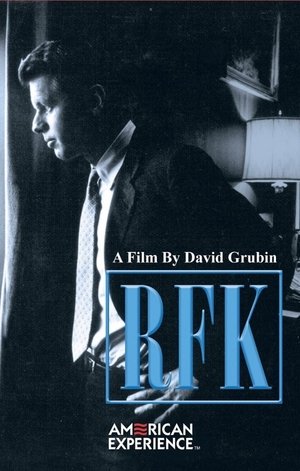
In January 1961, a new generation in the guise of John F. Kennedy moved into the White House. All of a sudden politics were youthful, dynamic and sexy. During the brief period in which he was in office, the first pop star of politics accompanied America through the darkest days of the Cold War. At the same time, his signal to embark in new directions was eagerly welcomed by younger generations all around the world. Later on, Jackie Kennedy was to compare his presidency with Camelot - the legendary court of King Arthur. Yet, there were also dark sides to this popular president's life.
Propaganda short film depicting the rise of Nazism in Germany and how political propaganda is similarly used in the United States. The film was made to make the case for the desegregation of the United States armed forces.
Life in the isolated town of Charrúa is dominated by the presence of a large power plant that distributes energy to most of Chile. A little boy hunts rabbits, residents demand better electrical coverage at a town meeting, a woman waters the plants outside her house and a local radio station relays the day's happenings. At night, wildlife is captured on camera, along with strange bursts of light that momentarily illuminate a countryside criss-crossed with pylons and cables. And ever present is the insidious hum of electricity.
At underground film of the 1st Popular Festival of Catalan Poetry filmed in the Proce Theater in Barcelona on May 25, 1970, in solidarity with political prisoners. The participating poets were: Agustí Bartra, Joan Oliver (Pere IV), Salvador Espriu, Joan Brossa, Francesc Vallverdú and Gabriel Ferrater.
Edward Said, Professor of English & Comparative Literature at Columbia University, was a prominent literary critic of the late 20th century and a leading spokesperson for the Palestinian cause in the US. Born to a Palestinian family in Al-Quds (Jerusalem) in 1935, he and his family were dispossessed in 1948 and settled in Cairo. Educated in the US, he lived in New York for many years. Said was a member of the Palestine National Council. After resigning from the PNC in 1991, Said wrote critically about the post-Oslo peace process, the political failures of Yasser Arafat and the PLO. Said was diagnosed with leukemia in 1991 and struggled with the disease while continuing to write and teach. He stopped giving interviews but made an exception less than a year before his death in 2003, speaking about his illness, work, Palestine, politics, life, and education. The last interview is the final testament of this passionately committed intellectual.
An analysis of the causes, social, political, and economic that caused the rise of Hugo Chávez as president of Venezuela; his abuse of power and the response of civil society, including the student movement; his political fall as well as the secrecy that surrounded his illness and the succession of Nicolás Maduro.
After Coal profiles inspiring individuals who are building a new future in the coalfields of eastern Kentucky and South Wales. Meet ex-miners using theater to rebuild community infrastructure, women transforming a former coal board office into an education hub, and young people striving to stay in their home communities. The stories of coalfield residents who must abandon traditional livelihoods illustrate the front lines of the transition away from fossil fuels.
The secretive rules of nature spread out to be extraordinary beauty. Water is a lifeform that remembers and reflects everything. Following the nature of this water and the mysterious record of the ecosystem leads to the wonderful four seaons of the Bongha Village and the late Roh Moo-hyun's ambitious visions. What is the future he dreamt of back in his home, carrying out biological agricultural technology?