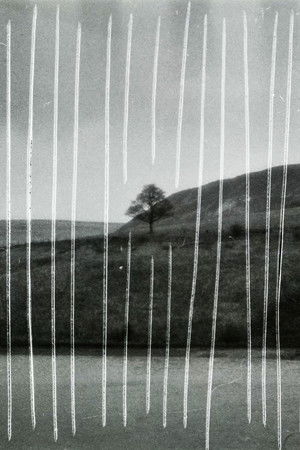
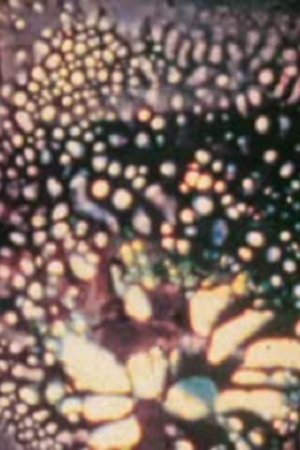
The sun’s energy circulates throughout the earth, feeding the cycle of life. Everything is connected in a natural loop, which repeats, like the circular discs of magical optical toys. This perfectly balanced rhythm is disrupted by human excess, throwing the cycle out of orbit and temporarily stopping the circulation of energy in nature.
Music by Jefre Cantu-Ledesma, 16mm color film by Paul Clipson.
A boy waits in the same street every day with his bags packed. What is he waiting for?
It is a documentary about mostly inner-city birds. It is meant to examine their lives in a more metropolitan context as they become increasingly tangled in our everyday lives.
In Manhattan's Central Park, a film crew directed by William Greaves is shooting a screen test with various pairs of actors. It's a confrontation between a couple: he demands to know what's wrong, she challenges his sexual orientation. Cameras shoot the exchange, and another camera records Greaves and his crew. Sometimes we watch the crew discussing this scene, its language, and the process of making a movie. Is there such a thing as natural language? Are all things related to sex? The camera records distractions - a woman rides horseback past them; a garrulous homeless vet who sleeps in the park chats them up. What's the nature of making a movie?
Mara—the spirit of the night, the weaver of darkened dreams—pressed upon my chest as sleep held me captive. My memory. In the haze of a dream, I saw those I loved, their faces bathed in an otherworldly glow. The nightmare was not the shadows nor the fear they whispered, but the cruel certainty of waking—of losing them to the morning light
A found footage examination of what happened at the lake today. Where were you? An exquisite corpse by Non Films. 8mm images randomly selected from found footage; poem written without images; music written without images or words. WINNER: BEST BROOKLYN PROJECT (Brooklyn Film Festival).
A young lover has to cope with losing the love of his life and come to terms with the fact that she has moved on to bigger and better things
An abstract short film about an alien invasion.
A woman discovers she's been married to a serial killer for fifteen years, albeit unwittingly. Her mind fractures as she examines her complicity -- should she have known? Could she have prevented him from killing? Or was part of her subconsciously attracted to his evil side?
Len Lye usually timed his films with great care to match their soundtracks, but for All Souls Carnival, he and composer Henry Brant worked separately, preferring to see if the score and visual track would synchronise by chance. Lye also experimented with a new Direct Film technique, drenching the filmstrip in colourful paint and marker pen.
A visual documentary of Einstürzende Neubauten, the German underground band, by Japanese cult director Sogo Ishii, made during their 1985 tour of Japan. The band makes an elaborate and remarkably choreographed appearance in the ruins of an old ironworks which was scheduled for demolition; footage of same was incorporated into the movie and a brief appearance on stage.
A loop of a guy in Maine hanging out in his room.
The turkish ambassador is said to visit a village in Hungary.
The mind of a prisoner, expressed through various poetic stanzas, corrodes at the same rate as the house they are trapped in.
Energy cannot be created or destroyed. When we die, where does our energy go? Inspired by Vauhini Vara's essay "Ghosts", in which she prompted Al to help her write about her sister's passing, "GHOSTS" takes us on the emotional journey of grief. We see a ghost figure trying to get through to her sister, who is still alive, and let her know she's still around somehow. There are two poems in this piece, one is a poem written by GPT 3, and the next is the director's (Oriana Mejer) response to it. This film uses spoken word poetry, TouchDesigner motion graphics, and is originally scored by French musician Taime.
A young woman, overcome with hunger, trades her brother for a sack of rice. The cost will be even higher than she bargained for.
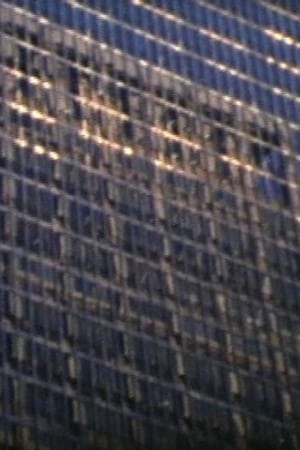
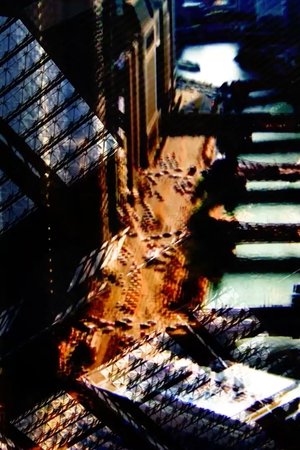
Its production seems like a game: throwing a Super 8 camera, turned on and recording, from what was, at that time, the tallest building in Caracas. The film films the shots of its own accelerated fall, a succession of chromatic shots that cannot be identified either in terms of what is “recorded” in each one (windows, columns, walls, sky or floor) or in its own formal configuration as an image (color, composition, shapes or figures). What is perceived and apprehended is the impotence of vision – of perception – to distinguish this extreme and exhausting mobility, this vertigo of “free fall.”
Corazón en el cenicero
In a remote and seemingly peaceful province of Ilaya, there lived two teenagers who explore their lives as the world around them grows darker.