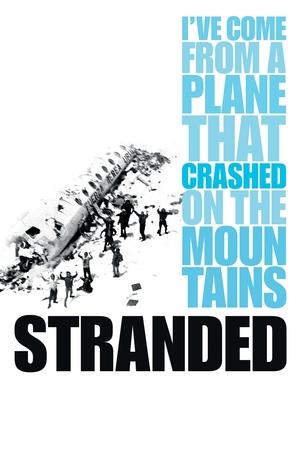
In 1972, a plane carrying an Uruguayan rugby team disappeared into the Argentinean Andes. Now, 50 years after one of the greatest ordeals of survival in recorded human history, the full story is finally comprehensively told through the words of each of those who lived it.
Los Nevados is the first peasant feature film from Venezuela. The magical poetry about humans who endure an almost animal, almost instinctive, almost sad existence, which turns into a complaint.
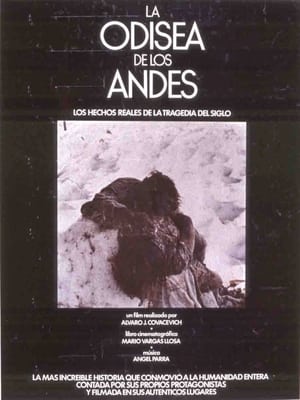
The story, told by the survivors, of a group of young men, members of a Uruguayan rugby team, who managed to survive for 72 days, at an altitude of almost 4,000 meters, in the heart of the Andes Mountains, after their plane, en route to Chile, crashed there on October 13, 1972.
A documentary revolving around the 1972 crash of the plane carrying an Uruguayan rugby team; interviews with survivors and the families of victims.
The true story of Joe Simpson and Simon Yates' disastrous and nearly-fatal mountain climb of 6,344m Siula Grande in the Cordillera Huayhuash in the Peruvian Andes in 1985.
Die Anden - Das Erbe der Indianerinnen
Avoir 16 ans et toutes ses Andes
Ten-year-old Sébastiana recounts the history and legends and explains the local customs of Andahuaylillas, Peru, a small village located high in the Andes. Their simpler way of life has persisted for over three centuries, undisturbed by modern society's technology and materialism.
Bolivia's Climbing Cholitas - a group of indigenous women scaling the Andes Mountains, some of the highest peaks in the world. Shot in Bolivia for Vogue Latin America and Vogue Mexico's 20th anniversary cover story.
Discover the heart-wrenching tale of Ecuador’s forgotten guitar road in “Vanishing Strings of the Andes.” Witness the struggle to preserve an age-old generational craft practised high in the Andes mountains before it’s too late...
Sacsayhuamán, an ancient citadel amidst the Peruvian Andes, is an architectural marvel. It was built more than 900 years ago, and no living person knows how such large rocks were fitted so perfectly into walls. This documentary takes us on a tour of Sacsayhuamán, offering a brief history of the site, and clues that may help to its understand how it was made. It was edited from photos and video taken in July 2012, when Russian geophysicists conducted soil research there, at the request of Peru's Ministry of Culture.
There was once, in 1910, a train able to cross the wild territories between Argentina and Chile, making possible a mythical journey, joining two oceans with a single ticket, from Buenos Aires to Valparaiso. The last trip of the BAP was in 1979; in the nineties, its various branches were permanently abandoned. Since then, travelers have been inhabiting the railway landscape as they dream, desire, remember or yearn: as part of their own being and national history.
It is a powerful predator, one of the most elusive animals in Patagonia and rarely filmed. In the very South of Chile the Pumas' hunting grounds lie in the awe-inspiring Torres del Paine National Park, follow a mother Puma as she rears her cubs in the wild, teaching them to survive and thrive.
From the plains of the Huasco Valley to the Atacama Desert and the mines of northern Chile, the narrator gathers the testimonies of farmers, neighbors, small landowners and political leaders. In the surrounding area and in the Pascua Lama gold mine itself, called The Treasure of America because of the enormous gold reserves it holds, the action is centred. The investigation is possible thanks to the access to the Canadian multinational Barrick Gold whose reports on the environment will be questioned.
A documentary fiction in the form of a diptych, about solitude, nostalgia and waiting. On the high plateaux of the Andes in Venezuela, the seventy-year-old mule-driver Saturnino has only one friend, his donkey Turmero. Filomena, seventy eight years old, is waiting against for the return of her husband.
This Traveltalk series short looks over the South American Andes mountains, and the South American west coast, also Rio de Janeiro.
The Andes Mountains travel the western side of South America. Unlike many other mountain ranges of their altitude, the Andes do support human life on their high altitude slopes. Modern life is slowly making its way to the high altitude Andes, but the natives for the most part continue with the traditional ways of their ancestors, growing limited crops such as beans and potatoes - where the crop originated - raising sheep and pigs, and living in crude huts. The llama is the most useful of their work animals. The most conspicuous aspect of the native dress is their derby hats, the origins which are unknown. Further down the slopes, agriculture and ranching is more productive and is carried out by descendants of the Spanish settlers. There is a famous lake district in the Chilean part of the Andes, where resort hotels are located.
"In Chile, when the sun rises, it had to climb hills, walls and tops before reaching the last stone of the Cordillera. In my country, the Cordillera is everywhere. But for the Chilean citizens, it is an unknown territory. After going North for Nostalgia for the Light and South for The Pearl Button, I now feel ready to shoot this immense spine to explore its mysteries, powerful revelations of Chile’s past and present history." Patricio Guzmán
In 1940 twenty Canadian Beavers were brought to 'Tierra del Fuego' island in southern Patagonia for commercial fur production. However, beavers having no natural predators, quickly spread throughout the island, causing massive destruction of trees threatening the entire Patagonian forests rivers and species. Why wildlife conservationist are convinced that 150.000 beavers must be killed? Why some of the most recognized specialist are convinced that an eradication is not possible? Meanwhile truism is capitalizing on the situation: a man dressed as a beaver passes out flyers promoting a famous sky resort: 'Cerro Castor' - Beaver Hill. Hunters claim for subsidies, scientists are researching, rangers do what they can and restaurants tray to offer beaver meat to tourist.
Movie about David Lama climbing the Patagonian mountain Cerro Torre for the first time free, a mountain that has been dubbed the most difficult to climb in the world.