60 years ago, almost nothing was known of elephants in the wild. But then one young Scottish biologist changed that forever. In 1965 Iain Douglas-Hamilton arrived in Tanzania to live alongside African elephants. Later joined by his wife Oria and daughters Saba and Dudu, elephants became central to their lives with matriarch Boadicea and gentle young mother Virgo cherished like human relatives. But this garden Eden was short-lived as an ivory poaching epidemic swept across Africa forcing Iain to switch from pioneering scientist to maverick conservationist. He became a lone crusader against the international Ivory trade which was finally banned in 1989. Now back in the field and revealing even more about the fascinating world of elephants, Iain’s work continues alongside a new generation of Kenyan conservationists. This inspiring documentary combines stunning wildlife imagery with the story of a remarkable life showing how sometimes you have to stand alone to protect what you love.
Allegations of a significant elephant-poaching problem in Botswana have sparked a political row between the president and his predecessor. As Alastair Leithead reports, the issue has ignited a national debate over whether there are too many elephants and whether hunting should be re-introduced.
The story of the birth of the exploitation of wild animals, the fruit of the iron twinning between the Industrial Revolution and the omnipotent and arrogant logic of colonialism, told through the multiple tribulations of Fritz, an Asian elephant who, one hundred and fifty years ago, worked in the largest circus in the world.
This film, three years in the making, The remote forests of Kalkalpen National Park in Austria, the largest area of wilderness in the European Alps, have been left untouched by humans for nearly a quarter of a century in order to return to their natural, primeval state. The landscape regenerates itself in dramatic cycles of growth and decay, and this bold hands-off method of conservation yields salient results: the lynx, absent from the area for 115 years, has returned.
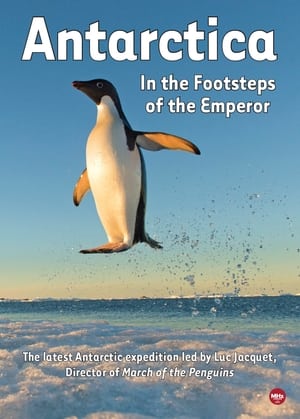
Every year, thousands of Antarctica's emperor penguins make an astonishing journey to breed their young. They walk, marching day and night in single file 70 miles into the darkest, driest and coldest continent on Earth. This amazing, true-life tale is touched with humour and alive with thrills. Breathtaking photography captures the transcendent beauty and staggering drama of devoted parent penguins who, in the fierce polar winter, take turns guarding their egg and trekking to the ocean in search of food. Predators hunt them, storms lash them. But the safety of their adorable chicks makes it all worthwhile. So follow the leader... to adventure!!
A vivid journey into the mysterious subterranean world of mycelium and its fruit— the mushroom. A story that begins 3.5 billion years ago, fungi makes the soil that supports life, connecting vast systems of roots from plants and trees all over the planet, like an underground Internet. Through the eyes of renowned mycologist Paul Stamets, professor of forest ecology Suzanne Simard, best selling author Michael Pollan, food naturalist Eugenia Bone and others, we experience the power, beauty and complexity of the fungi kingdom.
They are the secret protagonists of world history: dogs that became famous alongside powerful masters and mistresses. A four-legged friend helps to cultivate an image and can, depending on the calculations, make its owner appear sympathetic or threatening. In England, however, prime ministers have to get used to a cat...
Daring to seek Earth's history contained in glaciers atop the tallest mountains in the world, Dr. Lonnie Thompson found himself on the frontlines of climate change—his life's work evolving into a salvage mission to recover these priceless historical records before they disappear forever.
Kina & Yuk are two Arctic foxes, ready to start a family. But the climate is warmer, and the food is more and more rare. Kina & Yuk are obliged to venture far and far away.
Follow ocean legend Sylvia Earle, renowned underwater National Geographic photographer Brian Skerry, writer Max Kennedy and their crew of teenage aquanauts on a year-long quest to deploy science and photography to inspire President Obama to establish new Blue Parks to protect essential habitats across an unseen American Wilderness.
Askania-Nova is the largest steppe wildlife sanctuary in Europe. It is located in south part of Ukraine, not far from Crimea peninsula. In order to underline this unique beauty we created a documentary musical film about life of animals and people in wildlife sanctuary of Askania-Nova. The movie reveals stories of a three protagonists, whose destinies were entangled because of wildlife sanctuary.
The Balkans cradles Europe's last wild rivers and supports abundant wildlife and healthy, intact ecosystems. These rivers are "The Undamaged" – clean, pristine, and undammed. With over 2,700 small and large hydro power plants planned or under construction in the Balkans, corruption and greed are destroying the last free-flowing rivers of Europe. Follow the Balkan Rivers Tour, a rowdy crew of whitewater kayakers, filmers, photographers and friends who decided to stand up for the rivers, travelling from Slovenia to Albania for 36 days, kayaking 23 rivers in 6 countries to protest the dams and show the world the secret wild rivers of the Balkans. The film honours everyday people and local activists who are fighting to defend rivers and aims to spread the word of the plight of these rivers, showing a new style of nature conservation that is fun, energetic and effective.
What is a whale worth? What price can be put on the life of such majestic animals? How can we estimate that cost? And how have humans changed the way they value whales throughout history? What are whales used for? What are they needed for? To answer these questions, and many more, Natacha Aguilar, eminent Canary Island marine biologist and expert in cetaceans, guides us on a spectacular – and highly personal – journey through time and space. With the help of a committed group of scientists and non-profit organizations, A Whale’s Worth discovers the remarkable, little-known lives of these animals.
This documentary follows various migratory bird species on their long journeys from their summer homes to the equator and back, covering thousands of miles and navigating by the stars. These arduous treks are crucial for survival, seeking hospitable climates and food sources. Birds face numerous challenges, including crossing oceans and evading predators, illness, and injury. Although migrations are undertaken as a community, birds disperse into family units once they reach their destinations, and every continent is affected by these migrations, hosting migratory bird species at least part of the year.
A variety of unusual and frightening snakes are featured in this program. These unpredictable reptiles have appeared in both nature and recorded history for thousands of years. The huge appetite of the monstrous python and the toxicity of the Gaboon Viper are examined. Experts also comment on the spitting cobra's ability to hit its distant targets. The eating and mating habits of tropical sea snakes are compared to other snakes that exist exclusively on land. There's additional information about how snakes birth their young and how likely a particular snake is to attack when provoked.
Der Wind - Motor des Klimawandels
No other country in Europe has more bears than Romania. There are probably over 6000. Especially in Transylvania, they often come dangerously close to humans. As a result, people in many places are at their wits' end. The film follows a female bear and her three cubs as they leave the protection of the Carpathian forests and become 'problem bears'. Their dramatic fate highlights the challenges of bear-human coexistence. Is there still a common future in densely populated Europe?
David Attenborough looks into the ocean's depths to discuss the coelacanth, a primeval fish hidden for 400 million years. Its mysterious movements reveal vital clues about life's journey from sea to land, as well as secrets of evolution and survival.
Wolves divide and fascinate us. 150 years after they were driven to extinction in Central Europe, they are returning slowly but inexorably. Are they dangerous to humans? Is it possible to coexist? Using Switzerland as a point of departure, where wolves have returned in the very recent past, this documentary sheds light on the wolf situation in Austria, eastern Germany, Poland, Bulgaria, and even Minnesota, where freely roaming packs of wolves are more common sight.
On the edge of the Namibian desert, cattle farmers are looking for new land to graze their animals. The lions, who occupied these previously wild spaces, are hunted by herd guards, or even slaughtered when they attack cows. Will and Lianne Steenkamp lived for two years in a territory occupied by a 17-year-old lioness - a "queen" -, her two daughters and their five lion cubs. This film traces the process of empowering the young: after learning to hunt alone, they will have to leave the family pack and find young females to reproduce. A necessity all the greater as their species seems threatened.