The true story of Helen Keller and Annie Sullivan, a gripping battle to overcome impossible obstacles and the struggle to communicate. As a young girl, Helen Keller is stricken with scarlet fever. The illness leaves her blind, mute, and deaf. Sealed off from the world, Helen cannot communicate with anyone, nor anyone with her. Often frustrated and desperate, Helen flies into uncontrollable rages and tantrums that terrify her hopeless family. The gifted teacher Annie Sullivan is summoned by the family to help the girl understand the world from which she is isolated, freeing Helen Keller from her internal prison forever. Television remake of the 1962 film which also starred Patty Duke in the role of Helen Keller.
In American Sign Language (ASL) with subtitles available in English, Spanish and Canadian French. This powerful documentary uses real life experiences from Deaf people of varied social, racial, and educational boundaries showing how this form of oppression does lasting and harmful damage. Bonus materials include directors' comments from Ben Bahan and H-Dirksen Bauman and additional scences. Teachers: This film is a wonderful tool for beginning ASL students, as an introduction to a side of Deaf culture that cannot be found in any textbook.
Mary Lou Breslin, co-founder of the Disability Rights Education and Defense Fund, winner of the San Francisco Foundation 2009 Community Leadership awards (the Robert C. Kirkwood Award) - for making a mark in defining disability rights as a civil rights issue. She is a trailblazer whose grassroots movement has had tremendous impact addressing human rights abuses and neglect worldwide. As co-founder of the Disability Rights Education and Defense Fund, Mary Lou was at the forefront of creating the 1990 Americans with Disabilities Act (ADA), the Fair Housing Amendments Act, and the Civil Rights Restoration Act leading to protected rights and enhanced opportunities for us all, not just those with disabilities.
Sign The Show: Deaf Culture, Access and Entertainment is a feature-length documentary providing insight into Deaf culture and the quest for access to entertainment. It brings together entertainers, the Deaf and Hard of Hearing (HOH) community, and American Sign Language interpreters to discuss accessibility at live performances in a humorous, heartfelt, and insightful way.
Adam Pearson - who has neurofibromatosis type 1 - is on a mission to explore disability hate crime: to find out why it goes under-reported, under-recorded and under people's radar.
The film is separated into four chapters, each tracking a different group of protagonists who all have one thing in common – they were born deaf. Little Sandra likes to play football and admires Ronaldinho. Marián worships trains and wants to be an engine driver. Teenagers Alena and René are expecting a baby and long for it to be born healthy. The trio of Roman, Kristián and Karmen help their parents by collecting junk to be sold and dream of one day having a house with a flush toilet.
Prepare for an eye-opening journey into the heart of identity and division. 'Tethers' is a groundbreaking interview-style documentary that delves deep into the complex tapestry of cultural differences, racial tension, and the ethnocentric divide between Africans, African Americans, and Foundation Black Americans.
The true-life drama about a handicapped Baltimore woman living on welfare who organized a sandlot baseball team and ended up coaching more than 50,000 boys and girls over nearly 40 years.
Yu Xiuhua was raised to hope for little from her life in the rural Chinese province of Hubei. At 19, Xiuhua’s mother encouraged her to marry a man nearly twice her age, fearful no one else would accept a wife with Xiuhua’s condition — cerebral palsy. But as her 20th anniversary approaches, Xiuhua’s poetry goes viral, and she becomes the voice of a rising feminist movement throughout China.
Traces the lives of the Hartings, a blind Montreal family of three who make their living singing in the city's subway stations. The Hartings lost their only sighted child Hassan in a tragic drowning accident, and have since turned to the teachings of Russian mystic Grigori Grabovoi, hoping to resurrect their son. Resurrecting Hassan is an exploration of this family's legacy of grief, tragedy and abuse; the film will follow them on their path to redemption.
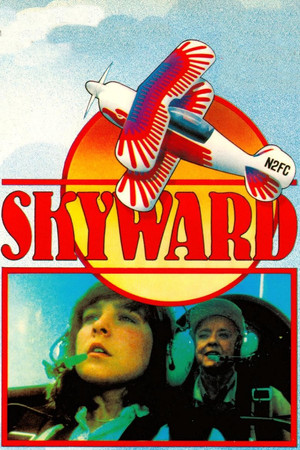
Billie Dupree is a flight instructor at an old Texas airport. When a young girl in a wheelchair finds the airport by watching gliders fly, she decides she wants to learn how to fly. Dupree teaches her to fly with some special controls compensating for her handicap. Koup Trenton runs an aircraft repair service and is trying desperately to get an old airplane back in the air. The three, together, put the young girl and the old plane up in the air.
The story of individuals from all walks of life that have faced incredible obstacles, found the drive to overcome their disabilities, and have through water sports become real everyday heroes.
The battle for accessibility in New York City Transit told by those fighting it. Less than a quarter of stations in the city's sprawling subway system are accessible to people with disabilities and those that need elevators. This film takes you on the frontlines of the disability rights movement featuring the perspectives of activists, local and state legislators, transit advocates and MTA officials.
Sven has a dream. Once in his life he wants to walk the Camino de Santiago - the Way of St. James. But that seems impossible, Sven has Usher syndrome, a disease which slowly, inexorably robs him of hearing and vision. Profoundly deaf and completely blind since 2010, he can only communicate using a special hearing aid in the spoken language.
Filmed and edited entirely in isolation, Living in Fear is an educational and inspiring documentary directed by myself, Stephanie Castelete-Tyrrell, a disabled filmmaker as I capture the fears and struggles disabled people faced before the government implemented the lockdown on the 23rd March 2020. Thousands of people with disabilities were left in the dark and had to make the call weeks before to lockdown as it was inevitable that we would die if we caught the virus. Food was impossible to access because we couldn't go out or get delivery slots, and even if we did panic buyers made it impossible to get the items we desperately needed. We were truly isolated, unable to have family and friends visit. Having carers coming in and out of the house was risky and many disabled people felt that having basic care was putting their lives at risk.
One day Sammy and his younger sister Ellie happen upon a cabin where Alice, a young, partially deaf girl with epilepsy is being kept by her abusive stepfather. The three soon become friends and hope to get Alice an education and help her escape from the torture she undergoes daily. However, Alice's stepfather soon finds out about the friendship Alice has struck up and punishes her brutally. This story of friendship and youth shows that everyone is human and deserves to be treated so, no matter their disability or weakness.
Faced with a traumatic injury that renders you permanently disabled; how would you reinvent yourself? Full Circle tells the story of Trevor Kennison and Barry Corbet’s shared resiliency and refusal to let their passion for life be limited by Spinal Cord Injury. It is an unblinking examination of the challenges of Spinal Cord Injury, and a celebration of the growth that such tragedy can catalyze.
The intimate life of the mythical Candy Dubois, from her childhood in a correctional facility to her success with the "Blue Ballet" in the great "BIM BAM BUM".
This film looks at the world of children with hearing loss and the importance of early diagnosis. With its straightforward, rigorous cinematic style and intimate approach to the subject, the film focuses on the human rather than the technical side of the problem of hearing impairment.
This feature documentary takes us to the heart of the Jane-Finch "Corridor" in the early 1980s. Covering six square blocks in Toronto's North York, the area readily evokes images of vandalism, high-density subsidized housing, racial tension, despair and crime. By focusing on the lives of several of the residents, many of them black or members of other visible minorities, the film provides a powerful view of a community that, contrary to its popular image, is working towards a more positive future.