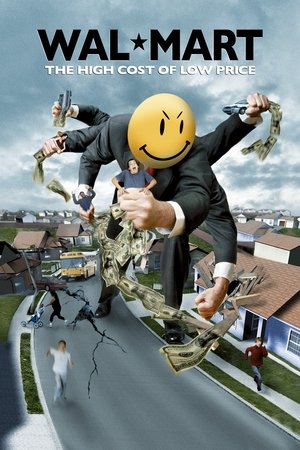
This documentary takes the viewer on a deeply personal journey into the everyday lives of families struggling to fight Goliath. From a family business owner in the Midwest to a preacher in California, from workers in Florida to a poet in Mexico, dozens of film crews on three continents bring the intensely personal stories of an assault on families and American values.
American resort developers bear down on the wild west coast of Nicaragua, hoping to build the next tourist paradise. With lax labour and environmental regulations, some of the developers take full advantage of the situation, and the local fishermen start accusing them of exploitation and land thievery. Unexpectedly, in the midst of this conflict, firebrand Daniel Ortega and the Sandinistas sweep back into government, boldly empowering the local fishermen. The tables turn viciously on the American developers, who get much more than they bargained for. But when the local fishermen, corrupted by new found power, begin acting in the same manner as the American developers, questions are posed about human nature, morality, and ethics on a much larger scale.
2025, the year of the intensification of a total and deadly war, which nothing and no one seems able to stop, targeting military personnel and civilians, and which has now claimed more than 1.5 million lives or left that many wounded on both sides. But 2025 is also the year of our break with Donald Trump's America, an America with violent and unpredictable reactions, which risks abandoning the old continent, its most loyal ally for 80 years, for Vladimir Putin. How can we stop this bloodshed on our doorstep? How can we contain the master of the Kremlin, a dictator whose predatory logic threatens to spread beyond Ukraine? Sabotage, ghost ships, interference operations, and drone flights: he is already waging a hybrid war against the rest of Europe. Is armed conflict between Europe and Russia now a possibility?
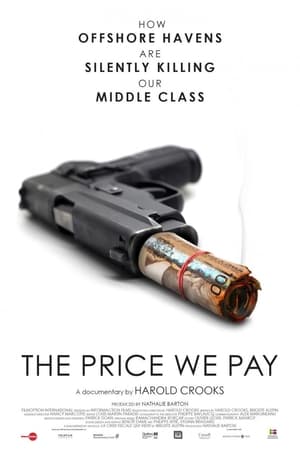
A documentary on the history and present-day reality of big-business tax avoidance, which has seen multinationals depriving governments of trillions of dollars in tax revenues by harboring profits in offshore havens.
Once upon a time there was a large Finnish company called Nokia that manufactured the world’s best and most innovative mobile phones. Nokia’s annual budget was larger than that of the Government of Finland and their phones spread everywhere and changed the whole culture of communication. But then something changed. Film portrays the rise and fall of Nokia and the Finnish mobile phone industry. Nokia engineers, designers and managers tell their story about the creation, success and downfall of the Finnish mobile phone.
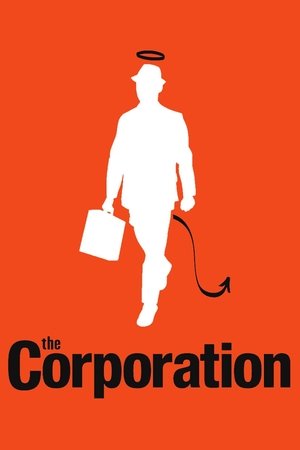
Since the late 18th century American legal decision that the business corporation organizational model is legally a person, it has become a dominant economic, political and social force around the globe. This film takes an in-depth psychological examination of the organization model through various case studies. What the study illustrates is that in the its behaviour, this type of "person" typically acts like a dangerously destructive psychopath without conscience. Furthermore, we see the profound threat this psychopath has for our world and our future, but also how the people with courage, intelligence and determination can do to stop it.
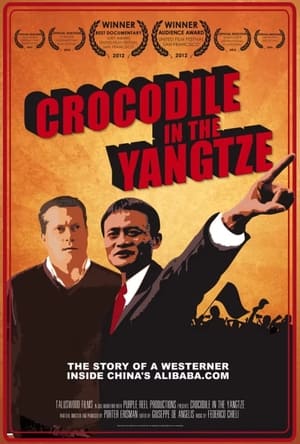
Crocodile in the Yangtze follows China's first Internet entrepreneur and former English teacher, Jack Ma, as he battles US giant eBay on the way to building China's first global Internet company, Alibaba Group. An independent memoir written, directed and produced by an American who worked in Ma's company for eight years, Crocodile in the Yangtze captures the emotional ups and downs of life in a Chinese Internet startup at a time when the Internet brought China face-to-face with the West. Crocodile in the Yangtze draws on 200 hours of archival footage filmed by over 35 sources between 1995 and 2009. The film presents a strikingly candid portrait of Ma and his company, told from the point of view of an “American fly on a Chinese wall” who witnessed the successes and the mistakes Alibaba encountered as it grew from a small apartment into a global company employing 16,000 staff.
Enfumés, j'ai infiltré l'industrie de la vape
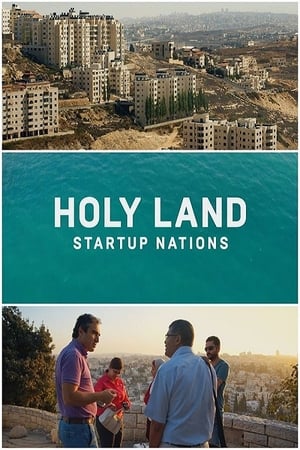
With the most tech startups and venture capital per capita in the world, Israel has long been hailed as The Startup Nation. WIRED’s feature-length documentary looks beyond Tel Aviv’s vibrant, liberal tech epicenter to the wider Holy Land region – the Palestinian territories, where a parallel Startup Nation story is emerging in East Jerusalem, Nazareth, Ramallah and other parts of the West Bank, as well as in the Israeli cybersecurity hub of Be’er Sheva. And we will learn how the fertile innovation ecosystem of Silicon Wadi has evolved as a result of its unique political, geographical and cultural situation and explore the future challenges – and solutions – these nations are facing.
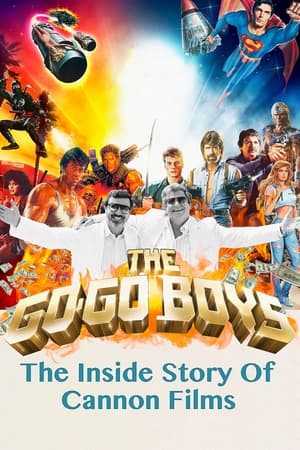
Cousins Menahem Golan and Yoram Globus relive the creation, rise and fall of their independent film company, Cannon Films. This documentary recounts their many successes and discusses their eventual downfall.
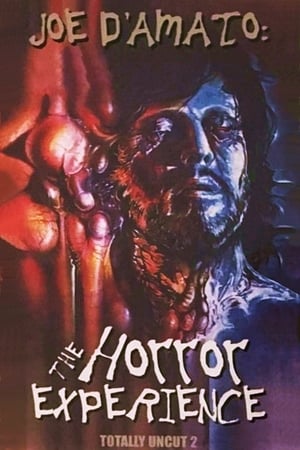
Documentary on various horror movies that Joe D'Amato directed and/or produced in the 1970's, 1980's, and early 1990's.
Taking a detour from the usual settings of Africa and South America, this mondo film focuses on Japan and Sweden, exploring strange and unusual scenes like the effects of pollution in a Japanese fishing village, esoteric psychotherapy methods, assisted fertilization, heatt surgery, sex education for blind children in sweden, military training for young Palestinians in Lebanon, a female priest celebrating mass and a school for children with phocomelia.
Why Is Mona Lisa Smiling? is a captivating documentary that connects the revolutionary spirit of the Renaissance with a modern reimagining of capitalism. Featuring a diverse cast of influential CEOs, visionaries, and historians, the film delves into the transformations reshaping companies.
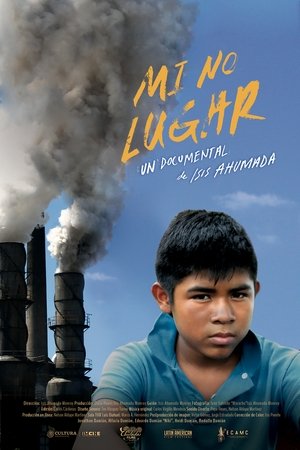
A boy migrates from Guerrero to Colima in Mexico, guided by the illusion of his parents, who want him to study high school. Nevertheless, the inequality barriers force him to work as a sugarcane harvester.
Exposing the dark underbelly of modern animal agriculture through drones, hidden & handheld cameras, the feature-length film explores the morality and validity of our dominion over the animal kingdom.
WELCOME TO THE ALAMO DRAFTHOUSE CINEMA, the most awesome post-modern hot spot for exploitation movie revival, deep in the heart of Texas! Home to world-famous events such as The Quentin Tarantino Film Fest, Fantastic Fest and Butt-Numb-A-Thon, the Alamo is one of the last places on earth where you can still see grindhouse classics such as THE DEVIL WITHIN HER and MAD MONKEY KUNG FU. Now, the Alamo has opened their vaults for a peek at some of the most outrageous cinematic gems from several golden ages of sleaze cinema. Digitally re-mastered in high-definition from the actual reels that show every week at the Alamo, this exciting edition of the 42ND STREET FOREVER series is the most bizarre, the most terrifying and the most hilarious one yet!
Part documentary, part expose, this film follows one-time child evangelist Marjoe Gortner on the "church tent" Revivalist circuit, commenting on the showmanship of Evangelism and "the religion business", prior to the start of "televangelism". Preserved by the Academy Film Archive in 2005.
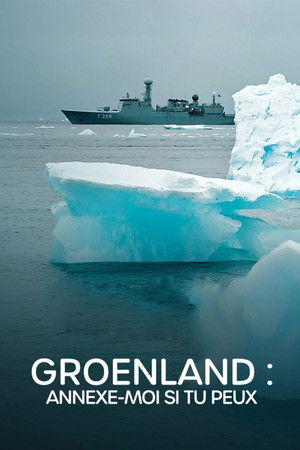
Greenland, a semi-autonomous territory of Denmark, is currently at the center of international covetousness and tensions. In his rivalry with China for technological supremacy, Donald Trump has made the acquisition of this Arctic territory a priority in order to secure American control over rare earth elements, of which Greenland is believed to hold one of the world's largest reserves.
The moral dimension of humanity's interaction with nonhuman animals and the industries that profit from their exploitation, as informed by world religions. A historical explanation of how the current global situation came to be.
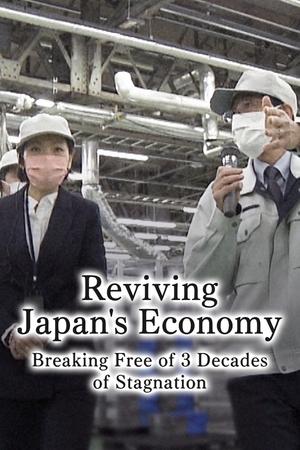
Three "lost" decades of economic stagnation since the collapse of Japan's bubble era have fundamentally altered the country's global image, and spawned the term "Cheap Japan." What will it take to truly revive Japan's economy once again? In a rapidly changing world, the question of how the globe's third largest economy can avoid being left behind is perhaps more pertinent than ever. Drawing on both expert guidance and in-depth analysis of a wide range of available data, we hunt for clues that might point the way to Japan's ever-elusive economic renaissance.