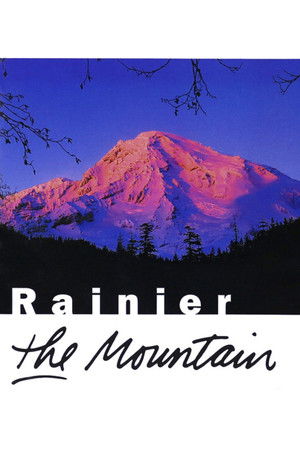
In this retrospective tribute, acclaimed filmmaker Jean Walkinshaw hails the 100th anniversary of Mount Rainier National Park in Washington by talking to those who know it best: the scientists, naturalists, mountain climbers and artists whose lives have been touched by the peak's far-reaching shadow. The result is a harmonious blend of archival material and high-definition footage celebrating an icon of the Pacific Northwest.
Cesta k slnku
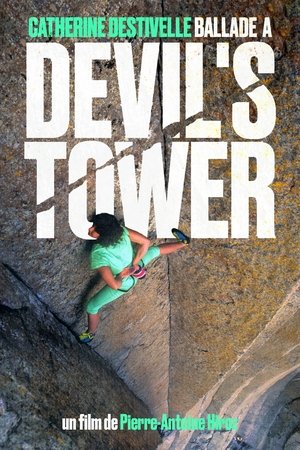
At the peak of her career as a rock climber, Catherine Destivelle goes to the United States to get away from the competitions and to recharge batteries. There, Destivelle travels by car through Utah and Wyoming to make spectacular free solo ascents in Indian Creek, where she soloes 'Supercrack' (5.10d), in Dead Horse Point State Park, and on the iconic Devil's Tower, where she climbs unroped the second half of the classic 130-foot route 'El Matador' (5.10d).
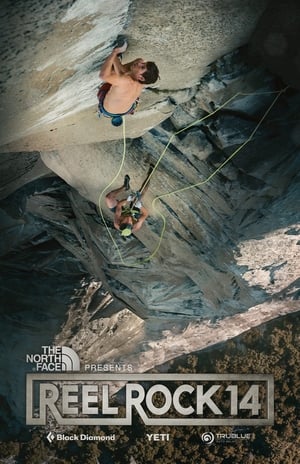
In a battle for El Cap’s coveted Nose speed record, rock legends Tommy Caldwell and Alex Honnold go head to head with Yosemite dirtbags Jim Reynolds and Brad Gobright. Highball bouldering ace Nina Williams flexes her guns and tests her nerves well into the no-fall zone. In rural Utah, conservative Mormon coal miners collide with an influx of out-of-town climbers - with surprising results. And two adventurous Brits, Hazel Findlay and Maddy Cope, pursue first ascents in wild and remote Mongolia.
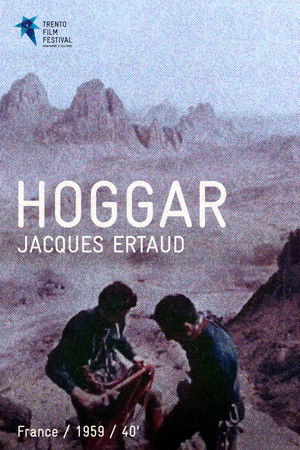
A 1959 documentary about climbing in the Hoggar Mountains of Algeria. For the first time, a mountain expedition was organized for 60 young aspiring climbers, accompanied by renowned mountaineers such as Lionel Terray, Lucien Bérardini, Maurice Herzog, and Jean-Paul Gardinier. In two weeks, dozens of new routes, often extremely difficult, were established. Jacques Ertaud's camera followed the climbers through all the challenging sections of the first ascent of the south spur of Assekrem.
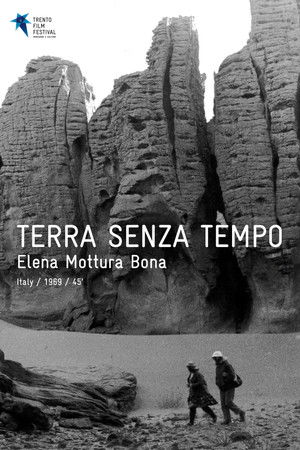
This is the journal of an expedition that, starting from the oasis town of Djanet, embarked on a 12-day journey guided by a member of the Algerian Tourism Club to discover the rock paintings of Tassili n'Ajjer in southeastern Algeria. These paintings date back to prehistoric times (10,000 to 5,000 years ago) and are located on an uninhabited rocky plateau whose highest point reaches 2,158 meters. Considered one of the largest and oldest "open-air rock art museums" in the world, the Tassili n'Ajjer boasts a particularly rugged landscape: the vast rocky plains, which sometimes give way to "forests" of monoliths, are riddled with akbas (holes in the escarpments accessible only on foot or by camel) and numerous faults and canyons. The Tassili n’Ajjer National Park was inscribed on the UNESCO World Heritage List in 1982 and classified as a biosphere reserve in 1986.
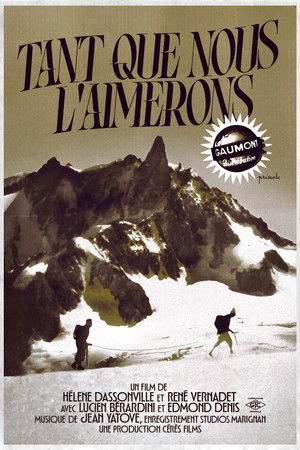
Lucien Berardini and Edmond Denis are two mountaineers who took part in the French expedition to Aconcagua (Andes Mountains) in 1954. Both suffered severe frostbite to their fingers and toes, and three years later, they set out to climb the Aiguille du Géant, a legendary route in the Mont Blanc massif. The camera closely follows the efforts of the roped party, an example of strength and self-sacrifice, until their victorious arrival at the summit.
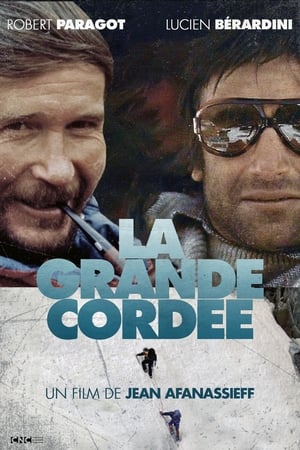
La Grande Cordée
Four experienced mountaineers climb the three floors of the Eiffel Tower through the pillars of the building. A police officer, overwhelmed by the events, does not succeed in arresting the intrepid who reach the summit with agility under the stunned eyes of tourists. They then abseil and happily throw themselves into the Seine to celebrate the feat.
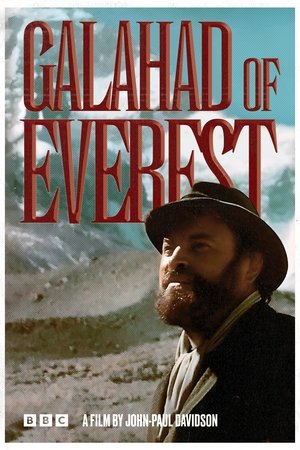
Brian Blessed plays George Mallory in this intrepid recreation of his ill fated 1924 climb to Everest. Meeting Sir Chris Bonington, Rheinhold Messnerhe learns of the pitfalls that await him before setting off for his epic struggle with the mountain. Against all odds he reaches 26000 feet on the North face of Everest, and is a changed man
Sahara - Hutsetik Haitzera is a mountain documentary about the climbing of Tizouyag Nord in the Hoggar Desert in Algeria by the Spanish Basque team composed of Alberto Iñurrategi, Jon Lazkano, Juanjo San Sebastián, Jon Beloki and Asier Aranguren. Made by climber Alberto Iñurrategi in 2002 and produced by Iñurrategi Anaiak, it is part of the Oinak Izarretan series.
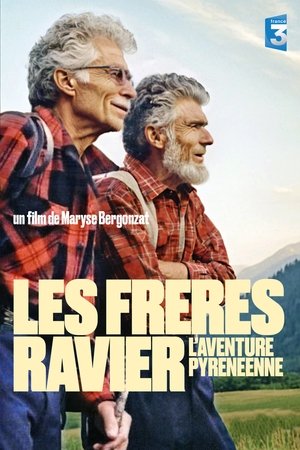
The two brothers Jean and Pierre Ravier have opened almost all the "classic" (difficult) routes in climbing and mountaineering in the Pyrenees. Roped together at the waist using a few flat knots and little equipment, the two twin brothers achieved more than 200 firsts across the entire massif. A unique style and commitment, a state of mind made up of adventure, literature, inventiveness and friendship. Unclassifiable and outgoing, after 60 years of Pyrenees, their desire for the mountains is intact. When does a race start? How does the idea, the desire, come about? What sense does it make to only achieve firsts? And what is the role of the Pyrenees themselves in this reciprocal and endless game of attraction?
The story of the ascent of the Aiguille de la République by mountaineers Jacques Fromentin and Michel Bastien. The Aiguille de la République, in the Mont-Blanc massif, culminates at an altitude of 3,305 meters among the Aiguilles de Chamonix group of summits. In the Fontainebleau forest, children learn mountaineering techniques on the bouldering climbing site. In 1954, rock climbing was also practiced in the Chamonix valley. The Montenvers train crosses the viaduct taking tourists or athletes to the Mer de Glace viewpoint. The two climbers take an approach step and reach the Envers des Aiguilles refuge. They then climb this steep and smooth wall, progressing along the ridge. On the platform, a rope throw allows them to climb up and sit at the top to dominate the panorama. Then the return: abseiling from the summit block.
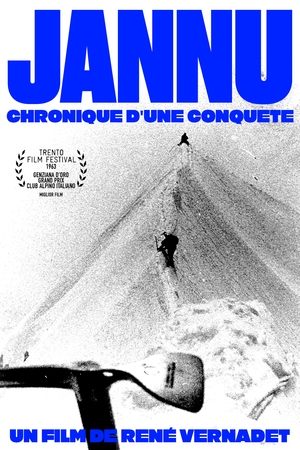
Three years after the 1959 expedition, abandoned 350m from the summit, Lionel Terray leads a new assault on Jannu, one of the most demanding peaks in the Himalayas. At the base camp, equipment and food rations are prepared. The conditions are optimal and the ascent can begin. The camera follows the progress of the mountaineers and Sherpas as closely as possible, from one high-altitude camp to another: installing fixed ropes, progressing over crevasses, in the middle of frozen towers, vertically down immense ice falls or along the edge of sharp ridges. From 7000m, oxygen bottles become essential, as the difficulty of the climb prevents acclimatization. The expedition is a total success: the majority of its members reach the 7710m summit.
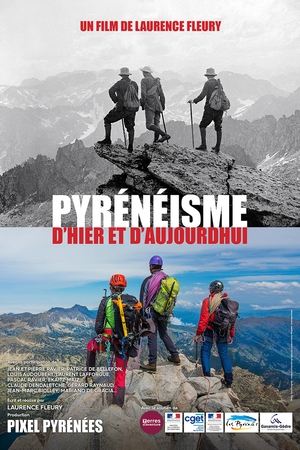
The word Pyreneism was invented by the writer Henri Beraldi at the end of the 19th century. Its definition did not come down to a simple practice of mountaineering in the Pyrenees. To be recognized as a Pyrenean, it was necessary to “ascend, write and feel”. An approach to the mountains, according to him, necessarily accompanied by an artistic or intellectual activity. This documentary looks back at the Pyrenees who have left their mark on history, before interviewing contemporary mountain dwellers who, through their mountain practice, consider themselves, or not, Pyreneanists. What prompted Beraldi to coin this term? Does it result from a Pyrenean complex facing the Alps? Chauvinism or a demand for identity? And today, does this word still have meaning? Beyond the reflection on the subject, this film is a wonderful tribute to the massif.
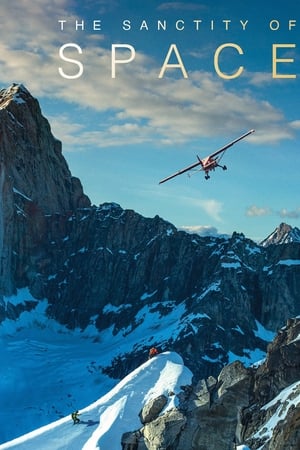
Seventy-five years after Brad Washburn, one of the greatest aerial mountain photographers of all time, first shot Alaska’s Denali Mountain from the open door of an airplane, climbing buddies Renan Ozturk, Freddie Wilkinson, and Zack Smith look at some of his mountain photographs and have this crazy idea. Rather than go up, their dream is to go sideways across the range’s most foreboding peaks, the Moose’s Tooth massif. It’s a fresh new way to explore the same landscape Washburn first discovered. As the group endures rough conditions, disintegrating ropes, and constant rockfall, their desire to be the first to complete the audacious line grows into an obsession. But friendships begin to fray when Renan suffers a near-fatal brain injury, forcing all three partners to decide what’s most important to them.
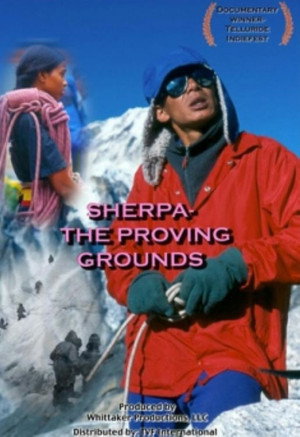
When Tenzing Norgay, a Sherpa, joined Edmund Hillary as the first men to summit Mount Everest in 1953, it alerted the world to the indispensable role of the Sherpas on any Himalayan expeditions. By 1954 the Himalayan Mountaineering Institute (HMI) was founded to marry the high-altitude strengths of the Sherpa with technical climbing skills. The HMI’s arduous training program has been developing mountaineers who play crucial roles in the success of Himalayan ascents. In 1967, HMI’s field director Nawang Gombu, a Sherpa and the first man to summit Everest twice, was charged with training women as well. In Sherpa: the Proving Grounds we follow a team of intrepid young women as they attack the grueling 28-day course.
Mountaineering documentary on the Nanga Parbat expedition, in India, in 1982. Led by mountaineer Pierre Mazeaud, this international expedition brings together eight French people, two Germans, an Iraqi, an Austrian and an Englishman including Michel Afanassieff, Michel Berrueux, Walter Cecchinel, Kurt Diemberger, Hans Engl, Shah Jehan, Karim Imamdad and others. On July 14, 1982, Hans Engl reached the summit after twelve hours of struggle.
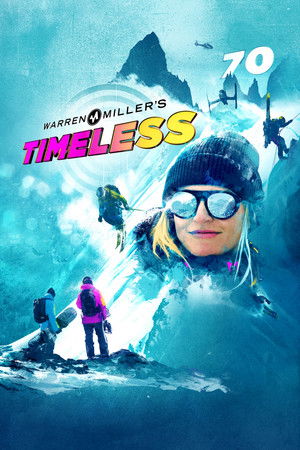
Kick off the season with Warren Miller’s Timeless, presented by Volkswagen, as we celebrate 70 years of ski cinematography and travel with top athletes across the globe to renowned mountain locations. Featuring ski legends like Glen Plake, alongside newcomers Caite Zeliff, Jaelin Kauf, and Baker Boyd. Road-trip with rippers from Arlberg to the Matterhorn, be immersed in the hometown hill of Eldora and discover a different side of Jackson Hole, plus much more.
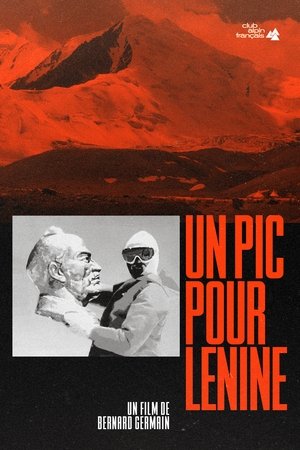
Un Pic pour Lénine