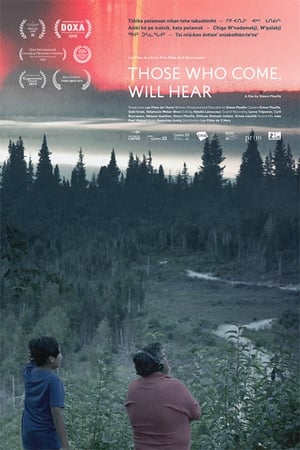
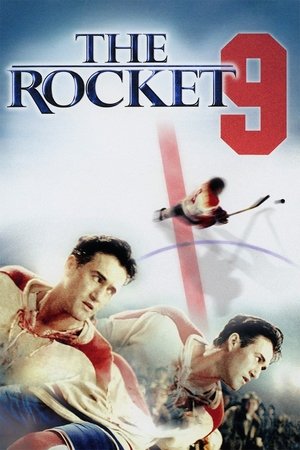
A peculiar neighbor offers hope to a recent widow who is struggling to raise a teenager who is unpredictable and, sometimes, violent.
A biopic of the late musician Dédé Fortin, the singer, songwriter, and founder of a very popular Québécois band called "Les Colocs".
Three friends meet one summer at a skydiving center. Adventurous, they spend most of their time jumping - for thrills and to escape what haunts them. When his dream of becoming a pilot is shattered, Rafaël, a young daredevil of 20 years, puts his life in danger by pushing his limits as a parashooter. Her friend Charles, the older owner of the skydiving center, tries to make her understand reason while developing a love passion for Manu, a young woman who, at 20, has to deal with her mother's cancer. But Manu and Rafaël also develop a strong passion, which comes to compromise the strong bond between the three friends. Things don't work out when Rafaël, who has been forbidden to jump, comes to miss a particularly dangerous jump prepared by Charles.
Canadian director Catherine Annau's debut work is a documentary about the legacy of Pierre Trudeau, the long-running Prime Minister of Canada, who governed during the 1970s. The film focuses particularly on Trudeau's goal of creating a thoroughly bilingual nation. Annau interviews eight people in their mid-30s on both sides of the linguistic divide. One tells of her life growing up in a community of hard-core Quebec separatists, while another, a yuppie from Toronto, recalls believing as a child that people in Montreal got drunk and had sex all day long. Annau has all of the interviewees discuss how Trudeau's policies affected their lives and their perceptions of the other side, in this issue that strikes to the heart of Canada's national identity.
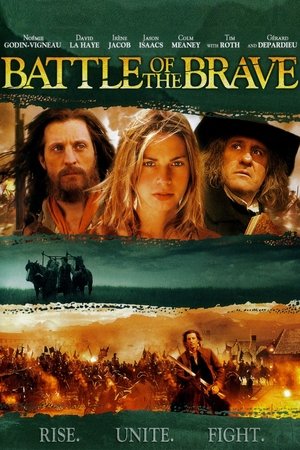
Montreal, spring 1966. Jean Corbo, 16 years old, born to a Quebec mother and an Italian father, is torn between his two affiliations. After befriending two young far-left activists, he joined the Front de Libération du Québec, an underground radical group. Jean, from then on, marches inexorably towards his destiny.
Three Alaska Native women work to save their endangered language, Kodiak Alutiiq, and ensure the future of their culture while confronting their personal demons. With just 41 fluent Native speakers remaining, mostly Elders, some estimate their language could die out within ten years. The small community travels to a remote Island, where a language immersion experiment unfolds with the remaining fluent Elders. Young camper Sadie, an at-risk 13 year old learner and budding Alutiiq dancer, is inspired and gains strength through her work with the teachers. Yet PTSD and politics loom large as the elders, teachers, and students try to continue the difficult task of language revitalization over the next five years.
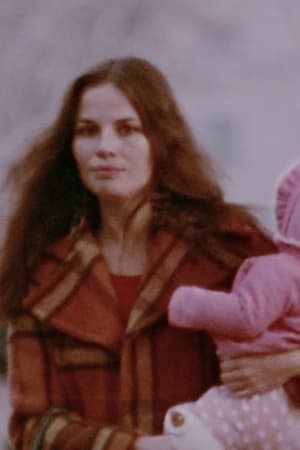
12-years-old Manon promises her younger brother, Mimi, that they will stay together, despite their difficult family circumstances and the ominous signs of being put into foster care. During the height of Quebec's FLQ Crisis in 1970, they stage their own rebellion by kidnapping an elderly woman and hiding her in the country, aided by their two cousins.
A Losing Game follows three people who ran for office in the 2022 Quebec provincial election, casting a critical eye on its electoral system and the many ways in which it is dysfunctional.
An aging thief hopes to retire and live off his ill-gotten wealth when a young kid convinces him into doing one last heist.
A young French Canadian, one of five boys in a conservative family in the 1960s and 1970s, struggles to reconcile his emerging identity with his father's values.
The movie explores the origin of the Ukrainian language and persecution of those who defended its authenticity. Using examples of other countries, creators of the film prove that a nation cannot exist without a language.
The story of an imaginative boy who pretends he is the child of a sperm-laden Sicilian tomato upon which his mother accidentally fell.
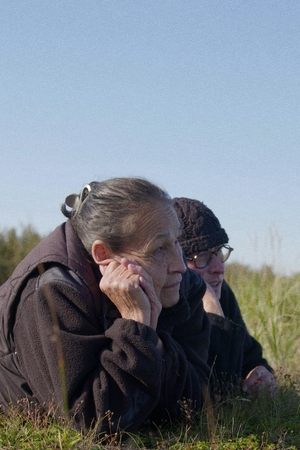
“We left our language and started speaking others’. The girls have got married and have left for the villages. Boys are getting married in villages. It should be taught to children”. — Gyani Maiya Sen-Kusunda The Gi Mihaq (also known as Kusunda) was a semi-nomadic hunter and gatherer community that settled in villages around the mid-western Nepalese district of Dang. They have long lost their native language Mihaq (Kusunda), to acculturation and other barriers to active use. The community also lost their 83-year-old elder Gyani Maiya Sen-Kusunda in 2020, the most and the only known fluent Kusunda speaker then. Filmed in Kulmor in the Dang District in 2018, this openly-licensed documentary is a memoir of Sen-Kusunda in her own words and a biography of her people who were forced to leave their language and cultural identity. Kusunda is being revived by Kamala Sen Khatri, Sen-Kusunda’s younger sister, and Uday Raj Aaley, a local researcher who is the key interviewer for this film.
Une identité dans la diversité
At 47, Julien is an eternal misfit with no real job. But now that he has published an autobiography recounting his childhood memories, a complicated relationship with his mother and troubling family secrets, success is knocking on his door. Julien and his mother have cut ties a long time ago and she doesn't know about the book. Living a sad and miserable life in a retirement home, she renews contact with her son to make up for lost time. But is that all there is to it?
What remains of the 2012 Quebec student protests? Little has changed in the decade that ensued. Rodrigue Jean and Arnaud Valade exhume images of the battles, recorded live and relayed through the mass media, that flared up as anger and indignation went head-to-head with the rhetoric of power. Against these divisive images, the filmmakers overlay a historical perspective of the state and its police in Montreal, Quebec and Canada, delving into the roots of sanctioned violence. Their compelling glance at the past is, of course, a cry that continues to echo in the present day. While the voices have been silenced, revolt still brews. All it takes is a spark...
Anticosti: La chasse au pétrole extrême
This film is about the francization of Québec that has taken place since the Parti Québécois won power from the Liberals in 1976. It shows how the once powerful anglophone community is now questioning its very survival. It discusses some of the motivating forces behind Québécois nationalism. The film concludes by asking if the Canadian nation can survive if neither of its major language groups is welcome in the territory of the other.
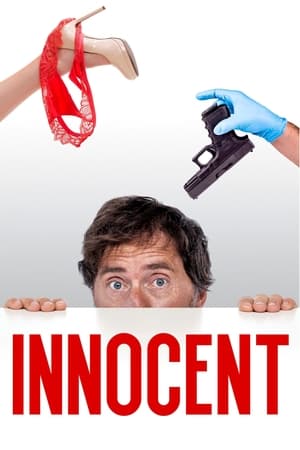
A man hires another man to kill him but changes his mind at the very last moment.
Take a breathtaking train a ride through Nothern Quebec and Labrador on Canada’s first First Nations-owned railway. Come for the celebration of the power of independence, the crucial importance of aboriginal owned businesses and stay for the beauty of the northern landscape.