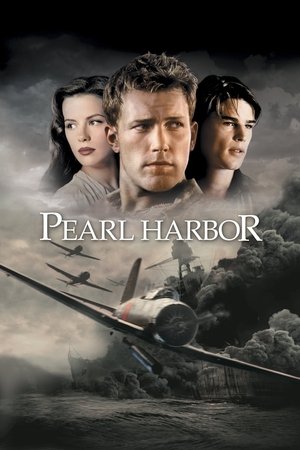
This two-hour special looks back at Dec. 7, 1941 - the date that has indeed lived in infamy, as President Franklin Roosevelt promised - when imperial Japan attacked the U.S. naval forces in Hawaii, ushering America into World War II. The attack killed more than 2,400 people, wounded 1,000 and damaged or destroyed nearly 20 American ships and over 300 airplanes.
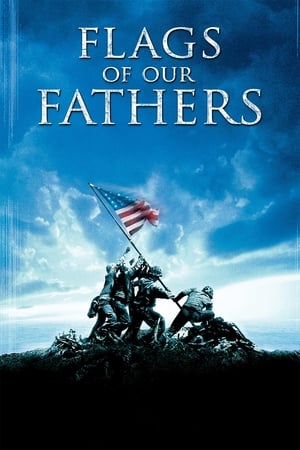
There were five Marines and one Navy Corpsman photographed raising the U.S. flag on Mt. Suribachi by Joe Rosenthal on February 23, 1945. This is the story of three of the six surviving servicemen - John 'Doc' Bradley, Pvt. Rene Gagnon and Pvt. Ira Hayes - who fought in the battle to take Iwo Jima from the Japanese.
A talented trainee pilot is given the opportunity to virtually test the latest fighter jet, which pushes him to his limits.
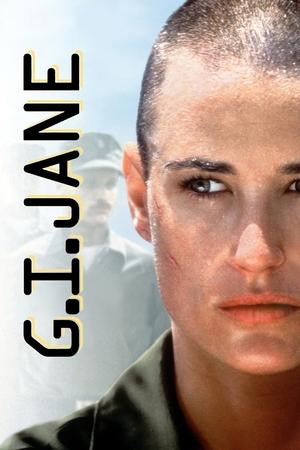
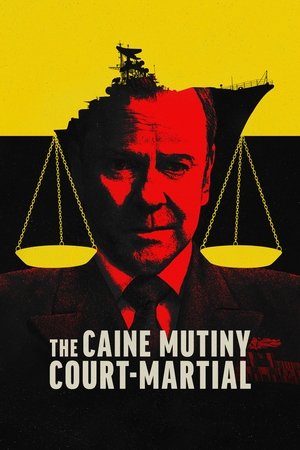
When a US Naval captain shows signs of mental instability that jeopardize his ship, the first officer relieves him of command and faces court martial for mutiny.
In the days after the attack on Pearl Harbor, panic grips California, where a military officer leads a mob chasing a Japanese sub.
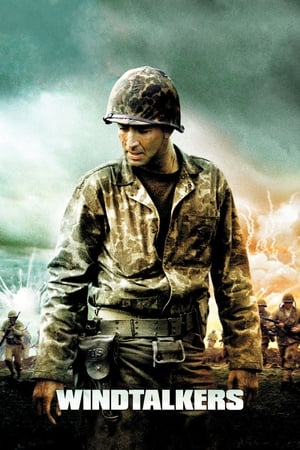
Joe Enders is a gung-ho Marine assigned to protect a "windtalker" - one of several Navajo Indians who were used to relay messages during World War II because their spoken language was indecipherable to Japanese code breakers.
Island of Java, 1942, during World War II. British Major Jack Celliers arrives at a Japanese prison camp, run by the strict Captain Yonoi. Colonel John Lawrence, who has a profound knowledge of Japanese culture, and Sergeant Hara, brutal and simpleton, will witness the struggle of wills between two men from very different backgrounds who are tragically destined to clash.
An army pilot is visiting the home of another army pilot in a neighboring country, and falling in love with his sister, when war breaks out.
A look at the recently discovered fascinating behind the scenes footage shot by the legendary Hollywood director John Ford at Pearl Harbor in 1942 while filming his popular World War II documentaries December 7th and The Battle of Midway.
When the Great War breaks out, brothers Roy and Monte Rutledge, each attending Oxford University, enlist with the Royal Flying Corps.
This intriguing and beautifully-shot newsreel features sea-faring heroes, feisty females and a generous lick of paint for a Mississippi steamship.
In the summer of 1941, the United States and Japan seem on the brink of war after constant embargos and failed diplomacy come to no end. "Tora! Tora! Tora!", named after the code words used by the lead Japanese pilot to indicate they had surprised the Americans, covers the days leading up to the attack on Pearl Harbor, which plunged America into the Second World War.
This war drama depicts the U.S. and Japanese forces in the naval Battle of Midway, which became a turning point for Americans during World War II.
In 1941 Hawaii, a private is cruelly punished for not boxing on his unit's team, while his captain's wife and second in command are falling in love.
The drama stars Beat Takeshi as General Hideki Tojo, who served as Prime Minister of Japan during World War II and was later executed as a war criminal. The story's theme is said to be a look at how the Pacific War began, focusing mostly on the three month period between the Imperial Conference (Gozen Kaigi) on September 6, 1941, and the attack on Pearl Harbor on December 7, 1941.
The crew of an Air Force bomber arrives in Pearl Harbor in the aftermath of the Japanese attack and is sent on to Manila to help with the defense of the Philippines.
Youngsters called Kildren, who are destined to live eternally in their adolescence. The Kildren are conscious that every day could be the last, because they fight a war as entertainment, organized and operated by adults. But as they embrace the reality they are faced with, they live their day-to-day lives to the full.
The adventures of the Lafayette Escadrille, young Americans who volunteered for the French military before the U.S. entered World War I, and became the country's first fighter pilots.
A bitter battle is fought between Australian and Japanese soldiers along the Kokoda trail in New Guinea during World War II.
Even in the 1970s, films were made in this country that emphasized not only the necessity to defend the impermeability of the Western borders by all means, but mainly rehabilitated the Stalinist era. Told with ridiculous patheticness, the story is set in 1951 and takes place in army circles, depicting the disputes over the most effective air defence of the border... It chooses to depict the working disputes between an experienced, but already mentally stagnant general and a young politruk who advocates a modern conceptual solution to the common task.