An intimate portrayal of the everyday lives of Carthusian monks of the Grande Chartreuse, high in the French Alps (Chartreuse Mountains). The idea for the film was proposed to the monks in 1984, but the Carthusians said they wanted time to think about it. The Carthusians finally contacted Gröning 16 years later to say they were now willing to permit Gröning to shoot the movie, if he was still interested.
In May of 1982 Julio Cortázar, the Argentinean writer and his companion in life, Carol Dunlop set out in their VW bus on a journey along the highway from Paris to Marseille that, for each of them, was to be their final one. Twenty-five years later, Océane Madelaine and Jocelyn Bonnerave set out to undertake the journey again.
Albert Hofmann - Wahrnehmungen
Modern Amazons are fierce heroines. They are ready to fight for what is important to them. Without explaining, without compromising, always persisting. They fight for victory in the ring for acceptance, and too, for fellow sufferers and humanity.
Max Frisch was the last big Swiss intellectual widely respected as a “voice” in its own right – a character hardly found today. The film retells Frisch’s story as a witness of the unfolding 20th century, wondering if such “voices” are needed at all, or if we could do without them.
Over 350,000 tons of highly radioactive waste and spent fuel rods are in temporary storage on site at nuclear power complexes and at intermediate storage sites all over the world. More than 10,000 additional tons join them every year. It is the most dangerous waste man has ever produced. Waste that requires storage in a safe final repository for hundreds of thousands of years. Out of reach of humanity and other living creatures. The question is, where? Together with Swiss-British nuclear physicist Charles McCombie, who has been searching for a safe final storage site for highly radioactive nuclear waste for thirty-five years, director Edgar Hagen investigates the limitations and contradictions involved in this project of global significance. Supporters and opponents of nuclear energy struggle for solutions whilst dogmatic worldviews are assailed by doubt
A disturbing exploration of what it means to be a man Desert Wind unveils the innermost thoughts of 13 men about their lives and male identity, making a clean sweep of clichés. Their revelations -- a glimpse of the hidden side that few men spontaneously reveal -- are of equal interest for women.
A hamlet in Finland's sprawling tundra. It became the second home of Emmental's Hans Ulrich Schwaar. He lives here with his friend and host, Sami Iisakki-Matias Syväjärvi, owner of the largest reindeer herd in Finland. The reindeer and the rhythm of nature determine daily life. Peter Ramseier has captured this life and the friendship between two men from different cultures in superb, poetic images.
Greina
It is winter at an emergency shelter for the homeless in Lausanne. Every night at the door of this little-known basement facility the same entry ritual takes place, resulting in confrontations which can sometimes turn violent. Those on duty at the shelter have the difficult task of “triaging the poor”: the women and children first, then the men. Although the total capacity at the shelter is 100, only 50 “chosen ones” will be admitted inside and granted a warm meal and a bed. The others know it will be a long night.
Nearing the end of a long and successful stage career, Miriam Goldschmidt finds her prowess as an actress increasingly on the wane. She struggles to memorize her lines and as her last project with lifelong collaborator, the legendary director Peter Brook, threatens to fall apart, Miriam looks back. Referencing Brook’s ground-breaking book «The Empty Space», she uses an empty rehearsal room in Berlin to invoke her archetypal life journey that took an orphaned black child from post-war Germany to the world’s biggest stages. We «Call Her Miriam» is a bewitching and moving portrait of a great artist living between dream and reality, truth and fction and life and death.
Le crépuscule des Celtes
Le garçon s'appelait Apache
Juntos, un retour en Argentine
From August to October 1942, over 2250 Jews were deported from the internment camp of Rivesaltes to Auschwitz by way of Drancy. Among them were 110 children. Friedel Bohny-Reiter, a nurse with the Swiss Aid to Children, worked in this camp in the South of France. Like many others in the formerly unoccupied zone, it was run by the French. Once a military camp, it had been converted in 1941 into a transit camp regrouping Jewish, Gypsy and Spanish people living in the area or who had fled to the free zone as refugees. Thanks to the young nurse from Basel, many children were probably saved from certain death. The film follows the nurse on a visit to that still intact site as well as through the pages of the journal she wrote in those dark days, published by Editions Zoë, Geneva in 1993.
'From One Day To The Next' follows four elderly people through their everyday lives, observing how they cope with a gradual loss of autonomy.
À l'Ouest du Pecos
Tracing the emigrations of his family over more than half a century, this riveting documentary epic from acclaimed expatriate Iraqi filmmaker Samir pays moving homage to the frustrated democratic dreams of a people successively plagued by the horrors of dictatorship, war and foreign occupation of Iraq.
Soeurs
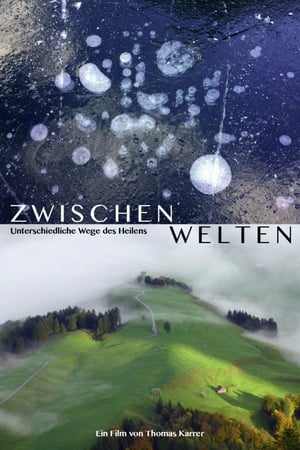
A documentary film about Tibetan traditional medicine.