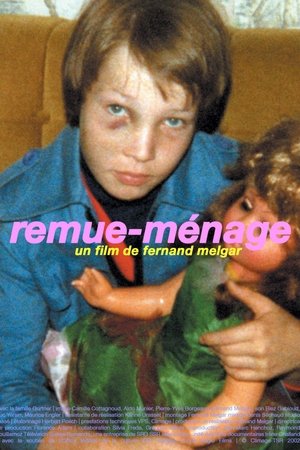
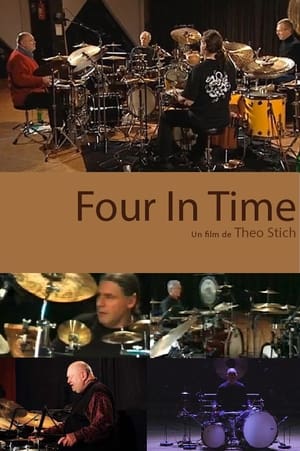
Modern Amazons are fierce heroines. They are ready to fight for what is important to them. Without explaining, without compromising, always persisting. They fight for victory in the ring for acceptance, and too, for fellow sufferers and humanity.
Documentary about thrift shops in Berne, Switzerland and how they want people to recycle and re-use instead of throw away.
Switzerland was one of the last countries in the world to grant women the right to vote. This film guides us through a century of Swiss history, tracing the imprint left by the women who fought for the right to leave hearth and home – and by the men who did everything they could to send them back – until they gained legal equality, whose implementation seems to be in question still today.
Zurich-born Hugo Koblet was the first international cycling star of the post-war period. He was a stylist on the bicycle and in life, and a huge heartthrob. Koblet had a meteoric rise and won the Giro d'Italia in 1950. Once he had reached the zenith of his career, Koblet was put under pressure by overly ambitious officials and ended up ruining his health with drugs. In 1954, he married a well-known model and they became a celebrity dream couple. After his athletic career ended, Koblet began to lose his footing. Threatened by bankruptcy, he crashed his Alfa into a tree.
The Making of a Dream is a cinematic essay on stories of dancers. It shows joys and pains from the first steps in an amateur school to the goal to become a principal dancer in a world known ballet company.
L'oasis des mendiants
L'usine
In 1906, Dr. Morgenthaler, a psychiatrist at Bern Psychiatric Hospital, started to collect and photograph the drawings, paintings and various objects designed by his patients. This collection of works by schizophrenic artists would later prove an important contribution to art history and the history of "Art Brut" or "Outsider Art": work by artists who have been deemed obsessive, mentally or psychologically ill, or otherwise "abnormal."
From August to October 1942, over 2250 Jews were deported from the internment camp of Rivesaltes to Auschwitz by way of Drancy. Among them were 110 children. Friedel Bohny-Reiter, a nurse with the Swiss Aid to Children, worked in this camp in the South of France. Like many others in the formerly unoccupied zone, it was run by the French. Once a military camp, it had been converted in 1941 into a transit camp regrouping Jewish, Gypsy and Spanish people living in the area or who had fled to the free zone as refugees. Thanks to the young nurse from Basel, many children were probably saved from certain death. The film follows the nurse on a visit to that still intact site as well as through the pages of the journal she wrote in those dark days, published by Editions Zoë, Geneva in 1993.
L'autre versant de Gstaad
La conquête du temps libre
Irrécupérables ?
It's there, it's been Irène Schweizer's faithful companion for over 40 years, sharing her joys and sorrows, inspiring her and allowing her to live her dreams: her piano.
A true pioneer of Swiss cinema, Isa Hesse-Rabinovitch (1917-2003) followed an unusual path throughout her life. The daughter of Judeo-Russian immigrants, she grew up in Zurich. She married a son of Hermann Hesse, with whom she had three children. Influenced by the artistic work of her parents, she worked as an illustrator, then as a reporter and photographer, always mindful of her independence. At the age of fifty, she began making films. Her first experimental shorts immediately earned her invitations to various film festivals and a resounding response abroad.
Pascal, Miranda, Jeremy and Franziska are real gypsies. They're between 17 and 25, love big powerful cars and have decided to live on the move. Like many other young Yenish people. They need freedom and fight for it. They show a world closed to the sedentary. A different but very Swiss life. Today's Romanis: disenchanted, close to reality.
Juntos, un retour en Argentine
Along with several courageous psychiatrists and their clients, the author sets out to film a documentary road movie that takes him to Switzerland, Europe, and the U.S. On their travels in mobile homes, they explore the depths of the human psyche in search of answers to the question: What is the human mind and how does it behave in psychotic extreme situations?
Over 350,000 tons of highly radioactive waste and spent fuel rods are in temporary storage on site at nuclear power complexes and at intermediate storage sites all over the world. More than 10,000 additional tons join them every year. It is the most dangerous waste man has ever produced. Waste that requires storage in a safe final repository for hundreds of thousands of years. Out of reach of humanity and other living creatures. The question is, where? Together with Swiss-British nuclear physicist Charles McCombie, who has been searching for a safe final storage site for highly radioactive nuclear waste for thirty-five years, director Edgar Hagen investigates the limitations and contradictions involved in this project of global significance. Supporters and opponents of nuclear energy struggle for solutions whilst dogmatic worldviews are assailed by doubt
Switzerland still carries out special flights, where passengers, dressed in diapers and helmets, are chained to their seats for 40 hours at worst. They are accompanied by police officers and immigration officials. The passengers are flown to their native countries, where they haven't set foot in in up to twenty years, and where their lives might be in danger. Children, wives and work are left behind in Switzerland. Near Geneva, in Frambois prison, live 25 illegal immigrants waiting for deportation. They are offered an opportunity to say goodbye to their families and return to their native countries on a regular flight, escorted by plain-clothes police officers. If they refuse this offer, the special flight is arranged fast and unexpectedly. The stories behind the locked cells are truly heartbreaking.
A behind-the-scenes look at the of how the Paris Opera is run under the direction of Stephane Lissner.