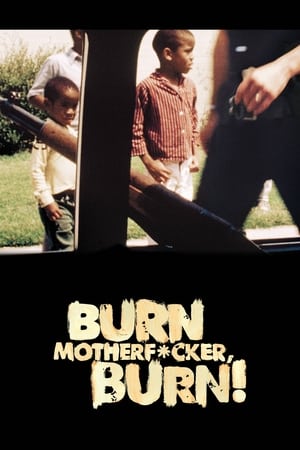
An early experimental film by Toshio Matsumoto. Produced as part of the student riots in Japan at the start of the 1960s, Matsumoto uses collage, archival footage, and impassioned narration to create an expressive, visceral criticism of the US-Japan Security Treaty.
Z lásky nenávist 3: Domácí násilí na seniorech
Z lásky nenávist
Z lásky nenávist 2: Domácí násilí na mužích
The story of the South Shore Resource and Advocacy Center, five survivors of domestic violence, and their experience in the Massachusetts justice system.
Explores the history of "The Game," the annual football matchup between bitter rivals Ohio State and Michigan
A hard-hitting documentary that tackles head-on a controversial but increasingly alarming subject: young men's obsession with the perfect body, and the use of performance-enhancing drugs to achieve it. Once the preserve of top-level athletes, the use of anabolic steroids has become endemic among teenagers and young men with a passion for bodybuilding. Daring to tackle head-on the taboo of male beauty standards, Adonis offers a field investigation into the heart of this muscle-building machine, questioning the reasons behind and the physical, psychological and social risks of this race to the perfect body. As he stages his own vulnerability, the filmmaker lifts the veil on the scale of the public health crisis that is looming.
“In Gaza you have to get there in the evening, in spring, lock yourself in your room and from there listen to the sounds coming in through the open window.... It's 2018. I am 25 years old and a foreign traveler. I meet young Palestinians my age..”
I was about seven years old the first time someone called me \"black\" on the street. I turned around to see who they were talking to, until I realized they were talking to me.
From the “integration model” to the “Islamist fanatic”, France fantasizes about these children of immigrants who grew up with it. Like every month “What I’m Meddling With!” presents portraits, the result of an in-depth investigation, to give a face to today's questions. The program, broadcast in the thematic evening of the Franco-German channel Arte, is made up of 2 ambivalent documentaries: "Les Lumières De La Zone" and "Les Soldats De Dieu" followed by debates.
There’s high school football, and then there’s Texas high school football. Oddly enough though, one of the greatest teams in state history has been lost to time—and fate. “What Carter Lost” is the saga of that team, the 1988 Dallas Carter Cowboys. With 21 players who were offered college scholarships and several who went on to the NFL, Carter took on the best that Texas had to offer, including the Odessa Permian team that inspired Friday Night Lights, as well as the worst: in a racially charged state-wide dispute over one player’s algebra grade and Carter’s legitimacy. Somehow, the team won the championship that year. Yet not too long after, the legacy they worked so hard for was thrown away after a group of players made a terrible decision. With personal interviews with players, coaches and family members, as well as glimpses of their lives today, “What Carter Lost” is ultimately about what Carter found.
After four years away, Huiju returns home to South Korea. Exchanges with her loved ones are awkward and clumsy. Huiju turns once again to her familiar rituals: pruning the trees, preparing a sauce, tying a braid.
In an intense action-filled 85 minutes, you will learn to defend yourself against the mounting threat of “knife culture” offenders.
Full Sweat is a 60-minute documentary about AFL club Hawthorn and their brutal 2025 pre-season.
The United States of America has been at war for almost all of its 250 years of existence. From the wars of independence to current armed conflicts, its armed forces have not only shaped American identity, but also influenced the political decisions of its leaders. The documentary delves deep into this complex history and analyzes the hot and cold wars that shaped the development of the USA, along with lessons for the future. How have generations of Americans experienced these wars and how have their lives been changed by them? How has military engagement been used to shape the image and role of the USA on the world stage? Do military decisions today shape the world of tomorrow and what are the effects on democracy and society? And as the US president begins his new term in office, the question also arises: what role does the army play in Donald Trump's understanding of the world?
Short documentary that lends a platform to the players on the Rattlers football team directly to speak on issues at their university they believe are impacting their student athlete experience. This is the story of FAMU football’s faith in their ability to speak out for what is right, and their fight for the respect and support they deserve as elite student athletes at the #1 public HBCU in America.
The tenth edition of Polish Pride parades a colorful trail of rainbow flags through the streets of Warsaw. Along the route, Antek and his friends line up to warn of the “pink threat” in prayer and edifying hymns. As traditional Catholics, he and his Brotherhood hold deeply conservative views: sex before marriage is out of the question, homosexuality can be cured, abortion is a great evil and Poland is for the Poles. His sister thinks his homophobic ranting is pointless, because in a few years the planet will be destroyed anyway as nobody is doing anything about climate change.
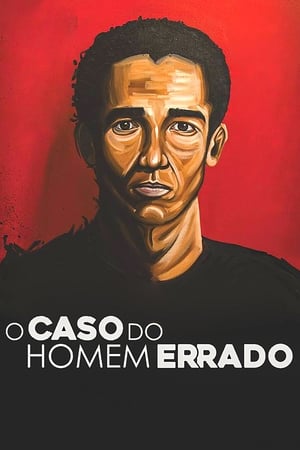
The documentary is structured as a video letter from a black man denouncing the persistence of racism in Brazilian society and media, a century after the official end of slavery. Thus, it presents the contradictions between two images of racial relations in Brazil: the image disseminated abroad, which spreads the myth of racial democracy, and the internal image, presented in textbooks and on television, in which negative stereotypes are perpetuated against the black population.
An American story. Traces the career of Joe Louis (1914-1981) within the context of American racial consciousness: his difficulty getting big fights early in his career, the pride of African-Americans in his prowess, the shift of White sentiment toward Louis as Hitler came to power, Louis's patriotism during World War II, and the hounding of Louis by the IRS for the following 15 years. In his last years, he's a casino greeter, a drug user, and the occasional object of scorn for young Turks like Muhammad Ali. Appreciative comment comes from boxing scholars, Louis's son Joe Jr., friends, and icons like Maya Angelou, Dick Gregory, and Bill Cosby.
This film takes us into the harsh realm of BC's early coal mines, canneries, and lumber camps; where primitve conditions and speed-ups often cost lives. Then, the film moves through the unemployed' struggles of the '30s, post WWII equity campaigns, and into more recent public sector strikes over union rights.