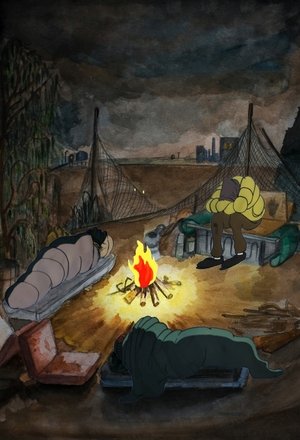
An artist looks back on his younger years at the Chongqing Art Academy in the turbulent 1990s. The selection and demands used to be killing. He was close friends with two boys and a girl. They fought with local youngsters and tried to give each other pep talks. Parallels with the childhood years of his parents, during the Cultural Revolution, also show violence and gun battles. Semi-autobiographical, with motion capture.
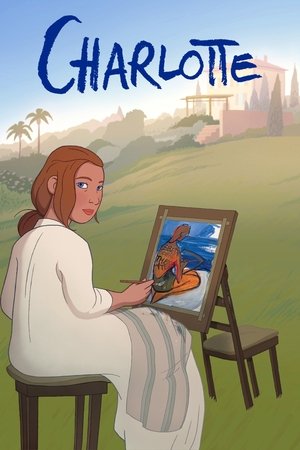
A daughter is constantly overshadowed by her famous father, but she is determined to make her own mark in the world.
Poème Électronique is an 8-minute piece of electronic music by composer Edgard Varèse, written for the Philips Pavilion at the 1958 Brussels World’s Fair. The Philips corporation commissioned Le Corbusier to design the pavilion, which was intended as a showcase of their engineering progress. The pavilion was shaped like a stomach, with a narrow entrance and exit on either side of a large central space. As the audience entered and exited the pavilion, the electronic composition Concret PH by Iannis Xenakis (who also acted as Le Corbusier's architectural assistant for the pavilion's design) was heard. Poème électronique was synchronized to a film of black and white photographs selected by Le Corbusier which touched on vague themes of human existence.
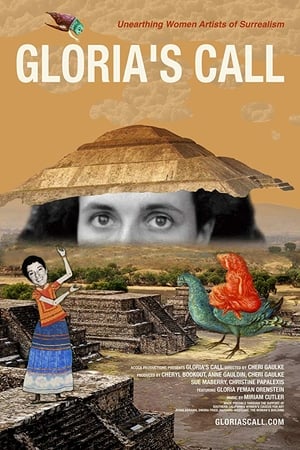
In 1971, graduate student Gloria Orenstein received a call from Surrealist artist Leonora Carrington that sparked a lifelong journey into art, ecofeminism and shamanism. This short film uses art, animation and storytelling to celebrate this wild adventure. Now more than 40 years later, award-winning Dr. Gloria Feman Orenstein is a feminist art critic and pioneer scholar of women in Surrealism and ecofeminism in the arts. Her delightful tale brings alive an often unseen history of women in the arts.
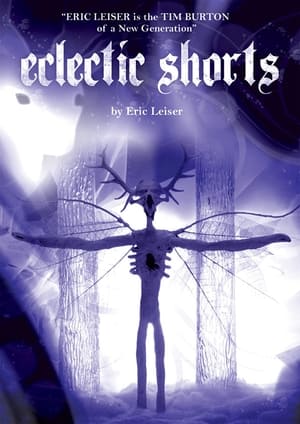
Eric Leiser displays his boundless creativity in this short collection; A stunning compilation of works presented with a mixture of live action, stop motion animation, puppetry and pixilation techniques, produced between 2001 and 2006.
An anthropomorphic rat repeatedly wakes up in its bed, leaves, presumably goes about its life, and returns back home in the evening. All we are offered by way of context is a single, hand-drawn shot of the rat’s proletarian room.
‘Who Named the Lily?’ celebrates and laments the complicated history of the Crystal Palace. Monster Chetwynd plays the ‘Fact Hungry Witch’, who explores the story of the Amazonian waterlily, and reveals its links to engineering. The artwork brings to light the politics of Paxton’s developments in industry and architecture, however, the protagonist of this story is the waterlily – a catalyst for ground-breaking technological advancement.
A paediatrician asks Louis 'to brush the teddy's toes', indicating that Louis's own are somehow developing differently... (http://explore.bfi.org.uk/4ce2b8ab5d636).
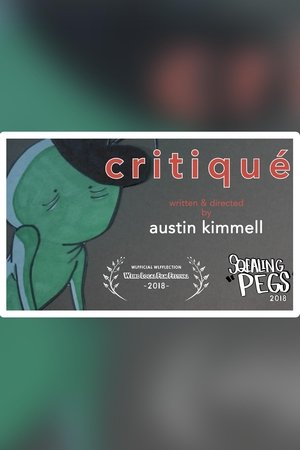
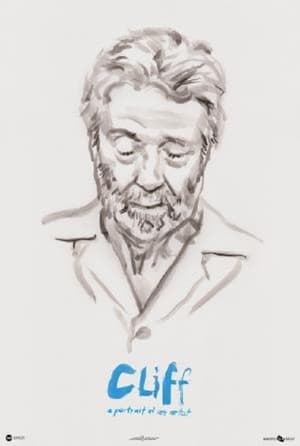
An acclaimed artist gets a bad review and deals with it the only way he can.
Len Lye (1901-1980) was a pioneer of experimental animation, and also of kinetic sculpture. This short film dramatically presents 18 minutes inside the head of the artist as a teenager. The opening scenes are set in New Zealand in the year 1917, on the day when Lye (setting out on his bicycle to deliver newspapers) makes his excited discovery that motion can be the basis for a radically new approach to art.
Hasan Everywhere is an animation which broaches the subtlety of a relationship between a man and a woman who bear the passports of enemies, to sympathetically deal with the subjects of death, grief, lost opportunity; but mostly it seeks to demonstrate the possibility of friendship triumphing over the deepest of rifts between two people. In that regard it is most unusual among the standard fare of animated shorts.
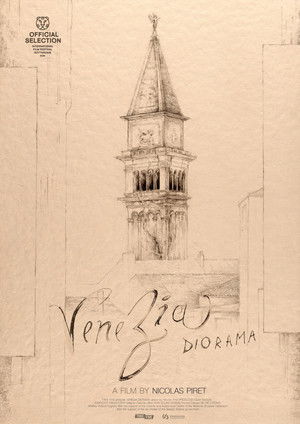
Through a series of animated art boards depicting a decaying Venice, the film unfolds like a set of postcards, capturing the mythical city's final moments of fragility. Blending archival footage with contemporary observations, and anchored by the story of the 1902 collapse of St Mark's Campanile, Venezia Diorama invites us to reflect on a city slowly eroding, yet suspended in time.
This wonderful story happened in the age of valiant knights, beautiful princesses, and battling sorcerers. Ruslan, a wandering artist dreaming to become a knight, met beautiful Mila and fell in love with her; he didn’t even suspect that she is the King’s daughter. However, the lovers’ happiness wasn’t meant to last too long. Chernomor, the evil sorcerer, appeared in a magic vortex and stole Mila right before Ruslan’s eyes to transform her power of love into his own magic power. Without further ado, Ruslan sets out on a chase after the stolen princess to overcome all obstacles and to prove that real love is stronger than magic.
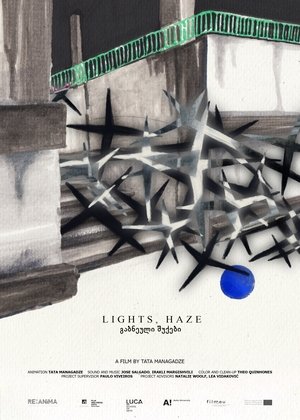
Utopian symbolic playgrounds from memories are interconnected through sharp, flickering lights.
A short animated biopic of popular and fashionable French painter Raoul Dufy.
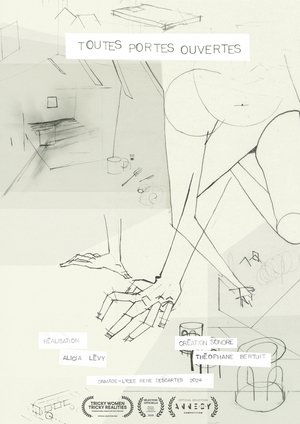
Confusion settles in the house, how to make it a home again?
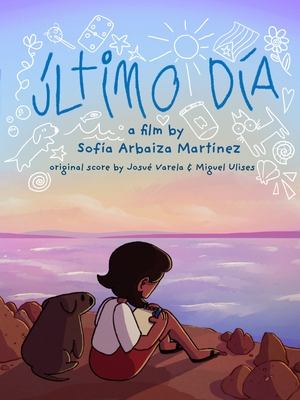
Yadira, a creative young Cuban girl, struggles packing on her final day home. Embarking on an immigration journey alone, her suitcase feels too small to carry everything her heart holds.
Images of crowd simulation are faced with testimonies from Liverpool Football Club’s supporters who recall their experience marked by a tragic event: the Hillsborough stadium disaster in 1989, which changed the nature of the game of football.
Walking Walking Looking Watching In and around Following directions There, I see I know that And that And there, another My device tells me It functions by directing my movements It is difficult to understand how it works
(New Logue Lane) 1. The sun was either setting or rising, it was impossible to tell at that particular moment. 2. Maybe, Maybe not. 3. He said we could solve his problem using methods more advanced than squinting and meditation [concentration], more advanced than anything we could have imagined. And, even better, someone might make a fortune doing it. 4. Holding a dusty wooden prism, he asked each of us to choose: “Architecture or Revolution.” Maybe it was the thick accent, or maybe it was something else entirely, but I swear he said Architecture or Resolution. …unfortunately, we chose Architecture.