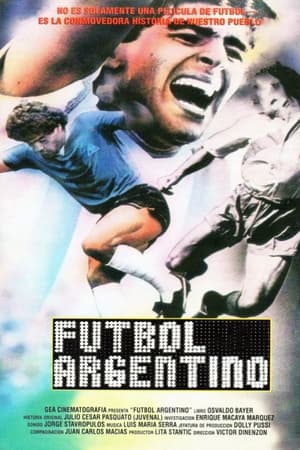
A history of Argentine football, from its origins in the nineteenth century to the victory of the Argentine national team in the 1986 World Cup. The film uses valuable archival footage.
Diego Maradona is one of the best football player ever. An important moment of his life is the passage to the italian soccer team, Napoli.
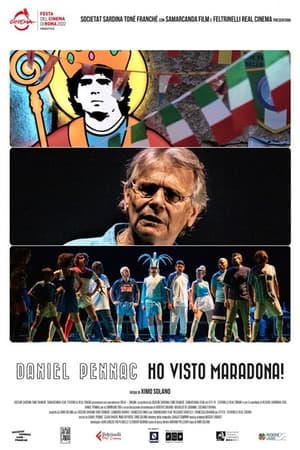
Rehearsals for a play about Maradona in Naples, with Italian actors and an Argentine director. Nothing about Maradona except anecdotes about his figure from the Neapolitans; one of the actors had come to play football. They were all 'touched' by Maradona, as is logical. Pennac is very intelligent, but he has never seen a ball in his life: his fascination comes from the public figure of Maradona, from the totem, from the stupor that invaded him when many friends confessed to having cried at his death. The spectator, Maradonian or not, has an irrepressible desire to travel to Naples and join the song that he sees towards the end of the film, which is moving and overwhelming in its beauty and simplicity. Ideal for theater lovers, or Maradona lovers, or both.
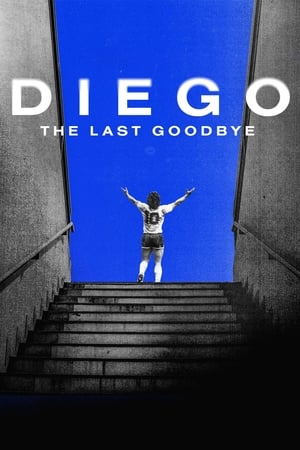
The last year in the life of Diego Maradona told by friends, family and former companions reveals his deep humanity. In the midst of the Covid 19 pandemic, a Maradonian funeral sends him away amid tears, songs and tear gas.
Maradona, a young man, due to some dangerous situations, moves out of his hometown and reaches Bangalore to stay with his distant relatives. However, during his stay there, his situation worsens further.
A young Argentine learns that soccer star Diego Maradona is ailing in a Buenos Aires hospital, and resolves to bring him a tree root he's discovered.
During the 1990 World Cup, two young Palestinian boys are on a quest for “Maradona’s legs”; the last missing sticker that they need in order to complete their world cup album and win a free Atari.
Grandes Momentos del Fútbol: El bueno, el malo y el Diego
Day one of the FIFA World Cup. The residents of Beirut have eagerly anticipated the big event, but for some reason the telecast is interrupted by strange audio waves. Soon they realize that an Israeli attack is in progress, but instead of running away and hiding, they rush to their rooftops where they can witness a much bigger live event.
A documentary from Erkki Karu, one of the earliest pioneers of Finnish cinema: This government-produced propaganda film introduces the nature, sports, military, agriculture and capital of Finland.
Arvo Pärt is regarded as one of the most original avant-garde composers. This documentary shows Pärt as a deeply spiritual man whose work is bound up with his religious beliefs. Both he and his music defy classification, and he is determined to preserve his aura of mystery.
At a blind school in the Czech Republic, the children exuberantly show off their remarkable talents – as musicians, as radio announcers, as daredevil bike riders and, most extraordinary of all, as photographers. Why take pictures of a world you can’t see? To capture memories, of course, that sighted people can describe back to them. Miroslav Janek’s documentary is a true eye-opener about the resilience, adaptability and creativity of children, faced with whatever challenge the world throws at them.
Several characters realize their personal way to build their own identity from the choice of genre. Transsexual, transgender, crossdressing – the defining of terminologies different ways of looking at yourself are constantly rising, portraying a universe of possibilities, expanding the boundaries of the possible and permitted.
Black Hole Radio is an installation that consists of taped confessions of callers of the New York City Phone Confession Line and video images. The Phone Confession Line is based on anonymous callers ringing to confess on things they had done or thought like adultery, theft, murder or regrets. Thereafter anybody could call and listen to the confessions. Although making a confession was free, listening to a confession costs money. After Cohen got his hands on the confessions, he used them as an audio heartbeat to accompany video-images of every day life in New York City he had taken over the years. This installation is a portrait of the city with its dark secrets, hushed voices and nocturnal images. In this way Cohen tries to bring across an experience to the viewer that relies on absence, waiting and the effort to hear something in the dark.
Pop Goes the Easel was Ken Russell’s first full-length documentary for the BBC’s arts series Monitor. It focused on 4 British Pop Artists - Peter Blake, Peter Philips, Pauline Boty and Derek Boshier.
Oceanographers have been gripped by a new spirit of discovery and have undertaken the biggest population census of ocean species ever conducted - a "Census of Marine Life". The quest: to find out when and where it all began. Where did the water come from? How was life created in the oceans? And how did it evolve to the enormous diversity we see today? Join National Geographic as we travel more than 4 billion years into the past to uncover how oceans and marine life came to exist.
Ken Howard hosts a series of role-playing vignettes (featuring some of Hollywood's top stars) to help parents and children deal with typical family situations involving the use of illegal drugs.
When Don Joyce and Negativland discovered their mutual love for “found” sounds, an intensely collaborative creative partnership was cemented. It continued non-stop for the ensuing decades, with Don endlessly scanning the airwaves of radio and television, along with his massive LP collection, for new material, day by day, week by week. “It was Don who took the idea of reshaping previously recorded words – in a pre-sampling age – and ran with it to an extent and depth never before heard, and never equaled. ‘Recontextualization’ became his weapon, with the 1/4” tape machine and razor blade his ammunition, and the radio ‘cart player’ – an entirely forgotten piece of broadcast history using endless-loop tape cartridges, which he used until he death – his delivery system.” -Negativland
In 1996, electric cars began to appear on roads all over California. They were quiet and fast, produced no exhaust, and ran without gasoline... Ten years later, these cars were destroyed.
Documentary on the creation of Kiyoshi Kurosawa's film "Chime"