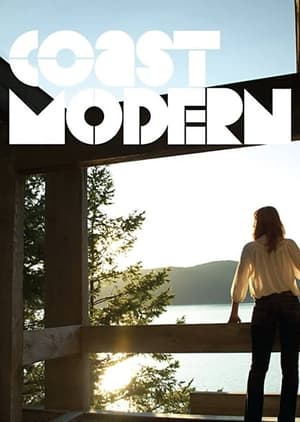
A core group of architects embraced the West Coast from Vancouver to LA with its particular geography and values and left behind a legacy of inspired dwellings. Today, architects celebrate the influence established by their predecessors.
This film is a portrait of unique cultural space for Spirits, Gods and People. While permanent theatres are commonly built in most cosmopolitan modern cities, Hong Kong preserves a unique theatrical architecture, a Chinese tradition that has lasted more than a century - Bamboo Theatre.
In 1959, a government employee named Richard Oyler, living in the tiny desert town of Lone Pine, California, asked world-famous modern architect Richard Neutra to design his modest family home. To Oyler's surprise, Neutra agreed. Thus began an unlikely friendship that led to the design and construction of an iconic mid-century modern masterpiece.
The “Bowlingtreff” is a bowling alley situated right in the centre of Leipzig opened in July 1987. At that time the quality of life in Leipzig and the whole GDR got worse. Houses collapsed because of poor conditions, public life and amusement was on a very low level. The “Bowlingtreff” was not merely an urban entertainment centre but a revolution in those days. Built with the help of hundreds of volunteers without permission of the state authorities in Berlin the building expresses a free and international architecture known as postmodernism. It is an architecture that was never seen before in Leipzig. Marble and parquet on the floor, a glass roof and beautiful pink pillars. The atmosphere was western as time witnesses remember it.
A film about modern Japanese architecture, its roots in the Japanese tradition and its impact on the Nordic building-tradition. Winding its way through visions of the future, traditions, nature, concrete, gardens and high-tech, KOCHUU tells us how contemporary Japanese architects strive to unite the ways of modern man with the old philosophies in astounding constructions. Interviews with, and works by, Japanese architects Tadad Ando, Kisho Kurokawa, Toyo Ito and Kazuo Shinohara and Scandinavian architects Sverre Fehn, Kristian Gullichsen and Juhani Pallasmaa.
The award-winning feature-length documentary about the revolutionary and brilliant Chicago architect Louis Sullivan (1856-1924). Known by historians as the 'father of the skyscraper' and creator of the iconic phrase 'form follows function,' Sullivan was on top of his profession in 1890. Then a series of setbacks plunged him into destitute obscurity from which he never recovered. Yet his persistent belief in the power of his ideas created some of America's most beautiful buildings ever created, and inspired Sullivan's protégé, Frank Lloyd Wright, to fulfill his own dream of a truly American style of architecture.
Make No Little Plans: Daniel Burnham and the American City reveals the fascinating life and complex legacy of architect and city planner Daniel Hudson Burnham. In the midst of the late nineteenth century urban disorder, Burnham offered a powerful vision of what a civilized American city could look like, one that provided a compelling framework for Americans to make sense of the world around them. A timely, intriguing story in the American experience, Make No Little Plans explores Burnham's impact on the development of the American city as debate continues today about what urban planning means in a democratic society.
Pessac, Quartiers Modernes Frugès: The camera goes from living room to living room, from yard to bath, kitchen to balcony, strolls through a typical day at the row houses built by Le Corbusier in the 20s. This film focuses on the question of how the residents have departed from Le Corbusier’s original concept in the intervening decades so that they feel at home within their own four walls.
"Steven Holl: The Body in Space" explores the career of the innovative, highly renowned American architect. In this portrait Holl presents some of his most acclaimed works, including the Makuhari Housing Complex in Chiba, Japan and the Chapel of St. Ignatius in Seattle. Centered around the completion of Holl's Museum of Contemporary Art in Helsinki, the film observes his process and reasoning throughout the duration of the project
Rachel Whiteread’s cast of a Victorian terraced house in London’s East End was hailed as one of the greatest public sculptures by an English artist in the twentieth century. Completed in autumn of 1993 and demolished in January 1994, House attracted tens of thousands of visitors and generated impassioned debate, in the local streets, the national press and in the House of Commons.
Aalto is one of the greatest names in modern architecture and design, Aino and Alvar Aalto gave their signature to iconic Scandic design. The first cinematic portrait of their life love story is an enchanting journey of their creations and influence around the world.
In the 1960s, frustrated by the growing problem of urban pollution, Athelstan Spilhaus, a visionary scientist and futurist comic strip writer, assembled a team of experts to develop a bold experiment: the Minnesota Experimental City (MXC). MXC would be the city of the future, a domed metropolis for 250,000 pioneering residents, built from scratch and using cutting-edge technology to prevent urban sprawl and pollution. Things didn’t quite go as planned, as explored in Chad Friedrichs’ fascinating look back at the would-be city of tomorrow.
A documentary about the concrete sections of the Berlin Wall that have been acquired by institutions or individuals since 1989 and are now scattered across the USA. Cherished or abandoned, they have become silent witnesses to recent history.
Explorations in 21st Century American Architecture Series: Ray Kappe has long been a cult figure in the architectural scene in and around Los Angeles. In 1972, he founded the influential, avant garde Southern California Institute of Architecture (SCI-ARC), where many of the younger-generation architects have studied or taught.
No understanding of the modern movement in architecture is possible without knowledge of its master builder, Mies van der Rohe. Together with documentation of his life, this film shows all his major buildings, as well as rare film footage of Mies explaining his philosophy. Phyllis Lambert relates her choice of Mies as the architect for the Seagram building. Mies's achievements and continuing influence are debated by architects Robert A.M. Stern, Robert Venturi, and Philip Johnson, by former students and by architectural historians. Mies is seen in rare documentary footage.
Egypt's only modernist architect Hassan Fathy (1900-1989) was committed to ecology and sustainability in his architecture. This film takes us with slow steps, in still images, to two villages he created. Fathy's historically grounded, forward-looking designs prompt us to reflect on the past as well as contemplate new solutions for the future.
Documentary about the architecture of the Swedish housing boom in the 1960s and how it's viewed today.
Ferdinand de Lesseps, known as “The Great Frenchman”, will embark in the greatest adventure of his life: To unite the Pacific and Atlantic oceans through a Canal in the Isthmus of Panama – without knowing that this will cost him his reputation, thousands of innocent lives and the biggest financial scandal of all time, up to that point: the famous “Scandal of Panama”. Today, the French capital is known as “Paname”.
The Hopperstad stave church is a marvelous, iconic architectural statement from the fjords of Norway. Replicating the "stavkirke's" spiritual power and beauty became a quest for G.D. "Guy" Paulson of Fargo, ND. His Hopperstad Stave Church Replica is a jewel for the city of Moorhead, MN. Paulson's dream captured the imaginations of the experts, craftsmen, artists, and volunteers who helped him. It is a tribute to those who have gone before and an inspiration to those yet to come.
The architect André Ravéreau spent a large part of his life in Algeria, he is today an essential reference for Algerian builders of several generations. His daughter Maya, an architect herself, accompanies us to the places of his creations and his research, in the Mzab first where he lived, created, trained other architects in the "desert workshop" and had the oases of the Mzab classified as a UNESCO World Heritage Site. Inspired by tradition to better innovate as in the construction of the Ghardaïa post office, or in that of a very surprising villa... Then in Algiers where he worked to preserve the ancestral heritage of the Casbah, faithfully describing the principles of his construction in line with current concerns, such as the choice of environmentally friendly materials and avoiding energy waste, as testified by the architect Yasmine Terki, a great specialist in earth materials.