Allô police
Wednesday afternoon was deliberately chosen. There were a lot of customers in front of and in the brothers Özcan and Hasan Yildirim’s barbershop on 9 June 2004, when 700 three-inch carpenters’ nails turned into projectiles with a 250 metre range. 22 people were injured. The attack was infamous; the course of the investigations was equally scandalous: the victims were suspected. CCTV material was not analysed and Federal Minister of the Interior Otto Schily decisively ruled out a right wing background. It was only in 2001 that this crime was solved in the course of the revelations concerning the right wing extremist terrorist “National Socialist Underground” group. The trial continues until the present day.
The protests of 1968 had a significant impact on the great cities of the world. But people like to forget that the periphery went through the same social upheavals – Central Switzerland, for example. This is hardly surprising: in the founding cantons of the Old Swiss Confederacy, society followed a strict order; tradition, shaped by centuries of Catholic rule, seemed untouchable. But in the 1960s, the local youth could not take these stifling conditions anymore: starting in 1969, resistance broke out across Central Switzerland.
In 1942, more than 8,000 Jews were arrested on 16 and 17 July and sent to the Vélodrome d'Hiver sports center in the 15th district, a stone's throw from the Eiffel Tower, before being deported. The expression "Vel d'Hiv round-up" has become part of our collective memory, to the point of becoming the main memorial reference point for France during the dark years. Based on research carried out in unpublished or rarely explored archives, this film retraces the history of this roundup as experienced by hunted Jews and police trackers, from its planning in the Vichy offices to its hour-by-hour unfolding in the streets of Paris.
No Mercy, No Remorse takes viewers back to the winter of 1993, with a journey into the deeply disturbing world of Paul Charles Denyer, the then 21-year old who is currently serving three life sentences for the Frankston murders.
The amazing story of the animograph, a machine created in France in the sixties by the cartoonist and self-taught inventor Jean Dejoux (1922-2015), whose creation was intended to revolutionize the animation industry.
A BBC News investigation has revealed how violent criminal gangs are finding, abusing and extorting people from the LGBT community they meet online in Egypt. Using masking technology to hide the identities of the people he meets, Ahmed Shihab-Eldin navigates the complex online and real-life world of people who identify as queer and who have been repeatedly targeted by a gang with violent viral video humiliations and police arrests.
My name is Ion. Who could have imagined the fate that awaited me: my birth under the Romanian dictatorship, the loss of my eyesight through an accident, my sudden escape from my homeland to seek a future that was a little too idyllic? One thing is certain: fate is like all the criminals that I listen to today for the Belgian federal police. With a little willpower, there is always a way to dodge its tricks. The person who taught me that is a close and loyal childhood friend. That friend is literature. Without her, I probably would not be what I am now, here, among you.
WHO KILLED CHEA VICHEA? is a highly charged murder mystery, a political thriller, and a documentary like no other. In 2004, Cambodian union president Chea Vichea was assassinated in broad daylight at a newsstand in Phnom Penh. As international pressure mounted, two men were swiftly arrested and convicted of the crime, each sentenced to twenty years in prison. Filmmaker Bradley Cox’s five-year investigation reveals an elaborate cover-up that reaches the highest echelons of Cambodian society. Winner of a 2011 Peabody Award among many other honors and banned by the Cambodian government, WHO KILLED CHEA VICHEA? uncovers the face of dictatorship behind the mask of democracy.
Documentary about the youth riots in Zürich in 1980. Videoladen, Zürich 1980.
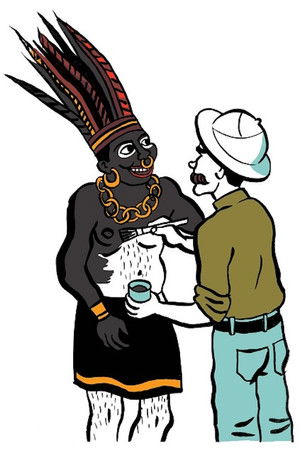
Lao Yang is head of logistics of the group. He is responsible for the equipment, building materials and food (mainly chickens) to arrive in the isolated Chinese prefab camp. The Congolese government was supposed to deliver these things but so far the team hasn't received anything. With Eddy (a Congolese man who speaks Mandarin fluently) as an intermediate, Lao Yang is forced to leave the camp and deal with local Congolese entrepreneurs, because without the construction materials the road works will cease. What follows is an endless, harsh, but absurdly funny roller coaster of negotiations and misunderstandings, as Lao Yang learns about the Congolese way of making deals.
Belgique nazie
25 years after the verdict in the Jamie Bulger murder trial, we reveal what the jury, public and press never heard, and what his two killers, Thompson and Venables, said during their time in custody from arrest to release.
Marie-Thérèse and Christian have turned their town into a ZUT—a Urgent Zones to Transform. They want pesticides gone. Completely. Immediately. And forever. The radical stance of these 'zutists' echoes a growing thirst for change across Belgium. From tiny garden plots to European institutions, from farm to farm, from laboratories to grassroots struggles, ZUT keep popping up—each one revealing just how dependent we’ve become on chemical inputs, and how deeply we long to break free.
Jazz and decolonization are intertwined in a powerful narrative that recounts one of the tensest episodes of the Cold War.
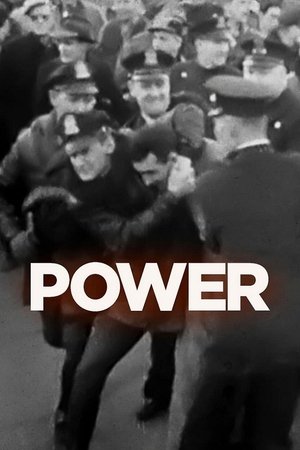
Driven to maintain social order, policing in the United States has exploded in scope and scale over hundreds of years. Now, American policing embodies one word: power.
Biopic filmed in a single shot about the Majorcan musician Juanjo Monserrat.
In October 2015, the evicted residents who had imprisoned on a false charge of killing a policeman assembled in a place for the first time after the Yongsan Disaster six years ago. They had occupied a watchtower against unreasonable redevelopment policies and in protest against violent suppression used by riot police in 25 hours of their sit-in demonstration. Their colleagues had died from an unknown fire, and they became criminals. The delight of meeting again lasts only briefly. The ‘comrades’ rip out cruel words while blaming each other.
The extraordinary untold story of the heroism and sacrifice of the NYPD’s elite rescue squad - the Emergency Service Unit - on 9/11.
Georges Remi, known as Hergé, a complex and complicated artist, created Tintin, one of the most famous characters in the world. With exceptional access to the archives of Studios Hergé and Moulinsart, this documentary looks at Remi's life and the way he changed the art of comic.