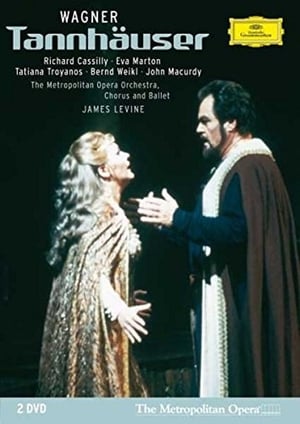
As renowned for its harmonious overture as for its romantic storybook characters, this three-act masterwork features some of the composer’s most groundbreaking and unforgettable music, as well as a theme the young Wagner would revisit again and again later in his career—the redemptive and transcendent power of a woman’s love. The enchanting plot harks back to medieval history: Wolfram is a lovesick troubadour who desires the virtuous Elisabeth. She, however, has eyes for another: the rebellious knight Tannhäuser, who in turn cannot get over an overwhelming sensual experience in the realm of the goddess Venus, and is banished for singing her praises at court. Only saintly Elisabeth’s death can atone for his misdeeds.
A woman ends up stranded at a gas station one night, where the manager and his friends are having a beer. It seems she didn't show up by chance, and a crazy night unfolds.
There's an uncompromising clarity to Blu-ray audio and video that really does bring the splendour of grand opera right into the living room. So it's all the more frustrating to get a compromised production as the final product. Jules Massenet's 1894 tragedy about a sex goddess humbled by an insistent Cenobite monk isn't produced very often, because of a demanding lead role and some difficult staging issues. But the music is gorgeous from beginning to end. When you have a great diva at centre stage, the three acts go by in a flash.
Franco Zeffirelli’s golden production stars the great dramatic soprano Nina Stemme as Turandot, the icy Chinese princess who has renounced all men. Marco Berti is Calàf, the unknown prince who solves Turandot’s riddles and wins her love. Anita Hartig sings Liù, the faithful slave girl who gives her life to save Calàf, and Alexander Tsymbalyuk is Timur. Paolo Carignani conducts.
A biopic of Czech composer Martinu in two parts: the first part is a recurring dream; the second, a Freudian analysis of the dream.
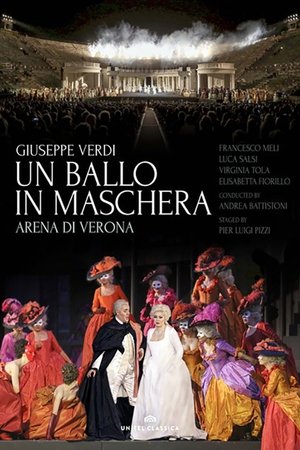
Un Ballo in Maschera (Verdi) - Arena di Verona
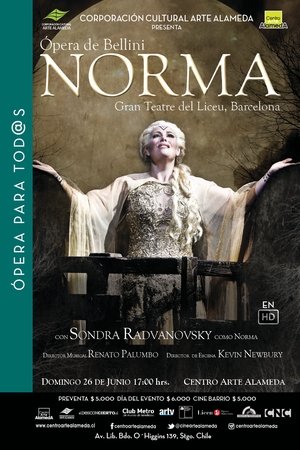
This new production of Norma, directed by Grammy Award-nominated opera, theatre and film director Kevin Newbury (winner of the Irish Times Theatre Award 2010) and starring Sondra Radvanovsky as a "powerful, elegant" Norma (New York Times) and Gregory Kunde as Pollione, is "something very special. The word 'historic' is used perhaps a little too often but tonight there really is no other adjective to describe the sensational performances offered to us by Sondra Radvanovsky and Gregory Kunde."
Amidst the glitz and glamour of her chart-topping career, singer Melanie Buchinger retreats to the peaceful mountains, seeking to rediscover her true self and carve out a new path for her future.
Locals in an Italian village believe evil has taken over the estate of a recently deceased pianist where murder has taken place. The alleged killer: the pianist's severed hand.
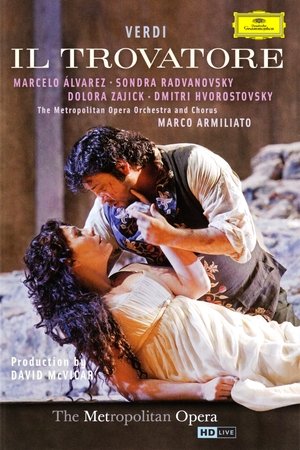
Verdi’s IL TROVATORE again storms the Met stage in a star-studded, anvil-wielding cast , including Sondra Radvanovsky, Dolora Zajick and Dmitri Hvorostovsky. Marcelo Álvarez sings Manrico, the troubadour of the title. The story is well-known already: The gypsy Azucena has harbored a grudge for thirty years, but she is about to have revenge at last. Meanwhile, her son Manrico is in love with Leonora, but so is his arch-enemy, the Count Di Luna. A pot-boiler, where every tune is a hit.
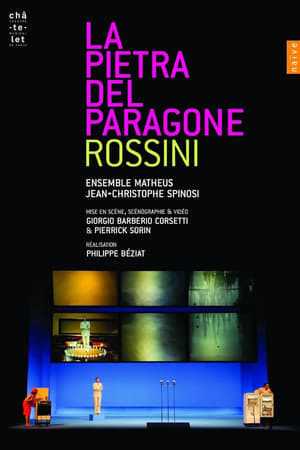
LA PIETRA DEL PARAGONE (The Touchstone) concerns the Count Asdrubale who is wealthy and therefore of great interest to many women – notably Aspasia, Fulvia, and Clarice. Only Clarice, however, loves him for something other than his riches. There are also male hangers-on: the corrupt journalist Macrobio, the poetaster Pacuvio, and Giocondo, who is Asdrubale's true friend, but who has his own eyes on Clarice. To test his friends and would-be fiancées, Asdrubale pretends that he has been bankrupted. Sure enough, only Clarice and Giocondo stand by him, and when his fortune is "miraculously" saved, the three have the last laugh on everyone else... or do they? This production is set in what looks like the early 1960s. But the real innovation is the use of blue screen technology: using tiny cameras and sets, along gigantic screens hanging over the stage, a kind of video mixing makes the singers appear to inhabit any number of fanciful settings and perform a myriad of improbable actions.
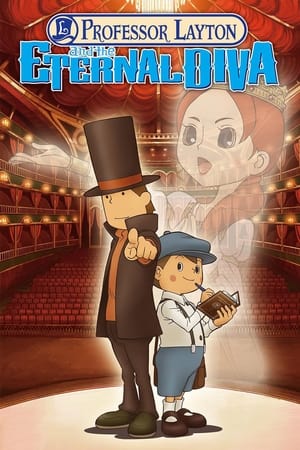
Archeologist and avid puzzle solver Professor Layton and his assistant Luke are caught up in an adventure when a masked figure steals an entire opera house and forces those in attendance to play a high-stakes game. The winner will receive eternal life, but it could mean death for the losers.
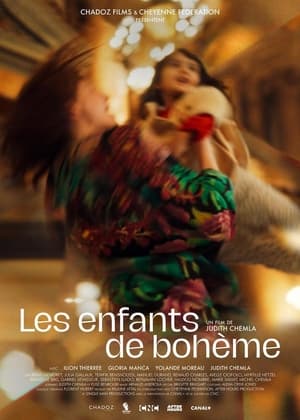
Idi and Rita live with their grandmother, Manie. Idi tries to keep the memories they have of their mother, by drawing on his school notebook. By the force of their desire, the children keep the link they have to their funny mother, despite the separation.
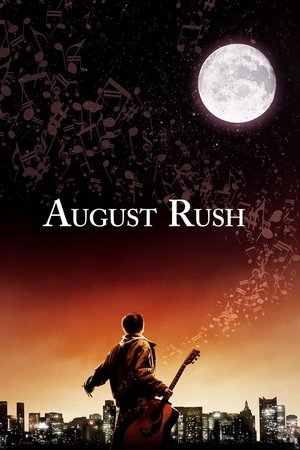
Evan, a musically gifted orphan, runs away from his orphanage and searches New York City for his birth parents. On his journey, he's taken under the wing of the Wizard, a homeless man who lives in an abandoned theater. After discovering his talent, the Wizard gives Evan the name "August Rush" and devises a plan to profit from his talent. Little does Evan know that his parents, Lyla and Louis, are searching for him too.
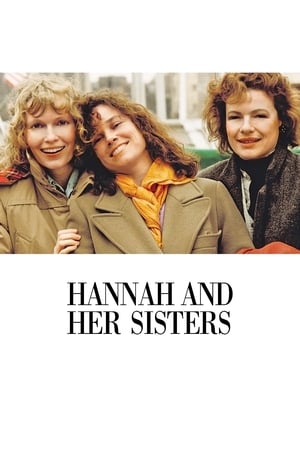
Between two Thanksgivings, Hannah's husband falls in love with her sister Lee, while her hypochondriac ex-husband rekindles his relationship with her sister Holly.
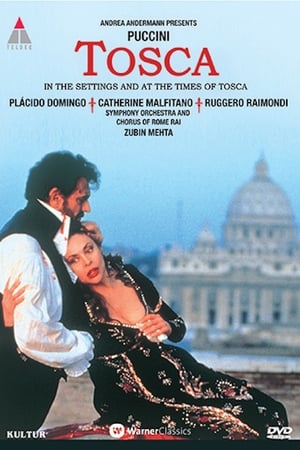
This live version of Puccini s superbly dramatic opera was recorded in Rome in the exact locations and at the precise times of day as Puccini had written into his score. The action opens in Rome's beautiful 16th-century church of Sant Andrea della Valle, where Cavaradossi (Plácido Domingo) is innocently painting, moves to the Farnese Palace where Tosca (Catherine Malfitano) dramatically stabs the lustful Scarpia (Ruggero Raimondi), and finally to the battlements of the Castle Sant Angelo at dawn the following day where Cavaradossi is cruelly killed, and Tosca takes her own life.
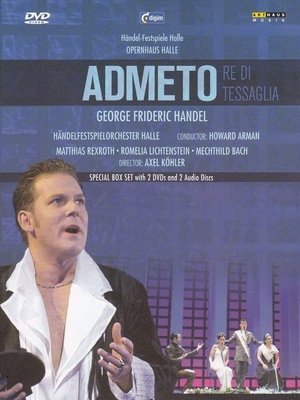
Axel Kohler, the internationally renowned countertenor has brought Admeto into the modern era in timeless style by the skillful application of imaginative theatrical digressions. Köhler's production at the Halle Opernhaus revisits a work that encompasses comedy, tragedy and almost absurd grotesqueness, couching it in the convincing metaphor of a modern hospital.
Ten strangers are invited as weekend guests to a remote mountain mansion. When the host doesn't show up, the guests start dying, one by one.
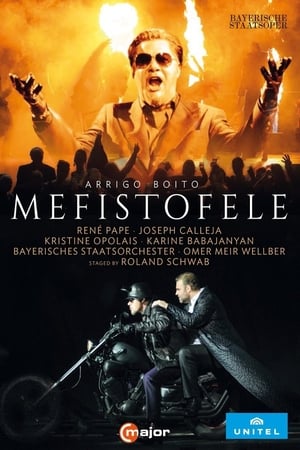
The director, Roland Schwab, has created his version of Hell. The set is like a high iron walled hanger and the stage is continually occupied with people who look like fugitives from Mad Max and who interact with Mefistofele. The orchestra and choir are wonderful. Rene Pape gives a nuanced interpretation with a certain amount of sardonic humour under the evil. His singing and acting are first rate, as is that of Kristine Opolais and Joseph Calleja.
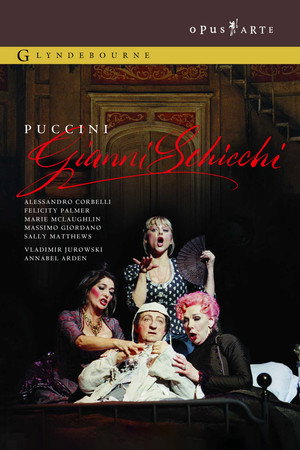
In the mid-20th century, in Fucecchio, near Florence, Buoso Donati, an elderly collector and wealthy antique dealer, has just passed away. He lies in his bed, surrounded by relatives feigning grief. They are all worried, as the deceased has bequeathed his entire fortune to a monastery. They search frantically for the will. The young Riniccio, Donati’s nephew, finds it but agrees to show it to the family only if they promise to let him marry Lauretta, the daughter of Gianni Schicchi, a local figure of dubious reputation. Everyone accepts the condition and discovers to their horror that the rumour was true: the monks are set to inherit the fortune. Riniccio suggests calling on Schicchi for help, much to the family’s disgust. Summoned, Riniccio arrives at the house accompanied by his daughter. He proposes keeping the death a secret, taking his place, and instructing a doctor and a notary to alter ‘his’ testamentary dispositions. But has the hunter become the hunted? Not so sure...