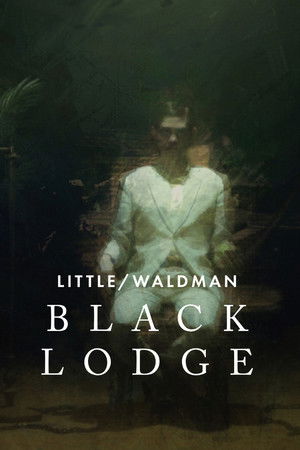
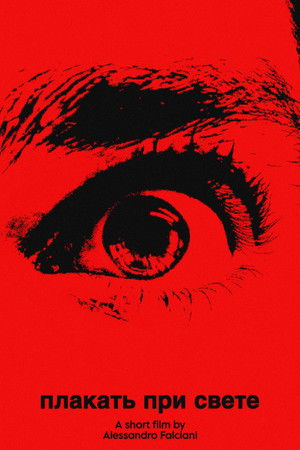
A distressed young woman, possibly on the run is surrounded by nothing but barren landscapes of forests and fields. As she progresses to an indiscernible denouement, the film contorts shape into a circular series of pulsating images that touches on the horror and the metaphysical.
"What hast thou done? Listen, the voice of thy brother's blood crieth unto Me from the ground." Two farmers love the same woman, who can choose only one of them. The rejected suitor takes revenge, and causes the fatal accident of his rival.
Satan
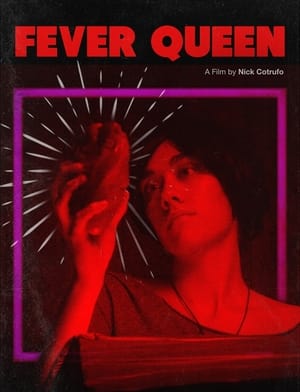
On an isolated farm, a woman finds an injured and frightened woman in her old chicken coop. Moved by an inexplicable instinct, she decides to help her, without imagining that this silent encounter will awaken buried secrets. When tension finally gives way to trust, something dark approaches, bringing a truth that no one could have foreseen.
A prophet who longed to look upon his deities. A daunting journey to a mountain peak. A confrontation with gods too powerful to name. This is the story that inspired Peter Rhodes, who worked as a filmmaker and artist during the 1920s. Few people know of his work, and it's only through luck and perseverance that we have been able to track down the elements for this "lost" film. Rhodes' films were created using silhouette animation, a technique perfectly suited to depict Lovecraft's mythic Dreamland stories. The filmmaker's involvement in New York City's occult and literary scenes provided him with a select audience for his work. Rhodes was especially influenced through his relationships with occultist Aleister Crowley and writer H.P. Lovecraft, but it was personal tragedy that moved him to produce "The Other Gods: A Tale of the Dream Cycle," his most powerful film.
As a practical joke, an actor impersonates the screen monster he made famous. A lost film.
When Demonetization (currency ban) is announced in India, 3 unlikely characters come face to face for a bag of cash. After that a car journey begins and some more characters come into picture. This results in a cat and mouse game with a very unexpected outcome.
One of the two earliest horror films ever made. This film is presumed lost.
One of the two earliest horror films ever made. This film is presumed lost. In this black comedy scene, the bottom falls out of a coffin, the corpse tumble out, and is jolted back to life. Short sequences like this, as well as street scenes and dancing geisha girls were the main subjects of early Nippon cinema, pioneered by Shiro Asano and Shibata Tsunekichi from 1897 onwards. In creating dramatic, scenes, film-makers naturally chose the most striking or bizarre. Another undocumented film, recalled by cameraman Shiro Asano.
In this single character-driven movie, we follow the life of meta, an archaeologist. In her excavation she comes across an old ruin and unknowingly falls trap to a curse. This curse later leads her head to get stuck in a mystical pot. It is the nature’s payback to her unknown karmic cycle.
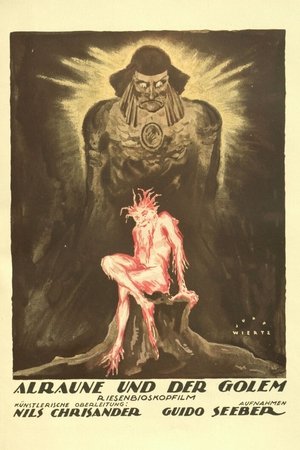
This mostly lost film is often confused with director Paul Wegener third and readily available interpretation of the legend; Der Golem, wie er in die Welt kam (1920). In this version of the golem legend, the golem, a clay statue brought to life by Rabbi Loew in 16th century Prague to save the Jews from the ongoing brutal persecution by the city's rulers, is found in the rubble of an old synagogue in the 20th century. Brought to life by an antique dealer, the golem is used as a menial servant. Eventually falling in love with the dealer's wife, it goes on a murderous rampage when its love for her goes unanswered.
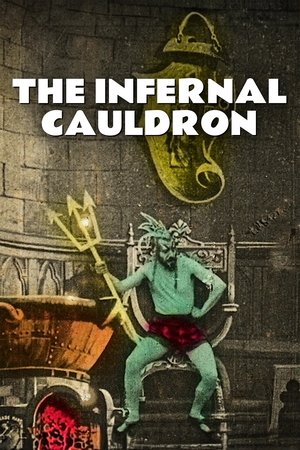
God and Satan wager on the soul of a learned and prayerful alchemist as part of their eternal war over Earth.
When actress Nikki Grace gets the lead role in a cursed film, her world becomes more and more surreal, blending realities and ideas of infidelity, reincarnation, and supernatural forces.
Yotsuya Kaidan
Iemon
The story of Charles Peace, one of Britain's most notorious criminals. Peace was an expert in cat burglary. The film reconstructs Peace's real-life leap from a train on his way to trial for the murder of Arthur Dyson.
This is a story about a man who believes that he has two “selves” - external and internal. That is, an organism is a certain conglomerate of cells, each of which is a separate individual. This hybrid creature has a certain common personal “I” that uses the entire organism, and is the organism itself, which has its own will. According to the character, one can communicate with him, which is what he is trying to do. He wants to reach him and comes up with different ways of communication: injecting substances under the skin or intravenously, tattooing texts on the body, swallowing objects. The answer would come in the form of a rash or other physical manifestation that had to be interpreted. As a result, communication is carried out and the second “I” agrees to die.
Jack Pepper accidentally fires his gun while forcing a newspaper editor to retract his statement regarding Miss Tulip Hellier, and the sheriff goes after Jack. While hiding out, Jack finds a liquor cache on the Hellier ranch and knows it was placed there as a ruse to distract the sheriff while an outlaw gang runs dope across the border.
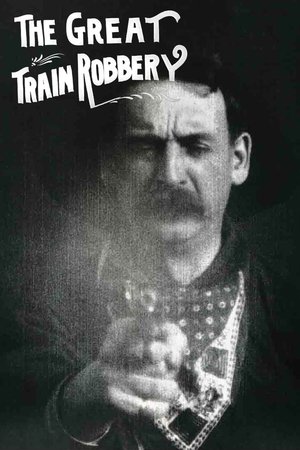
After the train station clerk is assaulted and left bound and gagged, then the departing train and its passengers robbed, a posse goes in hot pursuit of the fleeing bandits.
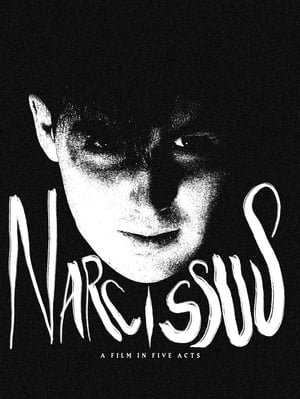
A silent film following a man on the verge of the nervous breakdown as he is pursued by an ominous stalker.