A collage of images and voices of women poets that succeeds brilliantly, both as a tribute to the women whose words are borrowed and as an original videopoem.
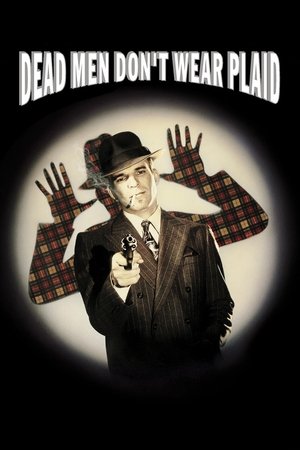
George Abitbol, the classiest man in the world, dies tragically during a cruise. The director of an American newspaper, wondering about the meaning of these intriguing final words, asks his three best investigators, Dave, Peter and Steven, to solve the mystery. (Sixteen French actors dub scenes from various Warner Bros. films to create a parody of Citizen Kane, 1941.)
For the multimedia exhibition Tangenten I (Tangents I), Dammbeck and co-organizer, sculptor and painter Frieder Heinze had planned to collaborate on a film that would combine non-camera animation with 35mm footage of a train ride between the two Dresden districts of Radebeul and Pieschen. When the exhibition was banned in 1978, Heinze turned to other projects, but Dammbeck continued working on the film by himself. Metamorphoses I—the first experimental film ever to be shown publicly in East Germany—marks the filmic beginning of Dammbeck’s long-term art project the Herakles-Konzept (Hercules Concept).
Considerations on collage as a cognitive act in artists’ cinema. A pedagogical film adrift: 35mm photographs and other materials collected over the last fifteen years by artist Stefano Miraglia meet a text written by Baptiste Jopeck and the voice of Margaux Guillemard.
Bits of found film and different types of animation illustrate a classic chase scene scenario: A woman is abducted and a man comes to her rescue, but during their escape they find themselves in the enemy's secret headquarters.
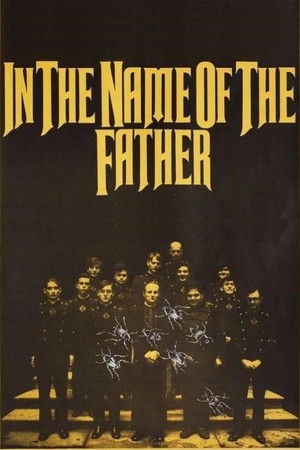
In 1958 Angelo, a rich and spoiled boy, enters a religious school, where students are tired of its vice-rector, and the strict rules and old-fashioned teaching methods of priests. Soon, Angelo exerts strong leadership among his peers and incites turmoil among them, helped by intellectual Franco and shy Camma. They expel the prefect from the school, organize a Grand Guignol show, and disappear the corpse of an old professor.
Clips from assorted television programs, B-movies, commercials, music performances, newsreels, bloopers, satirical short films and promotional and government films of the 1950s and 1960s are intercut together to tell a single story of various creatures and societal ills attacking American cities.
Arthur Lipsett's first film is an avant-garde blend of photography and sound. It looks behind the business-as-usual face we put on life and shows anxieties we want to forget. It is made of dozens of pictures that seem familiar, with fragments of speech heard in passing and, between times, a voice saying, "Very nice, very nice." The film was nominated for an Oscar for Best Live Action Short Film.
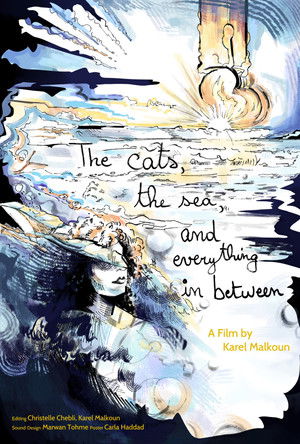
In 2022, when the economic crisis in her native country was at its peak, she decided to visit her family there. She turned her short trip into a collage-like diary in which she reflects on her relationship with her homeland, which is in a state of protracted decay. The film is composed of spontaneous snapshots capturing the author's stay, interspersed with inserted captions serving as personal, often poetically formulated comments and observations. As a result, the film does not hide its strongly subjective perspective, but at the same time builds on it to make an important statement that shows the transformation of Lebanese society in everyday details such as the appearance of the city itself or in the intimate sphere of the author's family life.
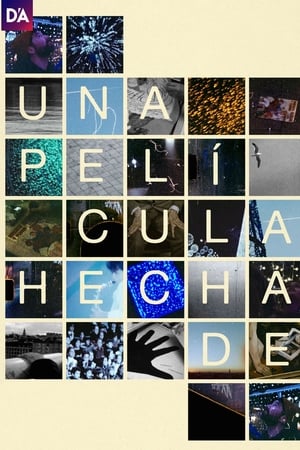
An audiovisual investigation into the way Spanish cinema has represented its audience throughout history, and a tribute to those who, for over a hundred years, have inhabited the theaters, mutually nurturing their deepest dreams and aspirations.
How do German couples communicate in private? What are they arguing about? Is the way to a man’s heart really through his stomach? This docu-fictional hybrid production discusses such questions with the help of authentic interview snippets that were edited under the staged plot. We get an insight into the life of an animal couple, who experience typical everyday situations on behalf of us humans. At first, our fox is emotionally contained, while the penguin lady may get wild as hell. With a wink, the filmmakers hold up a mirror to the audience in the cinema.
The first "filmed portrait" of Pasolini was created by French television in July 1966 as part of the prestigious series Cinéastes de notre temps, directed by Janine Bazin and André S. Labarthe. Interviewed on the streets of the Roman suburbs and in his studio, Pasolini analyzes his dramatic relationship with Italian society and retraces the trajectory of his works up to Hawks and Sparrows.
Cornell employs clips from 1931's jungle melodrama East of Borneo – more specifically, clips of its lead actress, Rose Hobart – to disquieting effect. Through Cornell's collage editing, Hobart becomes a singular object of desire and dread, trapped in an exotic paradise.
A cinematic time capsule with over 1,400 hours of submitted material from all regions of Switzerland gives unknown insights about the life of Swiss people in the politically and socially turbulent summer of 2019.
An experimental, mixed-media retelling of the Biblical story of Adam and Eve. Of course, when a story this old is told countless times throughout the centuries, a few important details are bound to get lost in translation...
In 1968, art students Storm Thorgerson and Aubrey “Po” Powell made a trippy photo collage for their musician friends Syd, David and Roger. The resulting album and album cover, A Saucerful of Secrets, helped launch two careers: that of Pink Floyd, one of the 70s megabands, and of Hipgnosis, which, over the course of the next 25 years, designed a stream of iconic album covers.
A year in the life of Elsa Michaud and Gabriel Gauthier, students of Fine Arts in Paris, lovers in troubled times, overwhelmed by maddening verbal and auditory stimuli, witnesses of a globalized violence more visible than ever in a chaotic digital era, in which the slow execution of simple gestures in a silent performance is an act of resistance.
Since its publication 200 years ago, Mary Shelley’s Frankenstein has influenced vast swathes of popular culture. Adaptations have starred cinema legends from Boris Karloff to Robert De Niro – and even Alvin and the Chipmunks. From tales of science gone mad (Jurassic Park) to stories of understanding the other (ET, The Hulk, Arrival), traces of the story and its themes have spread across our media. With Frankenstein Re-membered, video artist and film historian Chris Gerrard collects these diverse fragments from the birth of cinema until the present day and in the tradition of Victor Frankenstein himself, attempts to stitch them back together into an adaptation of the original Shelley novel.
Humankind has always dreamt of the night sky. Of the infinite freedom offered by the black void, and of the strong, shining beacon inviting us to ascend. This is a story, a history of the events that led up to our conquest of space, and the consequences throughout wider humanity. The film is a collage. Of genres, documentary and comedy. Of media, drawing from painting and film. Of films, cannibalising all film history. Of truth, both objective and subjective. Watch the small steps and let your mind take a giant leap.
Inspired in part by a dream he had of murdering his mother, Brakhage here gives us one of his profoundest meditations on human aggression.