Young William Shakespeare is forced to stage his latest comedy, 'Romeo and Ethel, the Pirate's Daughter', before it's even written. When lovely noblewoman Viola de Lesseps auditions for a role, they fall into forbidden love — and Shakespeare's play finds a new life (and title). As their relationship intensifies, the comedy soon transforms into tragedy.
A group of teenagers living in a housing project in the outskirts of Paris rehearse a scene from Marivaux's play of the same name. Krimo is determined not to take part, but after developing feelings for Lydia, he quickly assumes the main role and love interest in the play.
In occupied Paris, an actress wed to a Jewish theater owner must keep him hidden from the Nazis while doing both of their jobs.
The story behind the translation and performance of Shakespeare's "Hamlet" in Klingon.
The dramatic story of famous theater star Gertrude Matthews at Prague's Ungelt Theater.
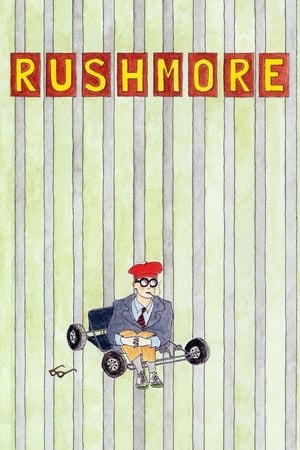
A boy who was once a perpetual outcast finds friends in a new boarding school. United with his new peers, he gets involved in a heated rivalry with a group of students from a neighboring school.
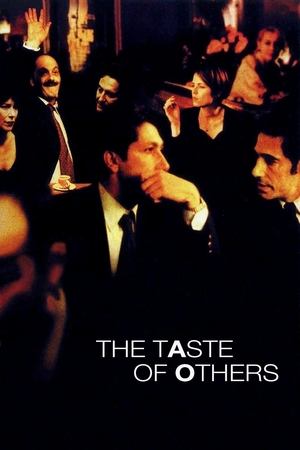
Unpolished and ultra-pragmatic industrialist Jean-Jacques Castella reluctantly attends Racine's tragedy "Berenice" in order to see his niece play a bit part. He is taken with the play's strangely familiar-looking leading lady Clara Devaux. During the course of the show, Castella soon remembers that he once hired and then promptly fired the actress as an English language tutor. He immediately goes out and signs up for language lessons. Thinking that he is nothing but an ill-tempered philistine with bad taste, Clara rejects him until Castella charms her off her feet.
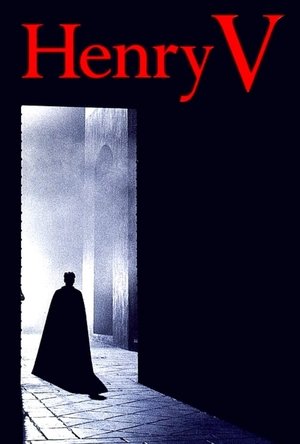
In 1415, in the midst of the Hundred Years' War, the young King Henry V of England embarks on the conquest of France.
Le Jeu de la vérité 2
Each is dependent on the other. He breaks into the passport office to get a passport. He is surprised and ends up back in prison, where he is trained in military drill. After his release, he once again lodges with relatives, his sister and brother-in-law. Wearing a second-hand captain's uniform, he first takes over a guard unit and uses it to occupy Köpenick town hall, where all the employees of the town council submit to the supposed captain. The mayor is promoted to Berlin and Voigt presents himself to the authorities a few days later. At first, everyone present laughs at the prank, but then Voigt is made aware of the legal consequences. He is sent back to prison, but shortly afterwards he is pardoned by the Emperor.
Orgon and his mother swear by Tartuffe, the self-styled devout who lives off them. The other members of the family, scandalized by the clergyman's hold over them, will do anything to expose his hypocrisy. Michel Bouquet plays an almost monstrous Tartuffe, whose only weakness lies in his feelings for Elmire.
After being dumped by her live-in boyfriend, an unemployed dancer and her 10-year-old daughter are reluctantly forced to live with a struggling off-Broadway actor.
The story of Oedipus' gradual discovery of his primal crime, killing his father and marrying his mother, filmed by the famed British theatrical director Sir Tyrone Guthrie. This elegant version of Sophocles' play adds a brilliant stroke: the actors wear masks just as the Greeks did in the playwright's day.
Siegfeld Institute of Music Junior High. An educational institution established for the purpose of training Rohedelstein, the future candidates for the roles of Edels. Two transfer students from Germany are due to enrol in the Junior High. One is Stella Takachiho, whose heritage is descended from Siegfeld's own prestigious family. The other is Shiro Ogami, Stella's exclusive maid. With the pair's transfer comes a drastic change in the fates of fellow Junior High students Ryoko Kobato, Minku Umibe, and Kuina Moriyasu. Liu Mei Fan works hard to meet the expectations of Akira Yukishiro and Michiru Otori, who are searching for a stage girl to carry Siegfeld on their backs. The ones who must entrust it, and the ones who must be entrusted with it—the symbol of the noble king, "Regalia", will end up...
Rock opera on the rise and fall of Estonian prog rock band "Ruja"
The National Theatre's live theatrical production of Tony Kushner's two-part play 'Angels In America' about New Yorkers grappling with the AIDS crisis during the mid-1980s.
America in the mid-1980s. In the midst of the AIDS crisis and a conservative Reagan administration, New Yorkers grapple with life and death, love and sex, heaven and hell. This new staging of Tony Kushner's multi-award winning two-part play, Angels In America: A Gay Fantasia On National Themes, is directed by Olivier and Tony award winning director Marianne Elliott.
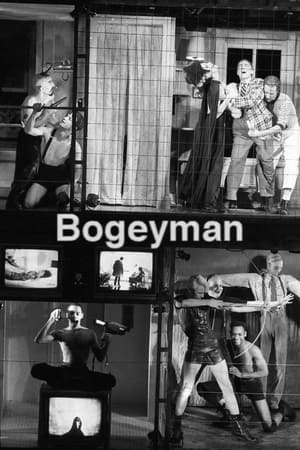
A television recording of a theatrical production of Alfred Jarry's absurd drama about the gluttonous, gluttonous, compulsive and unscrupulous Father Ubo, who, with the generous advice of his ambitious wife, gets rid of the Polish king and seizes his throne. He establishes a reign of terror in which he only cares about his own benefit, so it is not surprising that the people rebel against him. The recording was made at the end of July 1968 and, thanks to a copy saved from destruction during the normalization period, was first published in 1990.
Marcelline is an actress. Forty, single and childless, she begins rehearsals for Turgenev’s A Month in the Country. Denis, the director, admires her greatly and promises he’ll make her happy on stage — she will shine. But things don’t go to plan.
Weller Martin and Fonsia Dorsey, two elderly residents at a nursing home for senior citizens, strike up an acquaintance. Neither seems to have any other friends, and they start to enjoy each other's company. Weller offers to teach Fonsia how to play gin rummy, and they begin playing a series of games that Fonsia always wins. Weller's inability to win a single hand becomes increasingly frustrating to him, while Fonsia becomes increasingly confident. While playing their games of gin, they engage in lengthy conversations about their families and their lives in the outside world. Gradually, each conversation becomes a battle, much like the ongoing gin games, as each player tries to expose the other's weaknesses, to belittle the other's life, and to humiliate the other thoroughly.