A 1965 BBC adaptation of William Shakespeare's first historical tetralogy (1 Henry VI, 2 Henry VI, 3 Henry VI and Richard III), which deals with the conflict between the House of Lancaster and the House of York over the throne of England, a conflict known as the Wars of the Roses. It was based on the 1963 theatre adaptation by John Barton, and directed by Peter Hall for the Royal Shakespeare Company.
The film starts with the veteran thespian Harish Mishra, he is gravely ill. The punishments of a film shoot have left the old man in a coma. His co-star, Shabnam, is wracked with worry, but their director, Siddharth, keeps strangely distant and refuses to visit his ailing star. In flashbacks, their story emerges.
In the Yorkshire countryside, working-class tomboy Mona meets the exotic, pampered Tamsin. To seal their friendship, Mona introduces Tamsin to her born-again Christian brother and helps her spy on her adulterous father. Bound together by their secrets, the two girls see their friendship deepen and enter into dangerous waters.
In 1415, in the midst of the Hundred Years' War, the young King Henry V of England embarks on the conquest of France.
Henry VIII of England discards his wife, Katharine of Aragon, who has failed to produce a male heir, in favor of the young and beautiful Anne Boleyn.
Today, few people's clothes attract as much attention as the royal family, but this is not a modern-day paparazzi-inspired obsession. Historian Dr. Lucy Worsley, Chief Curator at Historic Royal Palaces, reveals that it has always been this way. Exploring the royal wardrobes of our kings and queens over the last four hundred years, Lucy shows this isn't just a public fascination, but an important and powerful message from the monarchs. From Elizabeth I to the present Queen Elizabeth II, Lucy explains how the royal wardrobe's significance goes far beyond the cut and color of the clothing. Royal fashion is, and has always been, regarded as a very personal statement to reflect their power over the reign. Most kings and queens have carefully choreographed every aspect of their wardrobe; for those who have not, there have sometimes been calamitous consequences. As much today as in the past, royal fashion is as much about politics as it is about elegant attire.
Liverpool. 1947. Right after World War II, a star struck naive teenage girl joins a shabby theatre troupe in Liverpool. During a winter production of Peter Pan, the play quickly turns into a dark metaphor for youth as she becomes drawn into a web of sexual politics and intrigue and learns about the grown-up world of the theater.
Lucy Worsley gets into bed with our past monarchs to uncover the Tales from the Royal Bedchamber. She reveals that our obsession with royal bedrooms, births and succession is nothing new. In fact, the rise and fall of their magnificent beds reflects the changing fortunes of the monarchy itself.
The film is a historical drama set during the reign of Elizabeth I (Flora Robson), focusing on the English defeat of the Spanish Armada, whence the title. In 1588, relations between Spain and England are at the breaking point. With the support of Queen Elizabeth I, British sea raiders such as Sir Francis Drake regularly capture Spanish merchantmen bringing gold from the New World.
After his lover rejects him, Maurice attempts to come to terms with his sexuality within the restrictiveness of Edwardian society.
Carlin is a new reform school inmate with a reputation as a hard case. The authorities encourage gang leader Pongo to humble Carlin, but Carlin overtakes Pongo as Daddy of the ward. The guards institute a reign of terror and neglect, with Carlin emerging as an unlikely leader.
When a series of murders hit the remote English countryside, a detective suspects a pair of travelers when it is actually the work of the undead, jarred back to life by an experimental ultra-sonic radiation machine used by the Ministry of Agriculture to kill insects.
In 14th Century England, this tale of murder and mystery follows a fugitive priest who falls in with a troupe of actors. As they arrive in a small town, the actors encounter a woman being sentenced to death for practicing witchcraft and murder. Discarding the expected bible stories, the actors now stage a performance based on the crime. Through the performance of the play, they discover a mystery.
Following the suicide of her mother, an emotionally disoriented schoolgirl is swept away to live in the countryside by wealthy family friends. Her entangled need for comfort and desire to explore her powers of sexual fascination soon embroils the entire household.
Don Warrington stars as the tragic monarch in this acclaimed version of the Shakespeare play recorded at the Royal Exchange Theatre in Manchester.
Henry IV usurps the English throne, sets in motion the factious War of the Roses and now faces a rebellion led by Northumberland scion Hotspur. Henry's heir, Prince Hal, is a ne'er-do-well carouser who drinks and causes mischief with his low-class friends, especially his rotund father figure, John Falstaff. To redeem his title, Hal may have to choose between allegiance to his real father and loyalty to his friend.
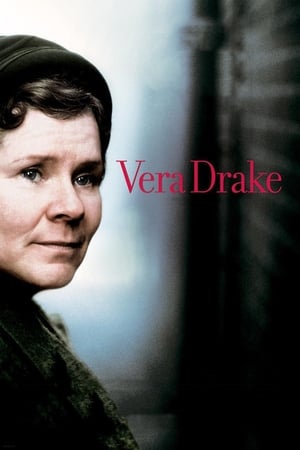
Abortionist Vera Drake finds her beliefs and practices clash with the mores of 1950s Britain – a conflict that leads to tragedy for her family.
Lee Remick stars as Jennie Jerome, born in the United States in 1845, who eventually became Lady Randolph Churchill, and gave birth to Sir Winston Churchill in this seven-part, seven-hour biographical mini-series.
When the Nazi high command learns in late 1943 that Winston Churchill will be spending time at a country estate in Norfolk, it hatches an audacious scheme to kidnap the prime minister and spirit him to Germany for enforced negotiations with Hitler.
When Lucy Honeychurch and chaperon Charlotte Bartlett find themselves in Florence with rooms without views, fellow guests Mr Emerson and son George step in to remedy the situation. Meeting the Emersons could change Lucy's life forever but, once back in England, how will her experiences in Tuscany affect her marriage plans?