Gripping, hi-octane adventure as intrepid underwater explorer Jacquie Cozens and experienced filmmaker Mike deGruy attempt to uncover the truth behind the legendary Red Demon: an enormous flesh-eating squid. This film was first broadcast: 12 Sep 2004
A unique story on the discovery of a 40-thousand-year-old, perfectly preserved baby woolly mammoth. Cutting edge science and Arctic adventure come alive in this story of a unique discovery: a perfectly preserved baby woolly mammoth that suddenly appears on a Siberian riverbank, triggering an extraordinary investigation into her life and death at the end of the Ice Age. Solving the mystery of her origins unites men whose lives are worlds apart except for their link to the woolly mammoth.
A journey into the lives of a mother polar bear and her two seven-month-old cubs as they navigate the changing Arctic wilderness they call home.
Veteran naturalist Sir David Attenborough tells the story of a remarkable group of gorillas, from his first encounter in the '70s to the present day.
The story of one remarkable woman who became a global icon in animal welfare and conservation who not only hoped for a better world, she achieved it! This sweeping documentary celebrates the vast legacy of Dr. Goodall’s four decades of advocacy work for chimpanzees and depicts the next chapter for generations to come.
In northern Zimbabwe, Lynne and Phil Richardson's National Geographic film crew follows a pride of lions for four years. During the dry season, lions and scientists set up camp at one of the Zambezi Valley's rare waterholes. Elephants, hyenas and buffalo also come there to quench their thirst. The fight for survival begins: hunting and being hunted is the eternal law of Africa's wildlife. The lions have now become accustomed to the human observers, who are able to take spectacular pictures from close proximity. The couple films the pack at night with an infrared camera, and a cub that is only a few hours old observes them with a hidden camera. They capture images that have never been seen before.
Feature-length documentary following award-winning wildlife cameraman Vianet Djenguet as he documents a gruelling but vital mission to ‘habituate’ a notoriously protective 450lb silverback, in a last-ditch effort to save the critically endangered eastern lowland gorillas from extinction.
Journey to a secret valley in Australia, where a nervous baby kangaroo named Mala faces hungry dingoes and winter snows in this coming-of-age adventure.
After a life spent travelling the globe, the world’s most famous naturalist turns his attention closer to home to explore the wildlife of England’s iconic capital. Having lived in London for 75 years, Sir David has an intimate knowledge of the city’s natural history, and there's no better guide to introduce us to its most spectacular wildlife secrets. Captured over his centennial year, this personal and poignant film is a timely insight into how cities can become homes for wildlife as well as ourselves.
The story of a family of meerkats living in the Kalahari Desert in South Africa.
70 years after the last wolves roamed the national park, a total of 41 wolves were reintroduced between 1995 and 1997. A globally unique experiment that had many supporters, but also resolute opponents, then as now.
Documentary about the work of Claude Lorius, who began studying Antarctic ice in 1957, and, in 1965, was the first scientist to be concerned about global warming.
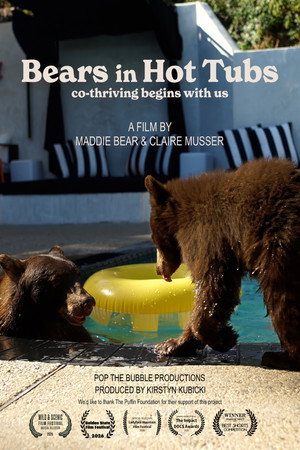
As wild bears adapt to suburban life, they show us we're not so different. Co-thriving begins with us.
The forest is like an organism, ancient and full of mechanisms. Its plants need water and are temperature-dependent. Nevertheless, it survives in a wide variety of locations around the world. How does it manage to adapt to even the most adverse conditions?
They have no roots, no seeds, no flowers, but mosses show immense survival capacities and can suspend their biological activity for long periods. Today, researchers are exploring the exceptional resistance of these archaic organisms. British ecologists have even resurrected a "zombie" moss that has been trapped in the permafrost for 1,500 years. Associated with decay and disliked in Europe, mosses are deified in Japan. With 25,000 species worldwide, bryophytes - their scientific name - are the seat of real ecosystems, and can develop in inhospitable landscapes, through an extravagant reproduction cycle.
In Canada and Alaska, the consequences of global warming are being keenly felt by brown bears - but in different ways by different populations. Their survival depends mainly on the quantity of wild salmon available in the region, as it is the fruit of their catch that enables the bears to accumulate fat reserves for the winter. While salmon populations off Canada's Pacific coast continue to decline year after year, in the immense Bristol Bay in western Alaska, as well as on Kodiak Island, they are increasing considerably. The water temperature in the North Pacific is now ideal for salmon development. From Canada to Alaska, the documentary follows different bear populations over a two-year period.
Captain Kleinschmidt leads an expedition sponsored by the Carnegie Museum to the arctic regions of Alaska and Siberia to study the natives and the animal life.
A baby pufferfish travels through a wondrous microworld full of fantastical creatures as he searches for a home on the Great Barrier Reef.
An experience of a camera swinging in different gestures facing the optical distortion of the Sun. The last appearance of the smudge.
Journey alongside a young tigress raising her cubs in the fabled forests of India.