In the summer of 1953, Margaret Johnson, the wife of an American businessman, is touring Italy with her daughter, Clara. While sightseeing, Clara—a beautiful, surprisingly childish young woman—loses her hat in a sudden gust. As if guided by an unseen hand, the hat lands at the feet of Fabrizio Naccarelli, a handsome Florentine, who returns it to Clara. This brief episode, charged with coincidence and fate, sparks an immediate and intense romance between Clara and Fabrizio. Margaret, extremely protective of her daughter, attempts to keep Clara and Fabrizio apart.
The Will Rogers Follies is a musical with a book by Peter Stone, lyrics by Betty Comden and Adolph Green, and music by Cy Coleman. It focuses on the life and career of famed humorist and performer Will Rogers, using as a backdrop the Ziegfeld Follies, which he often headlined, and describes every episode in his life in the form of a big production number. The Rogers character also performs rope tricks in between scenes. The revue contains snippets of Rogers' famous homespun style of wisdom and common sense and tries to convey the personality of this quintessentially American figure whose most famous quote was "I never met a man I didn't like."
Two friends have their hangout disrupted when a mysterious postal service worker knocks on their door.
Sannasi, a folk musician, convinces Sooravali, his lover and a female dancer in his troupe, to marry Karuppaiah, a seemingly docile man. Little do they realise the sinister intentions of Karuppaiah, but when they do it is too late.
Officers Ferrando and Guglielmo are certain that their lovers Dorabella and Fiordiligi are faithful to them, but the cynical Don Alfonso challenges them to a bet that the women will be unfaithful given the chance. The officers thus pretend to go off to war, and return in disguise as Albanian strangers, to woo Dorabella and Fiordiligi incognito. The ladies are initially frosty, but soon warm to their new suitors, spurred on by their maid Despina. Performed at the La Scala Theatre in Milan.
The new season of "American Dreamz," the wildly popular television singing contest, has captured the country's attention, as the competition looks to be between a young Midwestern gal and a showtunes-loving young man from Orange County. Recently awakened President Staton even wants in on the craze, as he signs up for the potential explosive season finale.
Ted Gregory is trying to be the first black producer to mount a show on Broadway, but he has trouble with his star singer.
This telecast offers a rare opportunity to see the legendary Joan Sutherland in the role that first catapulted her to international stardom. She drove audiences wild by the way her opulent voice caressed the music’s long phrases and sprinted effortlessly through the fiendish runs, trills, embellishments and stratospheric high notes. One of the glories of the operatic world, her portrayal of Donizetti’s hapless heroine is a multifaceted and moving characterization. The incomparable tenor Alfredo Kraus is Edgardo, the man Lucia loves but cannot have. (Performance taped November 13, 1982. Broadcasted September 28, 1983.)
The young Café finds the phone of Lina, a German student visiting Brazil during the 2014 World Cup, and they decide to meet so he can return it to her. After a small ride, as a thank you note, she invites him to watch the soccer match with her.
The retelling of June 6, 1944, from the perspectives of the Germans, US, British, Canadians, and the Free French. Marshall Erwin Rommel, touring the defenses being established as part of the Reich's Atlantic Wall, notes to his officers that when the Allied invasion comes they must be stopped on the beach. "For the Allies as well as the Germans, it will be the longest day"
It's hard to imagine confirmed Straussians not wanting this starry Metropolitan Opera performance of Elektra. Strauss and his librettist, Hugo von Hofmannstahl, transformed Sophocles' take on Homer's tale into a harrowing opera noir. Elektra lives for one reason, to kill her mother, Klytämnestra, and her stepfather, Aegisth, the murderers of her father, Agamemnon. In contrast to Elektra's vengeful obsession, her sister Chrysothemis desires to get on with life. When their long-missing brother, Orestes, returns to do the deed, Elektra celebrates with a dance of death and, her sole purpose in life fulfilled, dies. Strauss joined the hermetic plot to music of the utmost opulence, violent and yearning by turns, evoking the cardinal principles of Greek tragedy - pity and terror.
Car Men is a collaboration between the renowned choreographer Jíri Kylían and filmmaker Boris Paval Conen. Based on the opera 'CARMEN' by Georges Bizet they shot a hilarious and poetic short film in the destroyed landscape of a Czech brown coal mine. The actors in this film are older dancers from Kylían's troupe (around 50 years old) and the main prop is a 'TATRA 87', a famous car from 1937.
This is a good video of "Figaro", but there are a couple of better ones available. The Bohm and the Pappano are better still due to the female members of the casts. The reason for buying this one is the "Figaro", Bryn Terfel. No one can top him today in that role. John Eliot Gardiner also stands out. Many of us have voiced their opinion that If the Metropolitan Opera would release it's 1998 version, that would be the one to get.
It's 1961, two years after the original Grease gang graduated, and there's a new crop of seniors and new members of the coolest cliques on campus, the Pink Ladies and T-Birds. Michael Carrington is the new kid in school - but he's been branded a brainiac. Can he fix up an old motorcycle, don a leather jacket, avoid a rumble with the leader of the T-Birds, and win the heart of Pink Lady Stephanie?
An anthology of 7 Mexican short films, all created by 5 up-and-coming independent filmmakers, with a common thread: to explore themes of human relationships. In order, A Hand Beneath the Snow (Una mano bajo la nieve), Friendship (Amistad), The View from Up Above (La vista desde arriba), The Short Film (El cortometraje), Silvestre (Silvestre), Cocktails For Two (Cóctel para dos) and When I Hear You Sing, I Forget (Cuando te escucho cantar, olvido).
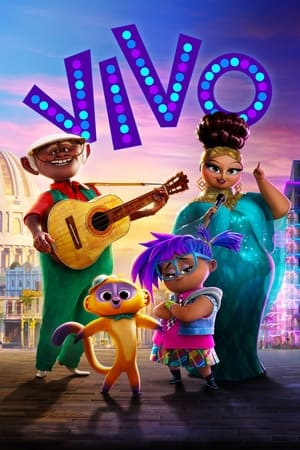
A music-loving kinkajou named Vivo embarks on the journey of a lifetime to fulfill his destiny and deliver a love song for an old friend.
A dancer in a girlie show plots revenge when a judge orders her show closed.
Two years prior to the opening scene, the nobleman Florestan has exposed or attempted to expose certain crimes of the nobleman Pizarro. In revenge, Pizarro has secretly imprisoned Florestan in the prison over which Pizarro is governor. The jailer of the prison, Rocco, has a daughter, Marzelline, and a servant (or assistant), Jaquino. Florestan’s wife, Leonore, came to Rocco’s door dressed as a boy seeking employment, and Rocco hired her. On orders, Rocco has been giving Florestan diminishing rations until he is nearly starved to death. Place: A Spanish state prison, a few miles from Seville; Time: Late 18th century.
With the good of the people in mind, Valery Legasov, a Soviet scientist called to the scene of the Chernobyl nuclear disaster, stands up to censorship behind the Iron Curtain.
Operetta concerning the love affair of Niccolò Paganini, the violinist, and Élisa Bonaparte, the younger sister of Napoleon.