The Falklands War began on April 2, 1982, with the Argentine landing on the islands ordered by Leopoldo Fortunato Galtieri, and culminated with the cessation of hostilities between Argentina and the United Kingdom of Great Britain on June 14, 1982. Through dynamic editing and the use of archival materials, the documentary considers the war as part of our recent past, but also opens up multiple questions and reflections on contemporary society and the future projection of what such a conflict generates for us Argentines.
Nas Entranhas de Nicolópolis
Four lucid grandmothers tell their story forgotten by history: the militancy and resistance of the young women of the leftist youth against the dictatorship of Marcos Pérez Jiménez.
Argentina, 1973. The return of democracy marks the beginning of a new countdown to the next coup d'état: on March 24, 1976, the worst dictatorship in Argentine history is installed, the bitter fruit of a plot carefully hatched for months.
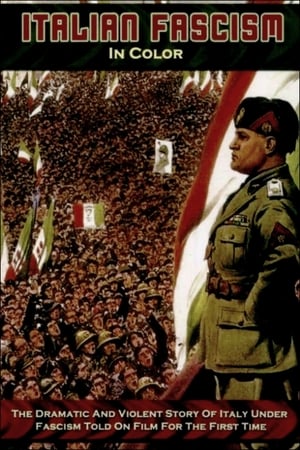
After the World War I, Mussolini's perspective on life is severely altered; once a willful socialist reformer, now obsessed with the idea of power, he founds the National Fascist Party in 1921 and assumes political power in 1922, becoming the Duce, dictator of Italy. His success encourages Hitler to take power in Germany in 1933, opening the dark road to World War II. (Originally released as a two-part miniseries. Includes colorized archival footage.)
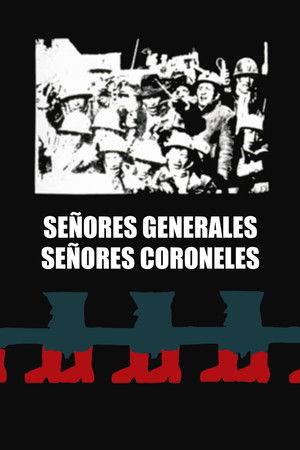
A plea against the government of General Hugo Banzer (1971-1978) and specifically against the Bolivian military during the seven-year dictatorship. Includes interviews with prominent politicians, union leaders, and former CIA agents, as well as with Régis Debray, advisor to President Mitterrand.
Images of Argentinian companies and factories in the first light of day, seen from the inside of a car, while the director reads out documents in voiceover that reveals the collusion of the same concerns in the military dictatorship’s terror.
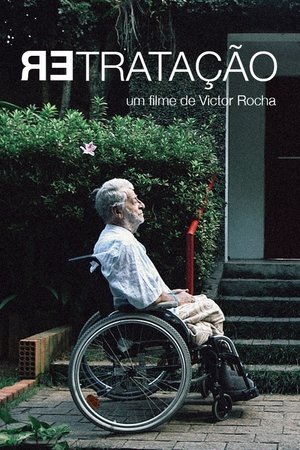
Fernando Lemos, a Portuguese surrealist artist, fled from dictatorship to Brazil in 1952 searching for something better. The movie follows the last moments of his journey and the struggle for the preservation of his legacy, trying to fulfill his last great desire: to be a good dead man.
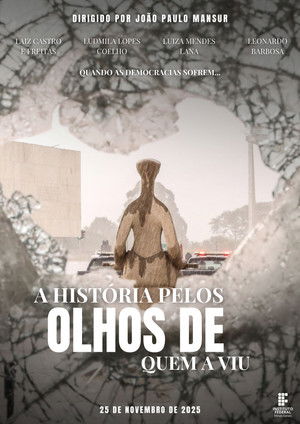
A História Pelos Olhos de Quem a Viu
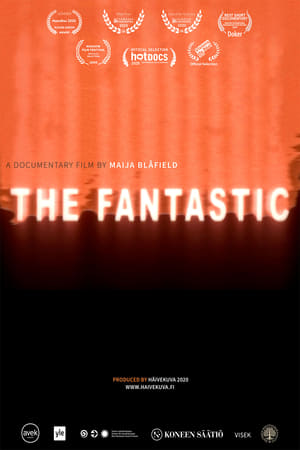
In Maija Blåfield’s documentary, eight former North Koreans talk about what it was like to watch illegal films in a closed society. In addition to the 'waste videos', South Korean films were also smuggled into the country via China.
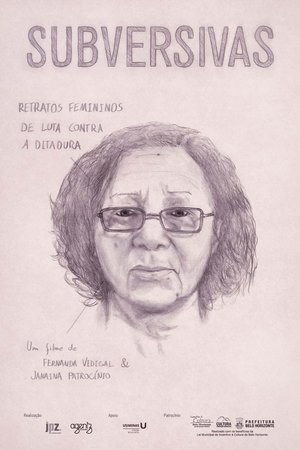
"Subversivas" is a documentary that reveals the brazilian military dictatorship from the perspective of women. Teresa Angelo, Gilse Cosenza, Thereza Vidigal, Angela Pezzuti and Delsy Gonçalves joined the resistance to the military regime in different ways. Their memories bring out events that marked that time and their life. These statements reveal their effort for freedom and democracy not only in political actions, but also in their family, work and everyday relationships, imbued with a belief and search for a fair and free country.
Resistencia Cultural
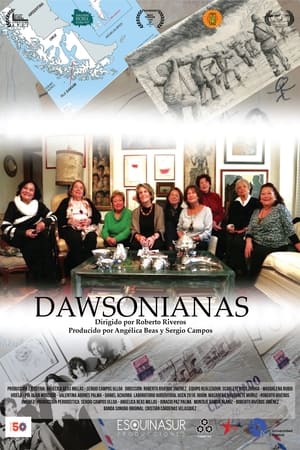
During the first days after the 1973 Chilean coup d’état, the political leadership of the Popular Unity government was arrested and transferred to Dawson Island, Magallanes Region, extreme south of Chile and the mainland. The wives of the then political prisoners began an incessant effort to find out the whereabouts of their husbands and then try to return them alive. In these circumstances, they meet and spontaneously organize into a group they call the “Dawsonianas.”
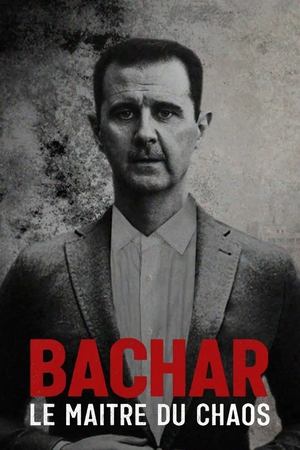
Bachar, le maître du chaos
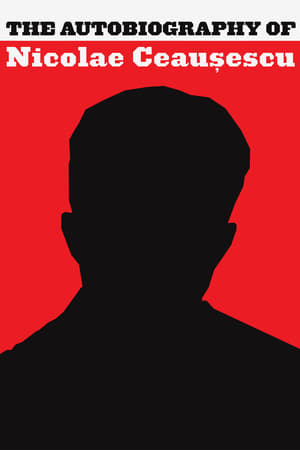
The three-hour-long documentary covers 25 years in the life of Nicolae Ceaușescu and was made using 1,000 hours of original footage from the National Archives of Romania.
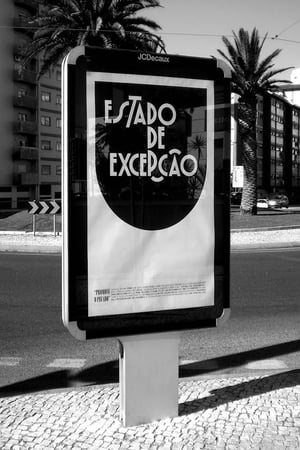
Estado de Excepção is a documentary about CITAC (Coimbra Theater Initiation Circle), a university theater group, revealing history since it was constituted in 1956 until the aftermath of the 1974 revolution. It is the history of the theater group university and, through it, the history of theater in Portugal, revealing two remarkable decades of the History of Portugal. Through the Academy of Coimbra, the documentary reproduces student life, the position of women in society, and the change in mentalities of being and being in the world. It reproduces the existing censorship and the fight against the dictatorship, the resistance to an exhausted regime, as well as the emerging contradictions of the democratic revolution. CITAC has a heritage of 50 years of experience in Coimbra. It carries with it the possibility of the theatrical and civic formation of thinking bodies, constituting a proper ball of a possible model, generation by generation, between studies, theater, and social drama.
Berlin, February 27, 1933. The Reichstag is in flames. A young Dutch unemployed man, Marinus van der Lubbe, was found alone in the building. For Hitler, it was a plot by the "Reds". One hundred thousand communists and sympathizers were arrested during the night and in the days that followed and locked up in the first Nazi concentration camps. In March, the Chancellor obtained full powers. On September 21, the trial opened in Leipzig, broadcast on the radio. For the Nazis and the Communists alike, van der Lubbe was the perfect scapegoat. On December 23, 1933, he was sentenced to death, while his four co-defendants were acquitted.
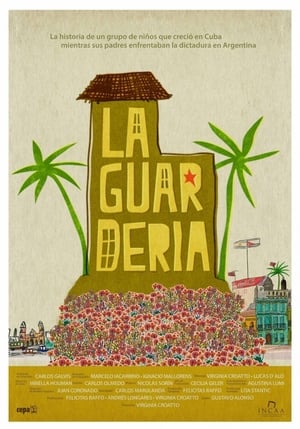
There was a time in Argentina, not so long ago, when the army wasn't only one, official, but many and made up by civilians. In those times of courageous youths determined to fight to the death for that cause upheld around Peronism as wll as some left-wing postulates, revolutionary Cubas was a beacon of hope in the world scheme -a Montonero nation. "A House in Cuba" seeks to recover the curious adventure of a couple of Montonero parents and their small children, who were lovingly sent into exile in order for their parents to take up arms.
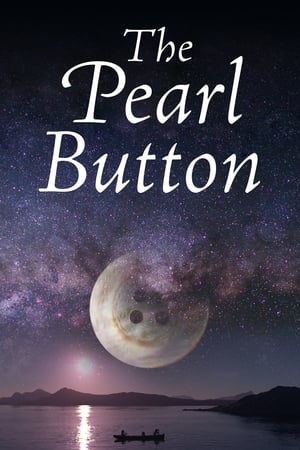
The ocean contains the history of all humanity. The sea holds all the voices of the earth and those that come from outer space. Water receives impetus from the stars and transmits it to living creatures. Water, the longest border in Chile, also holds the secret of two mysterious buttons which were found on its ocean floor. Chile, with its 2,670 miles of coastline and the largest archipelago in the world, presents a supernatural landscape. In it are volcanoes, mountains and glaciers. In it are the voices of the Patagonian Indigenous people, the first English sailors and also those of its political prisoners. Some say that water has memory. This film shows that it also has a voice.
The documentary tells the story of the Memory Forest, located in the Faculty of Social Sciences of the National University of San Juan. The short film shows some of its protagonists; Margarita Camus, Diego Fiol, Alicia Ruso, Cristina De Santis and Carlos Rodríguez, who met again in the place where the idea of creating this space for the memory of the detained-disappeared people in the last civil-military dictatorship was born. The piece was filmed entirely at the Faculty of Social Sciences and is the only high-resolution record of the history of the Forest and the testimony of its protagonists.