The story of the dysfunctional Tounsia family where Zakia, the matriarch of the family loves her son Selim to the point of enslaving the rest of the family. And the rest of the family just want one thing, and that is for Selim to get married and be out of their lives forever.
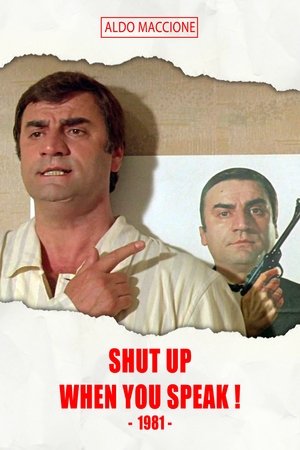
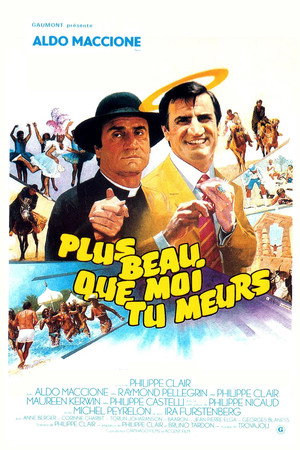
Giacomo has an idol: James Bond. When he dreams, he dreams of himself, his fabulous adventures, especially in Tunisia, and a beautiful wife, Belle. In reality he is unemployed, overwhelmed by an obsessive mother who continually called to see if he wore his woolen tank top and is treated by a doctor who thinks he is Einstein. Finally Giacomo is followed by bizarre characters, kidnapped and taken to Tunisia to live a wonderful adventure of her dreams, from the dangers of any kind ... and he met Beatrice
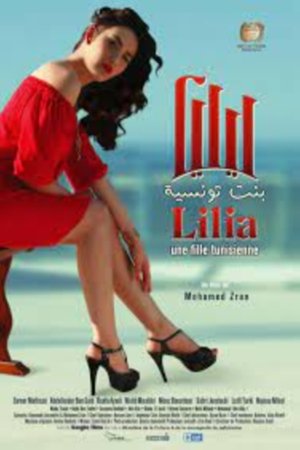
Lilia is a girl with magnetic, hypnotic and rare beauty that gives her a power of seduction which she uses and abuses with impunity, until the day she falls madly in love with her alter-ego.
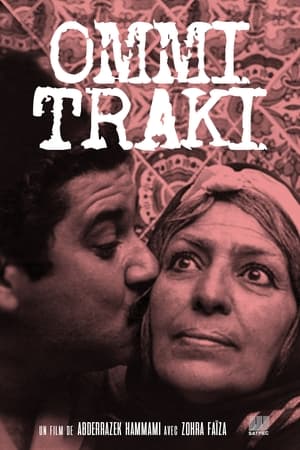
Ommi Traki is an elderly woman who is active and involved in everything, organizing everything in her family and neighborhood. Surrounding her are her husband Salah, who contentedly observes the results of his wife's interventions with a mocking air; her spoiled son Ali, a young man she still considers a child; the maid Zouzou; and others. The film is inspired by the famous Tunisian television series of the same name from the 1970s.
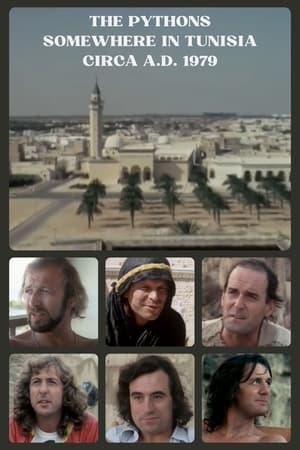
Ten years ago exactly, more or less, give or take a day or two, six young men sat down, or maybe stood, or perhaps some of them just lounged, and wrote the first episode of a new series called Owl Stretching Time. They were called Graham Chapman , John Cleese, Terry Gilliam , Eric Idle,Terry Jones and Michael Palin and later both they and the series became known as Monty Python 's Flying Circus . Today they are the best known British comedy group in the world, famous from Cathay to Kathmandu, from Sydney to Sidcup (except in Japan where the programme is called The Gay Boys' Dragon Show ... say no more). To commemorate their tenth anniversary a BBC team tracked them down in the deserts of Tunisia where they were filming their Life of Brian and almost persuaded them to examine the genesis, the genius and the gender of Monty Python.
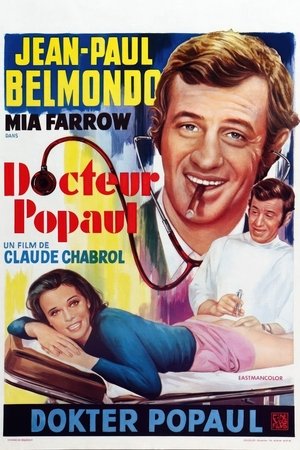
Paul, a former womanizer, marries the head of the medical department's "unattractive" daughter Christine because he thinks attractive women can't be trusted and make poor wives. A car accident leaves him bedridden and he begins to miss his playboy days, when Christine's bombshell sister Martine arrives and Paul decides he must have her. He begins drugging Christine at night so he can sneak out to kill of Martine's many suitors one by one.
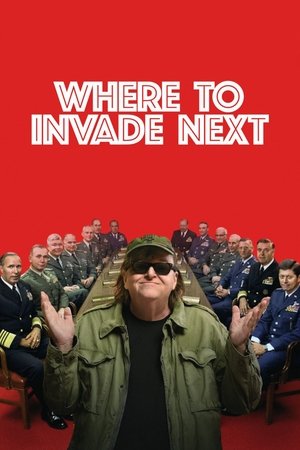
To understand firsthand what the United States of America can learn from other nations, Michael Moore playfully “invades” some to see what they have to offer.
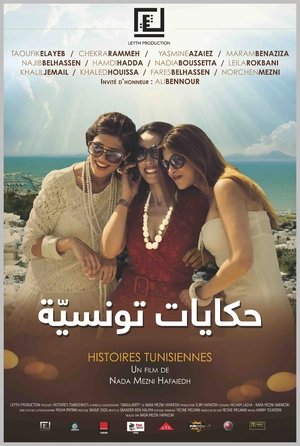
The film tells the stories of several people living in the same city, Tunis: Shams, who is experiencing heartbreak; Sabrine, torn between pressure from her family and her vision of her Prince Charming; Inès, who is enjoying her single life and open relationships after her divorce; Hassan, who decides to abandon his professional success and return to Tunisia after the death of his wife; Sami, the taxi driver who suddenly finds himself unemployed; and Mo, the owner of a pub who lives in a world of total corruption.
A heartbroken Tunisian film director finds the perfect male lead for her new romance movie, but during rehearsals the young actor begins to suspect that his role may not be a fictitious one.
The daughter of a local authority is in love with a poor minaret crier and resists a rich man from Tunisia.
Documentary made by the U.S. Army Signal Corps after the North African campaign.
The story of the sexual development of a filmmaker through three stages of his life.
During World War II, a squad of five American soldiers become lost in Tunisia and are killed one by one in fights with German units. Finally only one man, Private Russo, is left, in the midst of a mine field, together with a German officer, locked in a stalemate. Russo has water, while the German claims to have a map revealing the mine positions. So Russo agrees to swap water for the map, but the German officer tries to double-cross him. This was Burt Topper's debut film, made on 16mm on weekends together with some friends in Indio, California. It was also Wally Campo's debut film, as well as script supervisor Joyce King's.
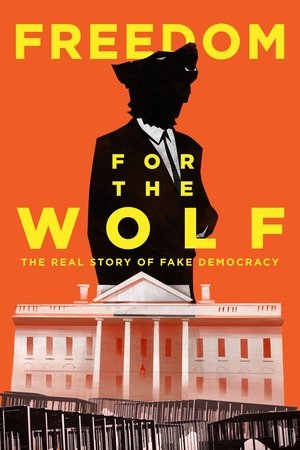
The Real Story of Fake Democracy. Filmed over three years in five countries, FREEDOM FOR THE WOLF is an epic investigation into the new regime of illiberal democracy. From the young students of Hong Kong, to a rapper in post-Arab Spring Tunisia and the viral comedians of Bollywood, we discover how people from every corner of the globe are fighting the same struggle. They are fighting against elected leaders who trample on human rights, minorities, and their political opponents.
The director meets Amir and Ramzi in a café in a small Tunisian town. They don't want to be seen there. They have to find a discreet place to talk. Like many other gay couples in Tunisia, Amir and Ramzi are living a nightmare since the Tunisian Revolution. With them, the director will discover the daily life of the Tunisian homosexual couples, even in the discrete parties organized in hotels of the country.
A workaholic father becomes sole parent to his two young sons, and finds it hard to relate to them, consumed as he is with his own grief.
A herd backs into a dusty courtyard. The sheep, on the ground with their four legs bound, are quickly and skillfully shorn. The animals, now without their fleece, leave one by one, leaping over a narrow channel to allow the shepherds to count them. Everything is crystal clear, efficient, encouraging in a sense – and this goes for both the shearing and the film. Except for the final panning shot of the men grinning at the camera and brandishing shears ready to be put to use. –Andrea Meneghelli
Born to an Algerian father and a Sicilian mother in Tunisia, I have always been wealthy of three cultures. This motherland is where were born my Algerian ancestors when it was called Ifriqya but also my Sicilian grand-parents whose parents were part of the important migration flux of the beginning of the last century. A reservoir of workforce by the thousands reached the shores of this "promised land". A hundred years later, I embark on a quest to rediscover my Sicilian family, exiled for the past sixty years, scattered between Italy and France.
In 827 A.D., eager young warrior Tariq and a tight-knit band of Black soldiers are lured into war by a beguiling, exiled general looking to settle a score against the Emperor of the Eastern Roman Empire. To defeat the Romans, Tariq and his friends must sacrifice themselves to change the face of Europe, forevermore bringing a new culture to the continent and beginning two centuries of Moorish rule in Sicily.
Tunisia itself is the subject; we wanted to render the genius of the site. Tunisia is almost the central character of this little film: we see the relation of the city to the sea, the traces that bear witness to its foundation, the remains of Carthage, the symbolism of the recently discovered Medina coin … The splendours of the house interiors and courtyards are associated with a scene of origin, what psychoanalysis calls a primal scene. Entering these houses opens up a world peopled by women: the child’s ‘homecoming’ in the hands of women is staged as an abduction, playing doubly on fascination and terror. These places were mine, from my childhood, they can be found almost intact – it’s the return of the exile visiting the kingdom. I let Ruiz discover all this, and immediately that led him to echoes and resonances ranging from Spain to Chile.