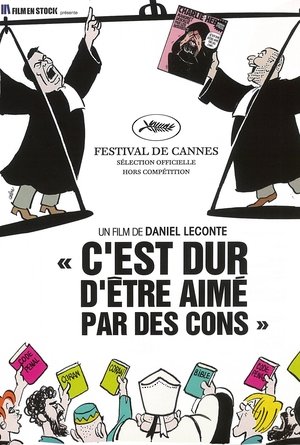
The murder of Dutch filmmaker Theo van Gogh by an Islamic extremist in 2004, followed by the publishing of twelve satirical cartoons depicting the prophet Mohammed that was commissioned for the Danish newspaper Jyllands-Posten, provides the incendiary framework for Daniel Leconte's provocative documentary, It's Hard Being Loved by Jerks.
The story of Zineb El Rhazoui, a young Moroccan woman who, in the wake of the Charlie Hebdo attack, finds her life radically transformed : from a censored journalist in Morocco she becomes the most protected woman of France.
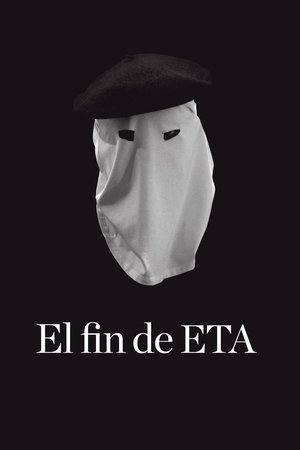
Obsessively referring to the traumas and wounds that the Spanish civil war (1936-39) and Franco's dictatorship (1939-75) caused in their day no longer serves to explain the impassable abyss of incomprehension and hatred that the abject policies and radical positions adopted by both the right and the left in recent decades have opened up before the citizens of a country that is barely known beyond hackneyed cultural clichés.
The bombing of the Alfred P. Murrah Federal Building in Oklahoma City in April 1995 is the worst act of domestic terrorism in American history. This documentary explores how a series of deadly encounters between American citizens and federal law enforcement—including the standoffs at Ruby Ridge and Waco—led to it.
'Ama Lur' is a documentary, directed by Nestor Basterretxea and Fernando Larruquert, that premiered in San Sebastián in 1968, and it is considered the foundation of Basque cinema.
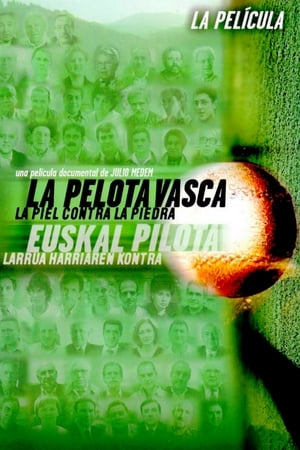
An attempt to create a bridge between the different political positions that coexist, sometimes violently, in the Basque Country, in northern Spain.
Kukutza III was a gaztetxe (self-managed social centre) in the neighbourhood of Rekalde, Bilbao. It was occupied in 1998, and it was evicted by the police in 2011. The documentary shows some activities that were hosted by the gaztetxe.
One year on from the first of four terror attacks which hit Britain in 2017, this documentary tells the personal stories of people who were caught up in the atrocities in Westminster, at Manchester Arena, around London Bridge and outside Finsbury Park Mosque. Those involved - some speaking for the first time - relive the moments of fear and panic that unfolded after the attacks, building a vivid picture of these catastrophic and life-changing events. They also explain how they have continued to try to cope with the consequences ever since. Featuring contributions from the likes of Grant Shapps MP, visitors to Parliament on the day of the Westminster Bridge attack, Ariana Grande fans injured in the Manchester bombing, those caught up in the London Bridge attack and members from the Muslim community in Finsbury Park, this programme provides a compelling insight into the personal consequences of the attacks, as well as the public and political mood in the aftermath.
A journey through the Spain of the Baroque, the glorious 17th century, an unfortunate era of endless wars and political tribulations; but also of great painters and sculptors who created astonishing pieces of art: el Siglo de Oro.
2nd Edition of Loose Change documentary. What if...September 11th was not a surprise attack on America, but rather, a cold and calculated genocide by our own government?We were told that the twin towers were hit by commercial jetliners and subsequently brought down by jet fuel. We were told that the Pentagon was hit by a Boeing 757. We were told that flight 93 crashed in Shanksville, Pennsylvania. We were told that nineteen Arabs from halfway across the globe, acting under orders from Osama Bin Laden, were responsible. What you will see here will prove without a shadow of a doubt that everything you know about 9/11 is a complete fabrication. Conspiracy theory? It's not a theory if you can prove it.Written and narrated by Dylan Avery, this film presents a rebuttal to the official version of the September 11, 2001 terrorist attacks and the 9/11 Commission Report.
The story of a group of actresses who, in the Spain of the seventies, and in the midst of the democratic Transition, decided to appear nude in the films of that time of radical political change, defying the rigid and deeply rooted social rules.
In Spain, a poor country ruined by the recent Civil War (1936-39), and in the midst of Franco's dictatorship, a film school was created in Madrid in 1947, which became, almost unintentionally, a space of freedom and pure experimentation until its closure in 1976.
Each World Trade Center tower consisted of 110 floors. Each floor has a story. In this two-hour special, survivors from two of those floors, many speaking publicly for the first time, tell their stories. Focusing on one floor in the North Tower and one in the South, this film will provide a never-before-achieved intimacy with what it was really like to be inside the Twin Towers on 9/11.
An intrepid archeology professor and his team of students are the only ones who stand in the way of an ISIS illicit antiquities network. Faced with losing their cultural heritage they become spies and they go undercover in ISIS territory. They dodge bombs and militia to create a system to monitor theft and destruction of Syrian antiquities. During this process, they discover more than they anticipated, discovering thousands of trafficked items and that the crimes committed are being enabled by terrorists and multinational corporations. The tragedy continues because the sale of illegal goods are uncovered in the most unsuspecting place.
Since the start of Operation Iron Sword, provoked by Hamas’ attack on Israel, conditions in Gaza have become apocalyptic. After months of offensive, most of the territory is an uninhabitable field of ruins. 1.5 million people are displaced, forced to constantly relocate by the advancing Israeli army. Barely a third of the hospitals are functioning. According to Unicef estimates, a child is injured or killed every 10 minutes in Gaza.
The history of Bruguera, the most important comic publisher in Spain between the 1940s and the 1980s. How the characters created by great writers and pencilers became Spanish archetypes and how their strips persist nowadays as a portrait of Spain and its people. The daily life of the creators and the founding family, the Brugueras. The world in which hundreds of vivid colorful paper beings lived and still live, in the memory of millions, in the smile of everyone.
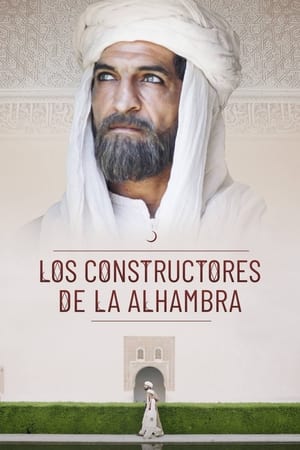
On 16 July 1212, a Crusader army made up of Castilians, Aragonese and Navarrese (but also French, English and Germans) confronted the army of the Almohad Caliph an-Nasir at the foot of the Sierra Morena mountain range. The Battle of Las Navas de Tolosa, as the battle is known, is considered the most important battle of the Middle Ages on the Iberian Peninsula and is a key event in the history of Spain. More than 800 years later, a group of archaeologists and specialists have begun an archaeological study of the battlefield. Is everything that has been said about the battle true? What secrets does the terrain hide? And, above all, what can we learn today about events that took place hundreds of years ago and that pitted tens of thousands of people against each other in the south of our country?
‘VIGO 1972’ narrates the events which took place in Vigo in September 1972, when the firing of five Citröen auto workers resulted in the largest general strike in the history of Galicia — with over thirty thousand workers — all of this during the Franco dictatorship in Spain.
The story of the creation of The Spirit of the Beehive, a film directed by Víctor Erice in 1973.
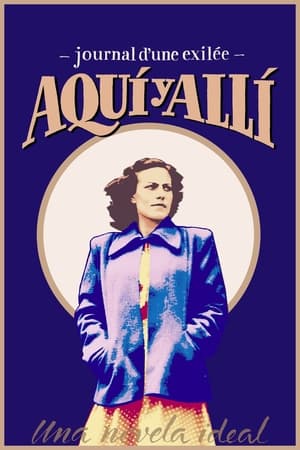
In the mountains of Madrid, Spain, a railway track on an abandoned bridge and a poem erased from the wall of a ruined building reveal a deliberately silenced story: the system established by Franco's dictatorship after the civil war (1936-39) that allowed hundreds of companies to use thousands of convicted Republicans as slave labor.