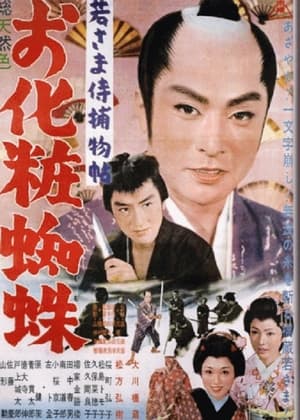
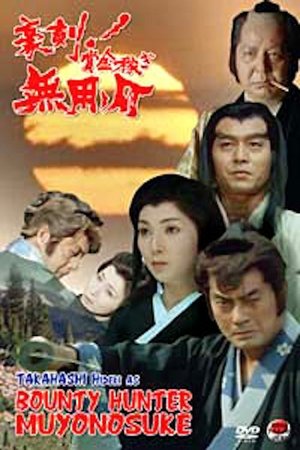
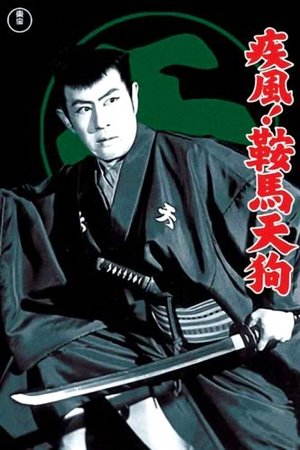
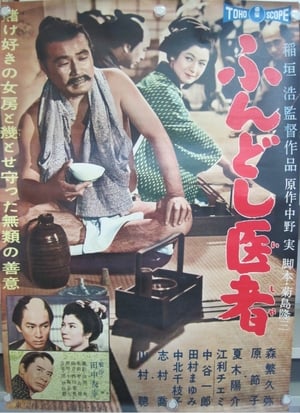
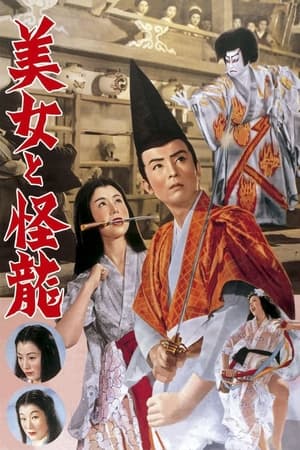
A young boy named Chomatsu (Misora Hibari) lives with an old man Denbei near the grounds of Asakusa temple as bell ringers. In their house is an Echigo lion mask, a memento of Chomatsu's deceased father. After several incidents of Echigo lion masks being destroyed in the area, a local kingpin Saheiji shows up at Denbei's demanded he hand over the mask, a request Denbei rejects out of pity for Chomatsu. However, after it is accidentally revealed that the mask contains an important map, Saheiji plots to steal the mask. Chomatsu gets involved after his mother makes a sudden reappearance that sends the boy on a roundabout journey that will reveal the truth about his family.
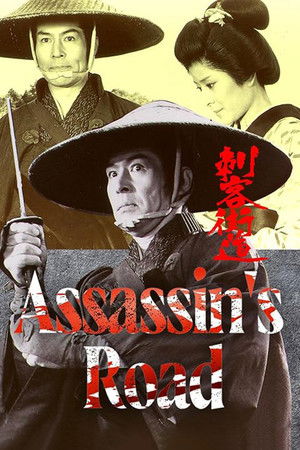
In a world where vendettas are officially sanctioned, the people sometimes needed help in carrying out their vengeance. Sanada Hiroyuki stars as Sukeroku the Helper, a ‘cool and rambling yakuza’ that has made a business out of helping victims carry out their revenge. When he returns to his hometown to pay a visit to his mother’s grave he meets a deadly ronin who carries a secret which eventually leads him into a vendetta of his own.
In Edo-era Japan, a ukiyo-e artist languishes in his master’s shadow. Creatively stifled, he finds consolation in the company of a prostitute, and becomes entangled in a love triangle. A mystery emerges involving two portraits and the sudden disappearance of the artist Sharaku. Helmed by Cannes-selected director Tatsuji Yamazaki, the film employs kabuki-inspired sequences and stylised sets.
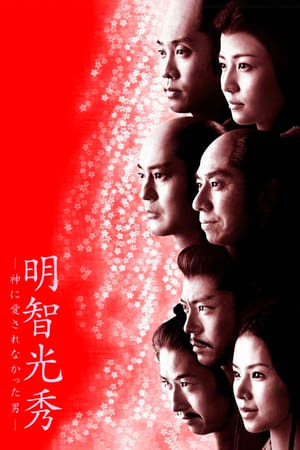
Sen no Rikyu (Ebizo Ichikawa) is the son of a fish shop owner. Sen no Rikyu then studies tea and eventually becomes one of the primary influences upon the Japanese tea ceremony. With his elegant esthetics, Sen no Rikyu is favored by the most powerful man in Japan Toyotomi Hideyoshi (Nao Omori) and becomes one of his closest advisors. Due to conflicts, Toyotomi Hideyoshi then orders Sen no Rikyu to commit seppuku (suicide). Director Mitsutoshi Tanaka's adaptation of Kenichi Yamamoto's award-winning novel of the same name received the Best Artistic Contribution Award at the 37th Montréal World Film Festival, the Best Director Award at the 2014 Osaka Cinema Festival, the 30th Fumiko Yamaji Cultural Award and the 37th Japan Academy Film Prize in nine categories, including Best Art Direction, Excellent Film and Excellent Actor.
A samurai answers a village's request for protection after he falls on hard times. The town needs protection from bandits, so the samurai gathers six others to help him teach the people how to defend themselves, and the villagers provide the soldiers with food.
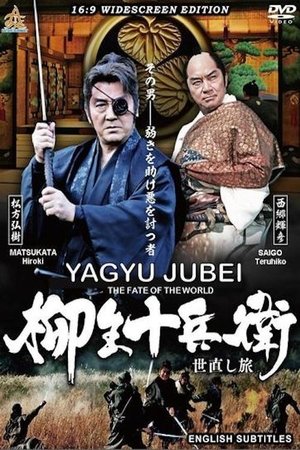
Yagyu Jubei, the finest swordsman in the land, is called upon to bare his blade to help Iemitsu keep his post. Meanwhile a fishmonger named Isshin Tasuke who bears an amazing resemblance to Shogun Iemitsu may be called upon to put his life on the line by acting as the Shogun's double. At the same time, the tragic story of Banzuiin Chobei and Mizuno Jurozaemon is unfolding.
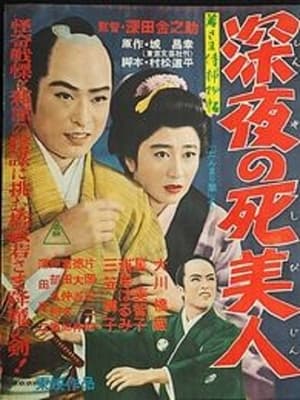
O-Kiyo (Mitsuko Mito), who had escaped from her boss, Shoden, who controlled the Sensoji Temple district, was desperately contemplating suicide when she was rescued by ronin Kojuro Tozawa (Kazuo Hasegawa), who hid her in a dilapidated apartment building. The Shoden clan desperately searched for O-Kiyo, but Kojuro found a huge sum of 50 ryo and ransomed O-Kiyo. Unable to accept this outcome, the enraged Shoden clan attempted to win the favor of constable Jinnosuke Nakayama (Kusuo Abe), seeking to demolish the dilapidated building and transform the area into a pleasure district. However, Kojuro thwarted their plans, bringing joy to the poor residents of the building. After demonstrating his remarkable skills, Kojiro revealed his true identity - he was a prominent hatamoto.
Having put down his sword and given up the will to fight, the masterless samurai Iemon lives in solitude while being haunted by his violent enigmatic past...
Shakespeare's King Lear is reimagined as a singular historical epic set in sixteenth-century Japan where an aging warlord divides his kingdom between his three sons.
A nameless ronin, or samurai with no master, enters a small village in feudal Japan where two rival businessmen are struggling for control of the local gambling trade. Taking the name Sanjuro Kuwabatake, the ronin convinces both silk merchant Tazaemon and sake merchant Tokuemon to hire him as a personal bodyguard, then artfully sets in motion a full-scale gang war between the two ambitious and unscrupulous men.
In this companion piece and sequel to "Yojimbo," jaded samurai Sanjuro helps an idealistic group of young warriors weed out their clan's evil influences, and in the process turns their image of a proper samurai on its ear.
Akira Kurosawa's lauded feudal epic presents the tale of a petty thief who is recruited to impersonate Shingen, an aging warlord, in order to avoid attacks by competing clans. When Shingen dies, his generals reluctantly agree to have the impostor take over as the powerful ruler. He soon begins to appreciate life as Shingen, but his commitment to the role is tested when he must lead his troops into battle against the forces of a rival warlord.
A poor peasant, after years of scraping, becomes a rich and powerful Osaka merchant. Mizoguchi Kenji's final project; he died before completing it and directing duties turned over to Yoshimura Kozaburo.
The film tells about the life of the former vassal of the Ako clan - Fuwa Katsuemon Masatane.
The background to and depiction of a watershed battle in Japanese history, at Sekigahara in 1600, when Tokugawa Ieyasu's Army of the East defeated the Army of the West of Ishida Mitsunari. The story includes the intrigues and shifting loyalties of the various retainers, family members, and samurai.
This movie depicts a familiar samurai Tange Sazen story realistically. Tange loses one of his eyes and arms in an attempt to recover a masterpiece sword for his lord. However, his efforts are not appreciated and he becomes a man of hatred.
Zatoichi is sworn to protect the life of a young girl and without any real allies finds himself in the middle of a bloody turf war.
The man is chased by losing the beauty and preciousness of love and the foundation of life without overcoming the hardship of life.
53 Stages of Action
Ichibei, a thief known as "Yami no Kiba," and his daughter Oasa are caught by members of a street performer family with a nationwide organization when the kite they are riding falls deep into the mountains of Owari. Nitayu, the key person in the clan, learns of Ichibei's obsession to avenge his father's murder by the Tokugawas and promises to help him. When Ichibei learns of Shogun Ienari's plan to transport a pure gold statue of Prince Ieyasu from Sunpu to Edo Castle, he joins forces with the bandit Kojiro to steal it. ......