Argentina... Argentina...
María Elena Soledad
Juan lives a solitary existence on a remote farm ever since he witnessed a UFO event. Filmmaker Alan Stivelman—together with the help of famous astrophysicist Jacques Vallée—begin an epic journey to help Juan in understanding the deep meaning of his close encounter. This true story shows the long-term consequences of close encounters, proving that no one is exempt from a potential contact.
1982 is not a year, it is a number. It is the number of massacres that occurred in Colombia. Using a Hollywood film from 1919 the film creates a portrait of distant and yet persistent individuals, an observation of the gesture that survives despite the blind light cast upon them by time, routine or indolence.
An overview of the night in which the Argentine Congress voted on the "Draft Law on Withholdings and Creation of the Social Redistribution Fund", also known as "Resolution 125/08". Released on the 10th year anniversary of the rejection of the resolution.
Poetic images emerge from everyday life, interweaving with narratives that recall traces of events from the last civic-ecclesiastical-military dictatorship in the city of La Plata.
A powerful Argentine political film stands on the figure of an outsider intellectual, Sebreli, but manages to transcend it, he becomes a touchstone to go through Argentina and its dilemmas, through this country that is proud of almost everything it should be ashamed of. From national icons like Gardel, Evita, Che, and Maradona the film dialogs with recent Argentine history and it does so with extraordinary energy, supported by a rarely seen use of all kinds of archive material in an almost Dionysian state of sampleadelia. The film arrives to a surprising reflection on nationalism, demagogic governments and delusions of unanimity; problems that are common to emerging societies that cannot find their ways to a freer and more egalitarian society.
The attention was not focused on the tourist attractions, but rather on the graffiti.
With David Beckham looking uncertain for the 2002 World Cup finals after his clash with Argentinean Aldo Duscher, this documentary charts the explosive 35 year feud between their two nations, when football became war by another means.
There was a time in Argentina, not so long ago, when the army wasn't only one, official, but many and made up by civilians. In those times of courageous youths determined to fight to the death for that cause upheld around Peronism as wll as some left-wing postulates, revolutionary Cubas was a beacon of hope in the world scheme -a Montonero nation. "A House in Cuba" seeks to recover the curious adventure of a couple of Montonero parents and their small children, who were lovingly sent into exile in order for their parents to take up arms.
The lifetime of the great Argentinian man of letters Jorge Luis Borges through narration and interviews of such key players in his life as Leonor de Acevedo —his mother—, María Kodama —his second wife—, and Adolfo Bioy Casares —his best friend and collaborator for decades.
Gentle or rough, blonde or shaved, cis or trans, long term inmates or those newly admitted: women re-enact their lives in a Buenos Aires prison, in trance and balance, voguing and singing. A hybrid musical and charming piece of collective empowerment.
It chronicles the encounter between Graciela Fernández Meijide, whose son Pablo was kidnapped in 1976 by the military dictatorship and who became a human rights defender; and Héctor Ricardo Leis, a former member of the Montoneros who went into exile after the coup d'état in Brazil. Throughout the documentary, both reveal their memories, experiences, and reflections on the years of lead in Argentina.
Juana Sapire returns to the city from which she had to go into exile in 1976 to testify in a historic trial over the disappearance of her husband, revolutionary militant and filmmaker Raymundo Gleyzer.
Para siempre
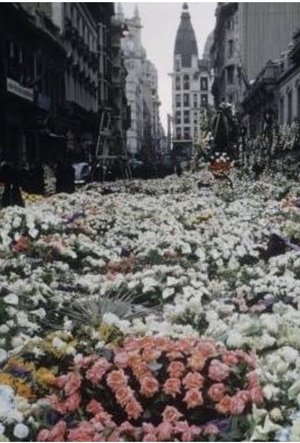
Documentary depicting the funeral of Argentinian First Lady Eva Perón in 1952.
Fútbol Violencia S.A.
Landwirtschaft in Südamerika - Argentinien
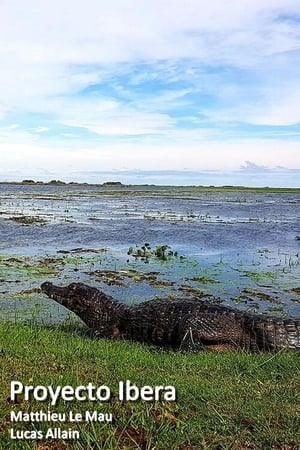
Proyecto Ibera
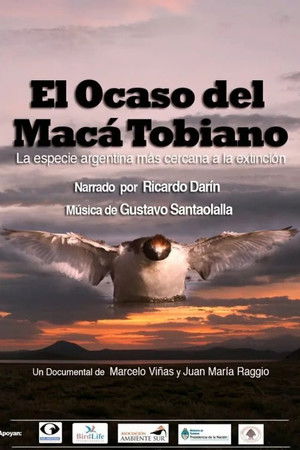
El Ocaso del Macá Tobiano