Go up-river and deep into the jungle far from Brazil's cities and stadiums, where families of giant otters, tufted capuchin monkeys and mischievous coati (South American raccoon cousins) rally their wits to survive in a breathtakingly beautiful yet dangerous land.
Explore a lesser-known part of Venice: the wild side! In coral reefs and hidden gardens, find everything from poisonous mammals to strange sea life.
Spend a year with a Red Panda named Tashi and experience her life in the forests underneath the Himalayas. Along the way, meet the other rare bird, insect and animal inhabitants of this remote lush area in Northern India, including the leopard. And if cute could get even cuter, meet Tashi's cub...
From a lonely childhood to literary fame, her life was shaped by devotion to nature, paying attention, and the long journey toward learning to love and to be loved. If poetry had a pop icon, Mary Oliver would be it.
After decades of hurricanes and oil spills, Louisiana faces a new threat - hordes of monstrous 20 pound swamp rats. Known as "nutria", these invasive South American rodents breed faster than bounty hunters can "control" them. With their orange teeth and voracious appetite they are eating up the coastal wetlands that protects Thomas and his town of Delacroix Island from hurricanes, but the people who have lived here for generations will not give up without a fight.
Narrated by actor Tim Daly, the show looks at the dilemma of Black Bears living so close Los Angeles. Film features homeowners Brian and Rick who are dealing with Bears swimming in their pool; and features state Fish and Wildlife Officers.
Journey alongside a young tigress raising her cubs in the fabled forests of India.
Short film showing (with limited accuracy) the life-cycle of myxomycetes.
For her entire professional life, renowned ecologist Nalini Nadkarni pioneered climbing techniques to study "what grows back” after an ecological disturbance in the rainforest canopy. Now, after surviving a life-threatening fall from a tree, she must turn her research question onto herself in order to understand the effects of disturbance and recovery throughout her life.
A cinematic foray into nocturnal nature, where numerous nocturnal animals are in search of prey: From midnight to 4 a.m., the camera observes bats and other nocturnal creatures.
This film documents Montana's fishers' unique experience and abilities, their natural instincts, and the state's remote natural beauty.
"There are things in this world that are yet to be named" centers around Solanum plastisexum - an Australian tomato whose sexual expression is unpredictable and unstable, challenging even the fluid norms of the plant kingdom. Footage of the team of botanists who recently used their Solanum research to explode notions of sexual normativity in any plant or animal is combined with a voiceover of letters sent between science writer Rachel Carson and her lover Dorothy Freeman. "There are things in this world that are yet to be named" is a meditation on erasure, indefinability, and the intersection of queer and environmental histories.
Expedition Artenschutz - Auf der Spur des Jaguars
An epic documentary film that sends nine scientists to extraordinary parts of the world to uncover unexpected answers to some of humanity’s biggest questions. How did life begin? What is time? What is consciousness? How much do we really know? By introducing researchers from diverse backgrounds for the first time, then dropping them into new, immersive field work they previously hadn’t tackled, the film pushes the boundaries of how science storytelling is approached. What emerges is a deeply human trip to the foundations of discovery and a powerful reminder that the unanswered questions are the most crucial ones to pose. Directed by Emmy-nominated and Peabody Award-winning filmmaker Ian Cheney and advised by world-renowned filmmaker Werner Herzog, The Most Unknown is an ambitious look at a side of science never before shown on screen.
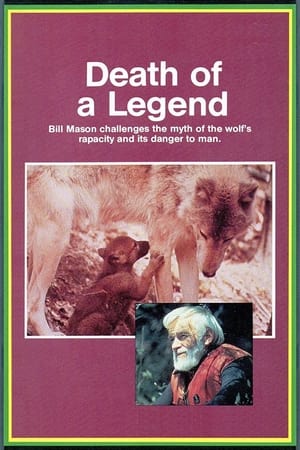
For 12,000 years wolves roamed Scotland. However, over three centuries ago, we exterminated them. This film reveals the rise and fall of the Scottish wolf and explores the question of whether they should be re-introduced. Wolves arrived as the last ice age ended, following the herds of deer and reindeer that crossed a now-lost land bridge from Europe. For thousands of years, wolves and humans shared the landscape as apex predators, with the wolf entering human art, myth and belief. However, farming put wolves and humans on a collision course, and, after centuries of persecution, wolves became extinct in Scotland. Since then, deer numbers have exploded, and many of Scotland’s woodlands have been stripped bare. Some argue for the wolf’s return. Could we, and should we, hear the howl of the wolf once more in the Highlands?
This experimental nature documentary by Minna Rainio and Mark Roberts depicts climate change and the wave of extinction from the point of view of our near future. Actually, it depicts the age we live in now, or rather its fateful consequences.
Finland’s first nature documentary. The filmmakers’ expedition leads them all the way to the Åland Islands and the Karelian Isthmus.
Disneynature's international team of filmmakers travel to the mountains of China to find and film the elusive snow leopard on the highest plateau on Earth, while enduring brutal weather and unsettled terrain.
After the ice age, the land around The Gulf of Bothnia is Scandinavia has been encroaching into the water. This has formed a new Archipelago known as Kvarken.
An adventure-filled exploration of conservation science, BEARS OF DURANGO embeds with a dynamic team of wildlife researchers tasked with conducting a black bear study in Durango, Colorado. In response to an exponential increase in black bear-human conflicts – including bears breaking into cars and homes, and cubs getting trapped in garages – Colorado Parks and Wildlife commissioned a six-year study to determine the factors behind the state-wide trend, and to propose solutions to quell it. BEARS OF DURANGO invites viewers to consider their own regions and backyards, and how they can better cohabitate with the wildlife around them.