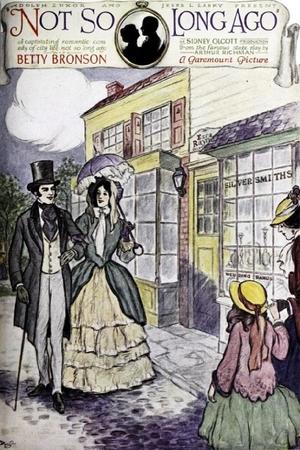
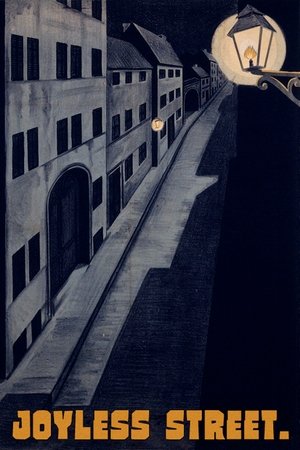
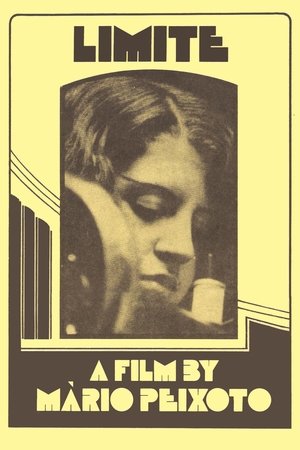
Anna Moore, a poor orphaned country girl, and her little brother, Tommy, live with hypocritical Squire Simpson, who conspires with his son to acquire the inheritance due the girl.
Two trouble-causing brothers, who in the second generation after World War II Germany live, are in the center of this German made for TV movie. The movie makes a subject out of their everyday lives and the helpless attempt for them to build a normal life.
Left penniless by her vengeful ex-husband, Madeline is forced to become a pickpocket to pay for a new wardrobe. One of her victims is a Mr. Finlay, who threatens to turn her over to the police -- until he hears Madeline's woeful tale of her cruel, possessive husband.
A dramatized account of a great Russian naval mutiny and a resultant public demonstration, showing support, which brought on a police massacre.
This pioneering documentary film depicts the lives of the indigenous Inuit people of Canada's northern Quebec region. Although the production contains some fictional elements, it vividly shows how its resourceful subjects survive in such a harsh climate, revealing how they construct their igloo homes and find food by hunting and fishing. The film also captures the beautiful, if unforgiving, frozen landscape of the Great White North, far removed from conventional civilization.
A semi-documentary experimental 1930 German silent film created by amateurs with a small budget. With authentic scenes of the metropolis city of Berlin, it's the first film from the later famous screenwriters/directors Billy Wilder and Fred Zinnemann.
The heavily indebted baron Henrik von Hagen, who loves women and partying, learns that his former lover, Russian ballerina Madame Vera Vasiljevna, will be visiting Finland. They are reunited and sparks fly. But Vasiljevna's new hobby casts a shadow over their romance.
The daughter of a count and the son of a shoemaker, both Hungarian, fall in love in America. As they're about to marry, the young woman is called back to Europe. When her betrothed goes after her, difficulties ensue.
In Africa a typist is framed for killing a diamond smuggler who betrayed her father.
David Locke is a world-weary American journalist who has been sent to cover a conflict in northern Africa, but he makes little progress with the story. When he discovers the body of a stranger who looks similar to him, Locke assumes the dead man's identity. However, he soon finds out that the man was an arms dealer, leading Locke into dangerous situations. Aided by a beautiful woman, Locke attempts to avoid both the police and criminals out to get him.
When her grandson is kidnapped during the Tour de France, Madame Souza and her beloved pooch Bruno team up with the Belleville Sisters—an aged song-and-dance team from the days of Fred Astaire—to rescue him.
A girl is trying to catch her kite.
The year is 1981, the German New Wave is at the peak. Harry, otherwise Sparkasse trainee, wants to make it big as a manager of the band of his friends, Apollo Schwabing. He has booked the band as the opening act for a concert where the group DAF are the headliners.
Two families, abolitionist Northerners the Stonemans and Southern landowners the Camerons, intertwine. When Confederate colonel Ben Cameron is captured in battle, nurse Elsie Stoneman petitions for his pardon. In Reconstruction-era South Carolina, Cameron founds the Ku Klux Klan, battling Elsie's congressman father and his African-American protégé, Silas Lynch.
A married farmer falls under the spell of a slatternly woman from the city, who tries to convince him to drown his wife.
During the 1972 Olympic Games in Munich, eleven Israeli athletes are taken hostage and murdered by a Palestinian terrorist group known as Black September. In retaliation, the Israeli government recruits a group of Mossad agents to track down and execute those responsible for the attack.
The Vampire is a surviving 1915 silent film drama directed by Alice Guy and starring Olga Petrova. It is one of Petrova's and Guy's few surviving silent films.
In 1943, as Hitler continues to wage war across Europe, a group of college students mount an underground resistance movement in Munich. Dedicated expressly to the downfall of the monolithic Third Reich war machine, they call themselves the White Rose. One of its few female members, Sophie Scholl is captured during a dangerous mission to distribute pamphlets on campus with her brother Hans. Unwavering in her convictions and loyalty to the White Rose, her cross-examination by the Gestapo quickly escalates into a searing test of wills as Scholl delivers a passionate call to freedom and personal responsibility.
Peter Olsen, a young social outcast who lives alone on a rundown farm and raises vegetables for a living, finds his only consolation in liquor, though Dorcas Chatham, daughter of the general store owner, begs him to forego this indulgence. Returning from town, he finds a dog by the roadside, apparently injured by a car, and takes it home. Later, on a drunken spree, Peter is attacked by robbers, but the dog comes to his rescue and frightens the assailants away. Stirred by the unselfish devotion of his dog, Peter gradually regains his self-respect, and Dorcas falls in love with him and accepts his proposal, though she fears the dog. When Peter enters the dog in a show, another exhibitor proves to be its owner, and Peter is first parted from, then reunited with, "his" dog. Dorcas overcomes her fear and is united with Peter.
A gangster falls for a blind violinist, only for his mobster rivals to kidnap her.