In Victorian England, wealthy patriarch Sir Harald Alabaster invites an impoverished biologist, William Adamson, into his home. There, William tries to continue his work, but is distracted by Alabaster's seductive daughter, Eugenia. William and Eugenia begin a torrid romance, but as the couple become closer, the young scientist begins to realize that dark, disturbing things are happening behind the closed doors of the Alabaster manor.
Three distinct tales unfold in the bustling city of Tokyo. Merde, a bizarre sewer-dweller, emerges from a manhole and begins terrorizing pedestrians. After his arrest, he stands trial and lashes out at a hostile courtroom. A man who has resigned himself to a life of solitude reconsiders after meeting a charming pizza delivery woman. And finally, a happy young couple find themselves undergoing a series of frightening metamorphoses.
What is “Slovakia”? How to explain the notion of “Slovakia” of the past 20 years to an unknown stranger, a visitor from another planet? What is the genetic makeup or the software for “Slovakia”? How to use it? How does it change? Slovakia 2.0 is a film about twenty years of independent Slovakia as seen from the perspective of ten film directors. It is composed of ten 10-minute films of different genres ranging from drama, through animation and documentaries, to experimental film. The ten recognised film directors who offer an answer to what is Slovakia include a wide range of generations, views and genres, namely Juraj Herz, Martin Šulík, Peter Kerekes, Zuzana Liová, Mišo Suchý, Ondrej Rudavský, Iveta Grófová, Peter Krištúfek, Viera Čákanyová, and Miro Jelok.
Injustice and the demands of the world can cause stress for many people. Some of them, however, explode. This includes a waitress serving a grouchy loan shark, an altercation between two motorists, an ill-fated wedding reception, and a wealthy businessman who tries to buy his family out of trouble.
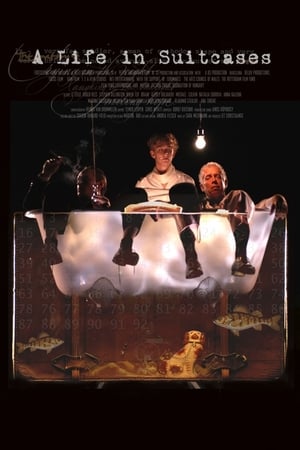
A comic study of 20th-century history, reconstructing the life of writer, creator and professional prisoner Tulse Luper. Born in 1911 Newport and last heard of in 1989, Luper’s life is pieced together from the evidence found in 92 suitcases scattered across the globe. In the first of three parts, we follow Luper through three distinct episodes: as a child during the First World War; as an explorer in Mormon Utah; and as a writer in Belgium during the rise of fascism.
A comic study of 20th-century history, reconstructing the life of writer, creator and professional prisoner Tulse Luper. Born in 1911 Newport and last heard of in 1989, Luper’s life is pieced together from the evidence found in 92 suitcases scattered across the globe. In the second of three parts, we follow Luper as he works in a cinema, giving him ample opportunity to cross paths with virtually every artistic device and dramatic character known to man.
A comic study of 20th-century history, reconstructing the life of writer, creator and professional prisoner Tulse Luper. Born in 1911 Newport and last heard of in 1989, Luper’s life is pieced together from the evidence found in 92 suitcases scattered across the globe. In the final installment, Luper continues his adventures as a professional prisoner during the later years of the Second World War and the Cold War.
A comic study of 20th-century history, reconstructing the life of writer, creator and professional prisoner Tulse Luper. Born in 1911 Newport and last heard of in 1989, Luper’s life is pieced together from the evidence found in 92 suitcases scattered across the globe. A Life in Suitcases condenses the six-hour trilogy into a single two-hour feature, and in doing so, accentuates the project as a filmic essay in multiple narratives, listings, sidebars, footnotes, commentaries and anecdotes; a project for an Information Age ready to understand that there never is a phenomenon called History, there can only be Historians, gatekeepers to vested interests.
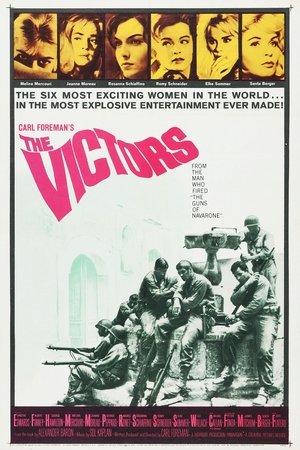
Intercutting dramatic vignettes with newsreel footage, the story follows the characters from an infantry squad as they make their way from Sicily to Germany during the end of World War II.
A depressed man moves back in with his parents following a recent heartbreak and finds himself with two women.
Boží soud
A two-part feature directed separately by Shimizu and his colleague Keisuke Toyoshima. Unrelated to each other, both have a common goal: to bring ghosts and aliens together in pure, referential and absurdistic delirium, including neo-Nazi specters, zombie yakuzas and nasty aliens.
Soud pana Havleny
Two women attending a women's seminar on personal development walk out in acute embarrassment during the introduction. They meet up with a woman who arrived too late to be admitted. Thrown together by chance, they discuss their emotional lives in intimate detail.
Konečne bude mier!
Dear you, unrelated is a contemporary project that dares to believe in the potential of fiction. Directors Lee Mi-rang and Lee Jong-su attempt to imaginatively restore the lost ending of The Widow. In The Widow: Rewoven, Lee Mi-rang reimagines the protagonist Shinja making a radically different decision from the original. Her film captures the inner turmoil and determination of a woman once dismissed as an Après-girl, tracing her hesitant yet resolute steps toward a new path. In Bearer of Dawn, Lee Jong-su presents a fictional scenario in which Shinja seeks revenge by finding a blacksmith. A newly added sequence in which she chooses a sword shifts the film's tone from drama into one infused with the suspense of a thriller.
A nine story anthology featuring various dregs, druggies, the innocent and the doomed inhabiting a dingy motel room somewhere along Route 66.
Commissioned by South Korea's National Human Rights Commission, If You Were Me is an innovative omnibus film project to promote tolerance and human rights and shed light on the hardships disadvantaged people face in Korea. This third installment continues the If You Were Me tradition. Directors Jeong Yun Cheol (Marathon), Kim Hyeon Pil (Wonderful Day), Lee Mi Yeon (L'Abri), Noh Dong Seok (Boys of Tomorrow), Hong Gi Seon (The Road Taken), and Kim Gok and Kim Sun (Capitalist Manifesto: Working Men of All Countries) participated in If You Were Me 3, creating shorts on human rights issues of their choosing, ranging from labor conditions to gay rights to discrimination.
Deaf Xiao Ma and his daughter Mumu rely on each other for companionship. The little "big sister" Mumu serves as the family's pillar—bridging communication between her father and the outside world, helping him secure work and earn a living. However, as Mumu grows older, she must integrate into the hearing world, and their inseparable life is about to be disrupted. Just then, a criminal syndicate that specifically preys on the deaf sets its sights on Xiao Ma. Desperate to protect his daughter, he is gradually lured step by step into the abyss of crime...
In three separate segments, set respectively in 1966, 1911, and 2005, three love stories unfold between three sets of characters, under three different periods of Taiwanese history and governance.