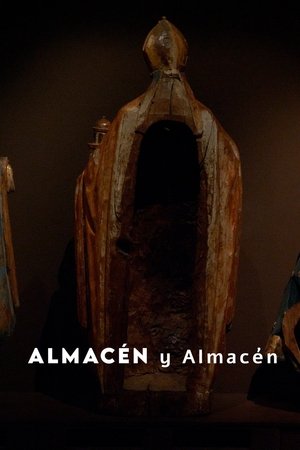
An exploration —manipulated and staged— of life in Las Hurdes, in the province of Cáceres, in Extremadura, Spain, as it was in 1932. Insalubrity, misery and lack of opportunities provoke the emigration of young people and the solitude of those who remain in the desolation of one of the poorest and least developed Spanish regions at that time.
A fist-person story of the director of the documentary, who talks about the loneliness that entails living with an eating disorder and her vision now thar she is entering into adulthood.
Images and numbers illustrate the domestic political measures taken after the Nazis came to power to eliminate unemployment.
A 16 year old girl recalls the last moments of her summer vacation, spent with friends in the Laurentians north of Montreal. She reminisces about their talks on life, death, love, and God. Shot in direct cinema style, working from a script that left room for the teenagers to improvise and express their own thoughts, the film sought to capture the immediacy of the youths presence their bodies, their language, their environment.
Delphine Seyrig reads passages from a Valerie Solanas’s SCUM manifesto.
La marche
Aspects of a London day, including prostitutes on street corners, a striptease show and the 2i's Coffee Bar.
An isolated village in the Lithuanian countryside. Seated in her house, an elderly woman recites an old folk story. Then she climbs up the tall ladder that takes her to the rooftop of the church.
Elem Klimov's tribute to his late wife, director Larisa Shepitko, killed in a car accident a year earlier. Features excerpts from all of her films, and archival audio of her discussing life and art.
Filmmaker Alain Resnais documents the atrocities behind the walls of Hitler's concentration camps.
In 1967, de Andrade was invited by the Italian company Olivetti to produce a documentary on the new Brazilian capital city of Brasília. Constructed during the latter half of the 1950s and founded in 1960, the city was part of an effort to populate Brazil’s vast interior region and was to be the embodiment of democratic urban planning, free from the class divisions and inequalities that characterize so many metropolises. Unsurprisingly, Brasília, Contradições de uma Cidade Nova (Brasília, Contradictions of a New City, 1968) revealed Brasília to be utopic only for the wealthy, replicating the same social problems present in every Brazilian city. (Senses of Cinema)
A portrait of Robert, a troubled but poetic soul struggling with his purgatorial existence in a hackney scrapyard.
The Veterans of Foreign Wars as a fraternal and social organization, with emphasis on their projects that benefit community life and cohesion.
Canadian author, humorist and storyteller W.O. Mitchell talks about his career as a writer and performer. Known for his witty radio and television appearances, Mitchell shows a more serious side as he reveals his personal views on writing and on the meaning of life and death.
Makulatura [which means both scrap paper and pulp fiction in Russian] is a duo of poets Evgeniy Alyokhin and Konstantin Speransky, who have been performing together since 2003. Blending classic literature references, mind-bending introspection, musings on modern love and an ironic attitude to their act, they create what faithful fans and listeners call “existential rap.” The film follows Makulatura on tour through several Russian cities.
Working men and women leave through the main gate of the Lumière factory in Lyon, France. Filmed on 22 March 1895, it is often referred to as the first real motion picture ever made, although Louis Le Prince's 1888 Roundhay Garden Scene pre-dated it by seven years. Three separate versions of this film exist, which differ from one another in numerous ways. The first version features a carriage drawn by one horse, while in the second version the carriage is drawn by two horses, and there is no carriage at all in the third version. The clothing style is also different between the three versions, demonstrating the different seasons in which each was filmed. This film was made in the 35 mm format with an aspect ratio of 1.33:1, and at a speed of 16 frames per second. At that rate, the 17 meters of film length provided a duration of 46 seconds, holding a total of 800 frames.
Glauco Mattoso, a blind sadomasochistic poet, agrees to participate in a documentary about his own life, but the conditions he imposes raise difficulties to the work of the young director.
Twenty-five films from twenty-five European countries by twenty-five European directors.
A short silent documentary on the making of the 1931 Abel Gance directed film, "La Fin du Monde".
“Symphonic Sketches” tells the story of one classical music concert performed by the Denver Philharmonic Orchestra. Musicians from diverse racial backgrounds connect to the repertoire in unique ways and stage an unforgettable performance.