An experimental and iconoclastic journey through the Spanish Holy Week in the late sixties.
Documentary about the excavation of Ancient Sardis.
Imposed under the British colonial rule in 1860, Section 377 of the Indian Penal Code criminalise any sexual acts between consenting adults of the same sex, stigmatising them as 'against the order of nature'. On July 2, 2009 the Delhi High Court passed a landmark judgment scrapping this clause, thus fulfilling the most basic demand of the Indian LGBTQ community, which had been fighting this law for the past 10 years. Three characters, Beena, Pallav and Abheena travel through the city of Bombay heading to the celebrations for the first anniversary of the historic verdict. '365 without 377' is the story of their journey towards freedom.
A short documentary about the October 14 1979 March For Lesbian And Gay Rights in Washington D.C.
A passionate group of Australian same-sex ballroom dancers battle homophobia, injury and personal drama as they pursue their dream of competing at the Gay Games in Germany.
“Push,” is a story of self-discovery, found in the simple joys of skateboarding. This film explores ideas of identity and quickly becomes an anthem for the inner strength that can be found in finding a community.
What happens when your child comes out to you? In this feature documentary, parents of lesbian, gay, bisexual and trans-gender individuals in Turkey intimately share their experiences with the viewer, as they redefine what it means to be parents in this conservative society.
Documentary about the life of the indigenous people in the Andes and in the slums of Lima, and of their religiosity.
Documentary about the history of male impersonation.
The Turkish army considers homosexuality a mental disorder which exonerates young men from military service, but also requires a medical diagnosis to be reached through both psychological and more invasive (and humiliating) diagnostic procedures.’Çürük’ is an intense, entirely anonymous recording of the mortifying procedure used by the Turkish military to make it possible for gay men to exempt themselves from military service. The humiliation includes psychological tests, anal examinations and the photographical proof of gay sex. The impact on gay men‘s self-esteem becomes more than obvious, when one of the protagonists doubtfully asks: “Do you think I'm a real man?”
The first film made by Markopoulos after moving to Europe, Bliss was shot over the course of two days using only available light to create a lyrical study of the interior of the Church of St. John on the island of Hydra.
In this short film, two starstruck movie fans hire a tour guide and see a plethora of Hollywood stars.
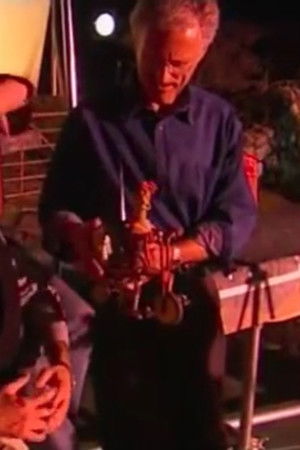
The Junk King (Vince Hannemann) gives valuable insight regarding his art and the Cathedral of Junk in Austin, TX.
Trans and queer communities shaped carnival traditions in the Canary Islands, exploring their historical role in developing costumes, performances, and celebrations that define the region's festive identity.
An accurate depiction of the basic tenets of northern Mahayana Buddhism, cast into living or "experiential" form, consistent with powerful mantras heard on the soundtrack of the film. Tarthang Tulku, a Tibetan Lama, was the advisor.
Becca
An animated documentary exploring how a mother's abusive relationship shaped the director's own experiences in boarding school.
In 1957, Charles and Ray designed the Solar Do-Nothing Machine for Alcoa, the Aluminum Company of America. True to the Eameses’ belief that toys are not as innocent as they appear, the machine was one of the first uses of solar power to produce electricity. In the 1990s, Eames Demetrios discovered unedited footage of the wonderful machine. He cut it together to produce a new film that shares a bit of its flavor for future generations to enjoy.
A young girl is cured of her epilepsy just as summer vacation is about to begin. During her last days with her classmates, she’ll come to experience life in a new way. Arranged as a series of elliptical tableaux, this haunting narrative from Luise Donschen (Casanova Gene) captures a simultaneous sense of discovery and disorientation as it proceeds from the confines of the classroom to a wider world of adolescent anxieties.
A history of the political and social repression carried out by the ruthless regime of Spanish dictator Francisco Franco between 1936 and 1975 that focuses on the lives of gays and lesbians during those dark years and the death of the Spanish gay poet Federico García Lorca.