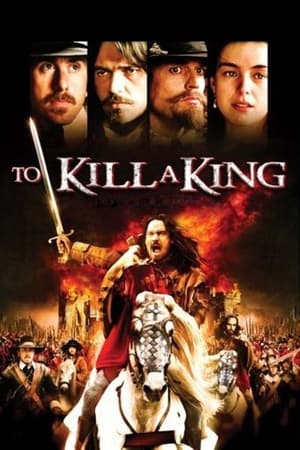
Disgusted with the policies of King Charles I, Oliver Cromwell plans to take his family to the New World. But on the eve of their departure, Cromwell is drawn into the tangled web of religion and politics that will result in the English Civil War.
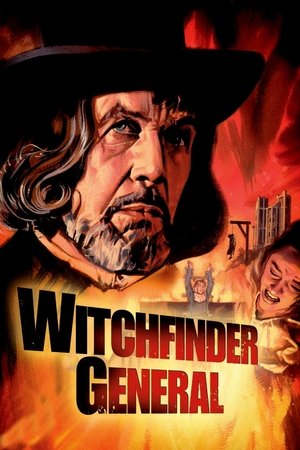
England, 1645. The cruel civil war between Royalists and Parliamentarians that is ravaging the country causes an era of chaos and legal arbitrariness that allows unscrupulous men to profit by exploiting the absurd superstitions of the peasants; like Matthew Hopkins, a monster disguised as a man who wanders from town to town offering his services as a witch hunter.
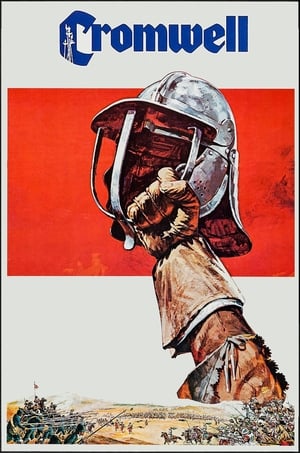
A recounting of the relationship between General Fairfax and Oliver Cromwell, as they try to cope with the consequences of deposing King Charles I.
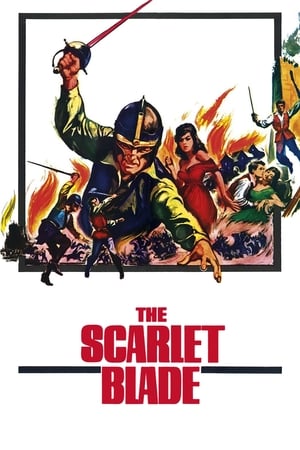
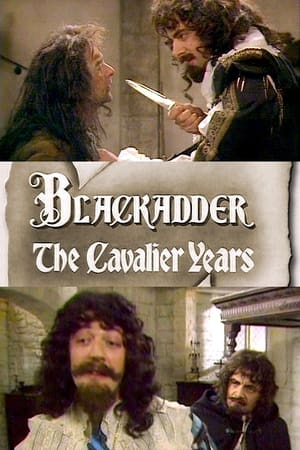
A cruel Roundhead Colonel is on the trail of royalist sympathizers, but unaware of his daughters royalist sympathies. When she falls into a love triangle with Cavalier Edward Beverly and Roundhead officer Captain Sylvester the stage is set for double crossing and derring-do.
Three children try to fight against the destruction of a local historic landmark. They are helped by a group of friendly ghosts.
An English farmer leads a village uprising against their corrupt landlords.
The Battle of Naseby was a decisive engagement of the English Civil War, fought on 14 June 1645 between the main Royalist army of King Charles I and the Parliamentarian New Model Army, commanded by Sir Thomas Fairfax and Oliver Cromwell. It was fought near the village of Naseby in Northamptonshire. Fairfax was ordered to lift his siege of Oxford, the Royalist capital, and engage the King's main army. Eager to bring battle to the Royalists, Fairfax set off in pursuit of the Royalist army, which was heading to recover the north. The King, faced with retreating north with Fairfax close behind, or giving battle, decided to give battle, fearing a loss of morale if his army continued retreating. After hard fighting, the Parliamentarian army all but destroyed the Royalist force, which suffered 6,000 casualties out of 7,400 effectives. Charles had lost the bulk of his army. Within a year, Parliament had won the first civil war.
The English Civil War (1642–1651) was a series of armed conflicts and political machinations between Parliamentarians (Roundheads) and Royalists (Cavaliers) over, principally, the manner of England's government. The first (1642–46) and second (1648–49) wars pitted the supporters of King Charles I against the supporters of the Long Parliament, while the third (1649–51) saw fighting between supporters of King Charles II and supporters of the Rump Parliament. The war ended with the Parliamentarian victory at the Battle of Worcester on 3 September 1651. This programme charts the lead up to the war and its outbreak, setting the scene for the following programmes in the series.
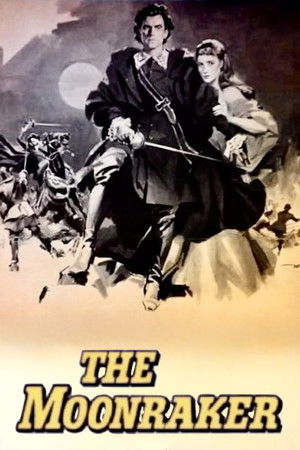
After the battle of Worcester at the end of the Civil War, the main aim of Oliver Cromwell's Commonwealth is to capture Charles Stuart. The future king's escape depends on the intrepid Earl of Dawlish, who as the Moonraker has already spirited away many Royalists. Dawlish travels to the Windwhistle Inn on the south coast to prepare the escape, where he meets Anne Wyndham, the fiancée of a top Roundhead colonel.
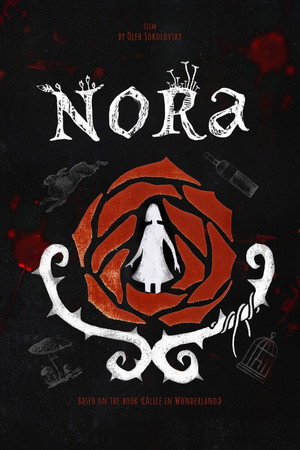
During the Civil War in 17th-Century England, a small group of deserters flee from a raging battle through an overgrown field. They are captured by an alchemist, who forces the group to aid him in his search to find a hidden treasure that he believes is buried in the field. Crossing a vast mushroom circle, which provides their first meal, the group quickly descend into a chaos of arguments, fighting and paranoia, and, as it becomes clear that the treasure might be something other than gold, they slowly become victim to the terrifying energies trapped inside the field.
Erik has been fired and wants his job back. When he can’t have it back, him and two friends decides to occupy the managers office.
The story of a girl who rebelled against the "double standard" of morals, and demanded that women should have as much right to expect virtue in the man they are going to marry as a man expects of a woman.
Alya and Ben love each other, but there's a high wall between them, a difference that can't be forced. Can love survive amidst differences and conflicting blessings?
Anson Campbell returns from the seminary to a small village on the New England coast. When the puritanical villagers persecute Bess Morgan, a "fallen" woman, he sticks up for her, telling them that their form of "Christianity" isn't Christian at all. This has no effect on the bigoted villagers and they turn their anger on him. Complications ensue.
Robert Wallace, the elder son of a rich and indulgent father, marries Margaret Christy, a spirited patriot, so that he can escape the call to war. Discovering the reason for Robert's haste to get married, Margaret is appalled and resolves to bring home to her husband a sense of his personal responsibility. In order to instill patriotism in Robert, Margaret contrasts him with John Harding, the man who gave her up to go to war. When Robert protests his wife's tactics, Margaret accuses him of being a contemptible coward. The next day a German insults the American flag, and Robert, his sense of justice aroused, makes him salute it. He then bids Margaret farewell and marches off to war. Margaret sees him off without divulging the secret that she is pregnant, thus sacrificing her own welfare for that of her country.
As Vitrines