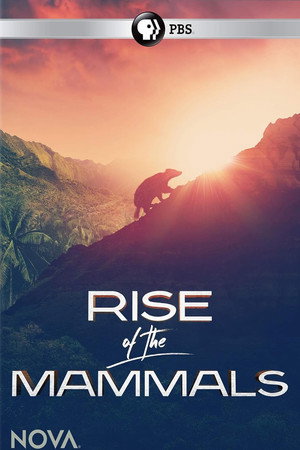
Darwin's great insight – that life has evolved over millions of years by natural selection – has been the cornerstone of all David Attenborough’s natural history series. In this documentary, he takes us on a deeply personal journey which reflects his own life and the way he came to understand Darwin’s theory.
In this documentary, we go back to the beginning and tell the origin story of Scotty the T. Rex and how it was discovered on that fateful day in 1991. We also showcase the lasting impact the discovery had on the town of Eastend and the Paleo world in Canada. In 2019, Scotty was proclaimed the biggest in the world. Believed to be a female, she measured over 13 m or just over 42.6 feet long and weighed over 8.8 metric tons. Discovered in the dinosaur-rich Frenchman Formation, Scotty's bones have been carefully preserved and are stored at the T. Rex Discovery Centre in Eastend, Saskatchewan.
This documentary delves into the mysteries surrounding the Neanderthals and what their fossil record tells us about their lives and disappearance.
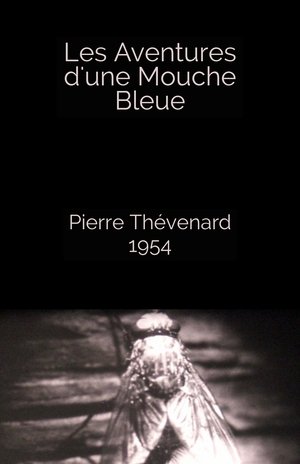
This film was produced as an extension of a research film on the metamorphosis of the fly. It successively shows the hatching of the eggs, the nutrition and growth of the larvae, swarming and underground penetration, the formation of the pupa, metamorphosis and organization of the adult insect.
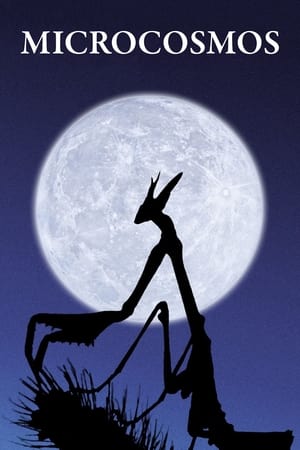
A documentary of insect life in meadows and ponds, using incredible close-ups, slow motion, and time-lapse photography. It includes bees collecting nectar, ladybugs eating mites, snails mating, spiders wrapping their catch, a scarab beetle relentlessly pushing its ball of dung uphill, endless lines of caterpillars, an underwater spider creating an air bubble to live in, and a mosquito hatching.
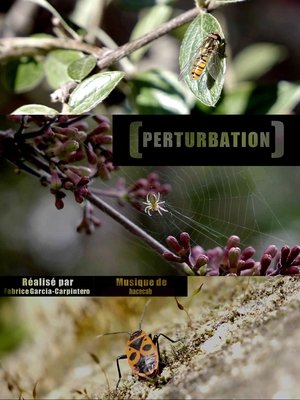
A scientist explains how the savagery and efficiency of the insect world could result in their taking over the world.
Sir David Attenborough investigates the discovery of a lifetime: the giant skull of a prehistoric sea monster, known as a pliosaur – the Tyrannosaurus rex of the seas!
An exploration of the diversity of moths and butterflies from caterpillars to larvae to chrysalis to winged flight. The documentary covers camouflage and other anti-predatory tactics along with uniqueness of different species and amazing feats and colors.
Sir David Attenborough investigates the discovery of a 200 million year old Ichthyosaur on the Jurassic Coast in southern England. Using state of the art technology and CGI David brings the story of the fossilised ichthyosaur out of the rock and shows us what this creature was really like as it lived during the Jurassic time period.
The Last Bumblebee is a solution-based documentary featuring interviews with scientists, and environmentalists discussing the importance of bumblebees as pollinators and the various threats they face.
Néandertal : Qui a tué notre cousin ?
A mining operation in Cerrejon, Northern Colombia revealed a treasure trove of fossils from animals that lived ten million years after the KT extinction that killed the dinosaurs. Surprisingly, enormous reptiles were dominate. Scientists investigate who was the apex predator of the era - Titanoboa, a quarter ton giant snake five times bigger than the largest anaconda, or a similarly giant crocodilian with an incredibly deadly bite force. —David Foss
A documentary series from Channel 4, hosted by professor Richard Dawkins, well-known darwinist. The series mixes segments on the life and discoveries of Charles Darwin, the theory of natural selection and evolution, and Dawkins' attempts at convincing a group of school children that evolution explains the world around us better than any religion.
Groenkijkers
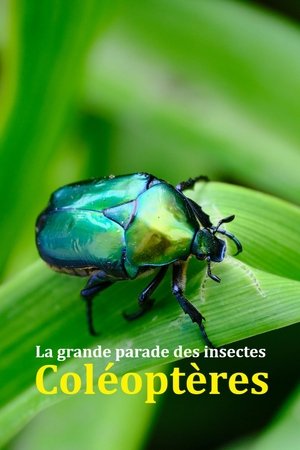
This documentary focuses specifically on insects. Giving you an unbelieveably up close and intimate view of the many unique secrets of the bug world. Answering scientific questions on how and why they have evolved certain bizarre adaptations, whilst using stunning imagery never seen before.
Be transported back to prehistoric times in Dinosaurs Unearthed, a fascinating look at two groundbreaking dinosaur discoveries. In Dino Autopsy, leading paleontologists unlock the mysteries behind one of the most complete dinosaur mummies ever discovered. This rare specimen—fossilized with skin and tissue intact—is bringing us closer than ever to understanding how dinosaurs lived, looked, and moved. In Dino Death Trap, the fossilized remains of Tyrannosaurus rex's great-grandfather are unearthed in China's Gobi desert, revealing what tyrannosaurs looked like before they grew so gigantic. Featuring state-of-the-art research techniques and amazing new footage of dinosaur mummies, these two thrilling programs reveal fascinating new clues about the lives of the prehistoric giants who once ruled the Earth.
David Attenborough returns to the island of Madagascar on a very personal quest. In 1960 he visited the island to film one of his first ever wildlife series, Zoo Quest. Whilst he was there, he acquired a giant egg. It was the egg of an extinct bird known as the 'elephant bird' - the largest bird that ever lived. It has been one of his most treasured possessions ever since. Fifty years older, he now returns to the island to find out more about this amazing creature and to see how the island has changed. Could the elephant bird's fate provide lessons that may help protect Madagascar's remaining wildlife? Using Zoo Quest archive and specially shot location footage, this film follows David as he revisits scenes from his youth and meets people at the front line of wildlife protection. On his return, scientists at Oxford University are able to reveal for the first time how old David's egg actually is - and what that might tell us about the legendary elephant bird.
Explores the story behind the discovery of an early primate fossil, Darwinius masillae, nicknamed Ida, in a shale quarry in Germany. The fossil is believed to be around 47 million years old, and is extraordinarily well-preserved. Originally unearthed in 1983, Ida lay in the hands of a private collector for 20 years before it was shown to a Norwegian paleontologist, Dr Jørn Hurum. Realising that Ida could turn out to be a significant missing link between modern primates, lemurs and lower mammals, he persuaded the Natural History Museum in Oslo to purchase the fossil and assembled an international team of experts to study it. Their findings were announced in a press conference and the online publication of a scientific paper on 19 May 2009.
David Attenborough brings to life, in unprecedented detail, the last days of the dinosaurs. Palaeontologist Robert DePalma has made an incredible discovery in a prehistoric graveyard: fossilised creatures, astonishingly well preserved, that could help change our understanding of the last days of the dinosaurs. Evidence from his site records the day when an asteroid bigger than Mount Everest devastated our planet and caused the extinction of the dinosaurs. Based on brand new evidence, witness the catastrophic events of that day play out minute by minute.
David Attenborough tells the story of the discovery and reconstruction in Argentina of the world's largest-known dinosaur, a brand new species of titanosaur.