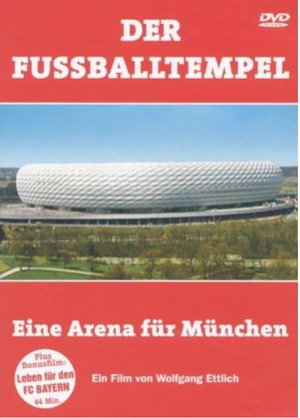
It does not happen every day that a gigantic stadium is built on a greenfield: In October of 2001, the citizens of Munich voted with a clear yes for a new soccer stadium in the north of the city. 66,000 soccer fans of FC Bayern and 1860 Munich will find a new common home in the futuristic looking structure. But before that stand four years of work on a construction site of superlatives. The director Wolfgang Ettlich and his cameraman Hans-Albrecht Lusznat followed the construction of the new Munich soccer arena since the first groundbreaking. They have recorded several phases of the construction and did thereby get to know the microcosm of a large construction site from the inside: The logistics, with which hundreds of construction workers have to be coordinated, and the steady growth of the stadium all the way to the perfectly conceptualized illuminated structure, with VIP-boxes, mass restaurants, and Europe’s largest parking garage.
They do not earn millions, yet they are happy nonetheless: Maria Meissner (87), Josef “Sepp” Schmid (74), and Rudi Egerer (65) have spent most of their lives working for FC Bayern. Maria still cleanses the trophies nowadays, Sepp still washes and prepares the jerseys of the players in the basement, and Rudi is still the bus driver. They are simple people who may have access to the glamorous world of the big stars, but who never wanted to adapt to the ‘modern times’ unconditionally. They have remained side characters and experience their club from a special angle: Being witnesses of the development from a people’s sport to star cult and commercialisation.
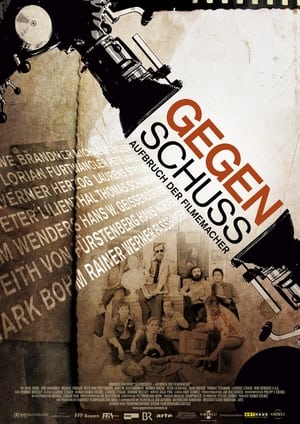
Documentary about filmmakers of the New German Cinema who were members of the legendary Filmverlag für Autoren (Film Publishing House for Authors). Among them are Werner Herzog, Rainer Werner Fassbinder, and Wim Wenders.
Draussen bleiben
Documentary film with play scenes about the rise and fall of the short-lived Bavarian Soviet Republic in 1919 from the perspective of various well-known poets and writers who experienced the events as contemporary witnesses.
Mia san Dageng: Punk In München!
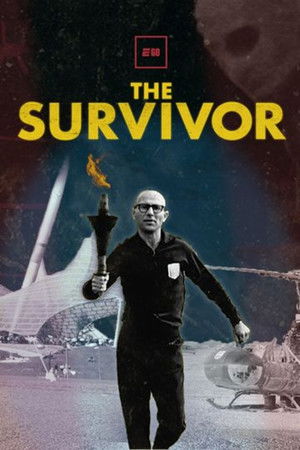
A powerful and emotional new episode of ESPN E60 will look back 50 years to one of the darkest moments in sports history – the Munich Massacre, when Palestinian terrorists murdered 11 Israeli sportsmen at the 1972 Summer Olympics. E60 will tell the story of one Israeli athlete, now 86, who survived, just as he had survived World War II and the Holocaust when he was a child.
Go with Armin and the blue garbage can through Munich and discover what happens to the garbage: Let us show you how 365 cans fit into just 16 water bottles. See how new paper is made from an old newspaper. Watch how waste from the organic waste garbage can is turned back into potting soil.
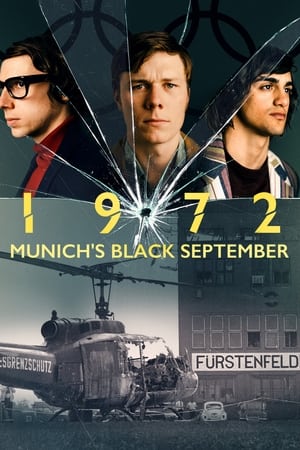
Explore the tragic truth about the massacre at the 1972 Olympic Games in Germany. Through interviews with key people such as the families of slain Olympians, German investigators and an anonymous perpetrator.
Two men, the hint of a sofa corner and a pile of letters. Using minimalist means, the film tells the story of two brothers caught between exile in a foreign country and resistance in the underground. It takes us back to the time when the revolution seized power in Iran and tells of life between the fronts. Daniel Asadi Faezi sketches the story of his father and his brothers - based on correspondence that has lain in the cellar for 30 years.
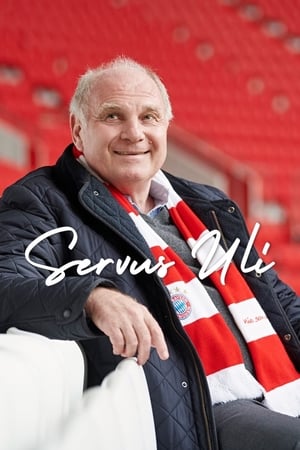
"Servus", he said after 49 years as a leading personality at FC Bayern München. Whether as player, manager or president, he played a major role in making FC Bayern the most successful German football club ever. Now, after countless athletical and personal ups and downs, Uli Hoeneß is retiring in late 2019.
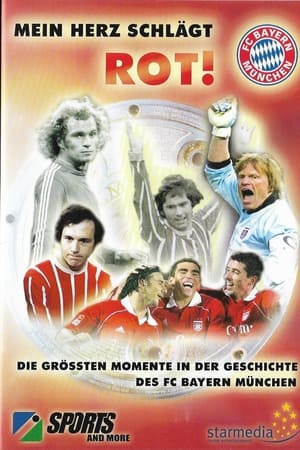
Championships, tears, and triumphs – the DVD for all Bayern fans! A review of all the big moments of the club’s history. Be it the Champions League triumph in Milan or the defending of the double in recent times. This DVD recalls the very biggest of players, the most successful coaches, and the most important moments, which turned FC Bayern Munich into what it is today: Record champion and most important representative of German soccer. There is a reunion with leading players, goal scorers, and goalkeeping legends of the last decades. Wonderful moments become alive again when you enter into the world of FC Bayern Munich. In the end, the certainty remains: My heart beats red!
Schwabing - Meine nie verblasste Liebe
Documentary about the Maximilianstraße in Munich.
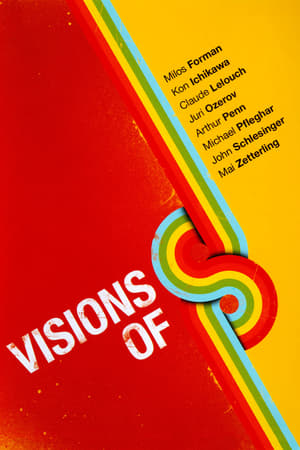
Eight acclaimed filmmakers bring their unique and differing perspectives to the 1972 Summer Olympic Games held in Munich. The segments include Lelouch's take on Olympic losers and their struggle to remain dignified even in the face of bitter disappointment and defeat; Zetterling's dramatic exploration of the world of weightlifting; and Pfleghar's piece on young Russian gymnast Ludmilla Tourischev's majestic performance on the uneven bars.
Documentary by Eckhart Schmidt.
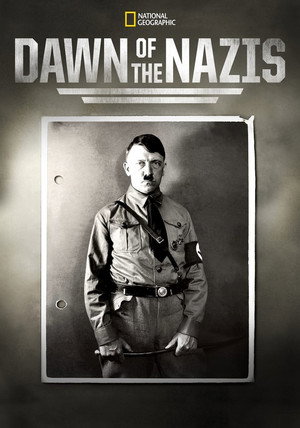
The night of November 8, 1923, is arguably the most significant and transformative in the history of the twentieth century. A localised uprising in the Bavarian capital of Munich, led by a small man with a toothbrush moustache and a poisonous yet compelling grandiloquence, would have repercussions that would lead to the political shackling of an entire nation, the most abhorrent crimes of the century and a world war. You might say, Adolf Hitler came of age amid the smell of sweat and sawdust of a Munich beer hall. In the political chaos of 1923, he was a local irritant, gaining popularity among workers and soldiers, the ethos of his Nazi Party spreading like a virus. His first attempt at attaining true power came with an attempted putsch on the already separatist government of Bavaria, which left him imprisoned.
Documentary about Kurt Landauer, the long-time Jewish president of FC Bayern München, who led the club to its first German championship, was persecuted and forced out of office by the Nazis, and rebuilt the club after the war.
The film was shot in an old, decrepit building where dozens of guest-workers' families live. The owner, a local influential politician, has avoided paying for the maintenance of the building under the legal standards by using his connections to proclaim the building a national cultural heritage. However, the rent he has been charging was as if the building were an object that offered standard comfort. The only German tenant takes the crew around and speaks of his battle against the landlord’s manipulation.
Golden Globe - München