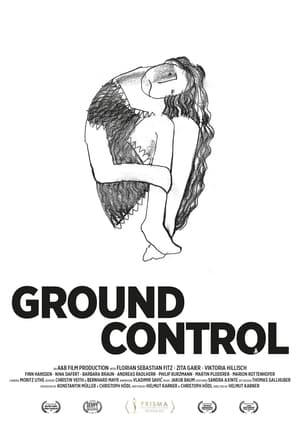
A girl and an older man discuss the nature of reality while doing chores on a pig farm.
Energy cannot be created or destroyed. When we die, where does our energy go? Inspired by Vauhini Vara's essay "Ghosts", in which she prompted Al to help her write about her sister's passing, "GHOSTS" takes us on the emotional journey of grief. We see a ghost figure trying to get through to her sister, who is still alive, and let her know she's still around somehow. There are two poems in this piece, one is a poem written by GPT 3, and the next is the director's (Oriana Mejer) response to it. This film uses spoken word poetry, TouchDesigner motion graphics, and is originally scored by French musician Taime.
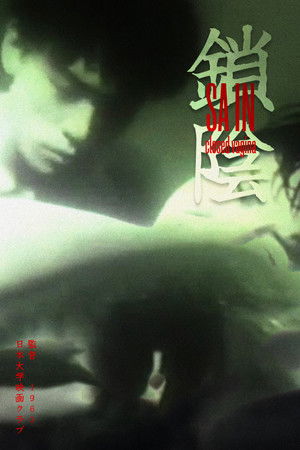
"Assassination" - Adaptation of Hermann Hesse's novel "Demian". A young man's detachment from and revolt against the superficial ideals of the world of appearances and eventually awakens into a realization of self. Max Demian is his childhood friend and mentor.
A tormented man struggling with his inner demons, seeks desperately a way to be at peace with himself.
Seeing himself as a form unable to experience intimacy, he is given the chance when brought to the household of twin sisters.
Questions how we as individuals are psychologically relying on our inhabit spaces and how we as society are influencing and being influenced by our surroundings.
The end of the world isn’t a global catastrophe, but an inner sense of total collapse, like for a man who’s lost his job and doubts his wife’s loyalty. In despair, he goes fishing and finds a wounded angel. He takes the angel home on his bicycle and introduces him to his family. But soon after, during a party at a local bar, the angel is accidentally shot by a neighborhood policeman. Based on Gabriel García Márquez’s short story 'A Very Old Man with Enormous Wings'.
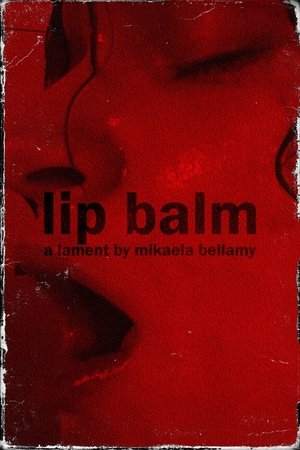
A lost and lonely artist drowns in a collection of her dreams in search of her estranged sister.
In 17th-century Tuscany, a church play is performed for the benefit of young aristocrat Cosimo. In the play, a grotesque old woman gives birth to a beautiful baby boy. The child's older sister is quick to exploit the situation, selling blessings from the baby, and even claiming she's the true mother by virgin birth. However, when she attempts to seduce the bishop's son, the Church exacts a terrible revenge.
A couple stroll through a wintry landscape - Is this a dream? Is this Heaven?
the emotional rollercoaster journey of a wood cutter when nature is paying back.
Three lives caught in limbo between dreams, reality, and oblivion.
Created by Antonio Rezza using an auto-timer and edited in the video camera, it describes selfishness and one-sided relationships. The only person who listens to everyone else’s problems ends up sopressing himself before the eyes of his confidantes/ executioners.
Welcome Home.
This short film, built around a randomly chosen name and composed of scenes shot within a single room over the course of three hours, features an introspective monologue that was shaped and adapted during the editing process. The narrative aligns closely with the emotional tone and visual rhythm of the piece, particularly in harmony with the non-original music selection, Maggot Brain by Funkadelic.
After reminiscing on her life, an abused older woman kills her husband. On her way to dispose of his body, she is forced to confront her guilt head-on.
The young hero seems the essence of maleness, yet he's troubled by vaguely feminine objects. Soon his masculine and feminine selves are intercut, as each of his identities appears to look and gesture at the other. The film, at once melancholy and transcendent, consists of a shimmering, nearly plotless evocation of gender identity in flux through haunting, densely interlaced images.
Structured in nine tableaux each a study of a simple action or situation involving a lone, naked figure, the blind Eros, searching for fulfilment, for self. The objects he touches - books, paintings - can be seen as icons of the creative spirit; there is also a motor cycle and film equipment. In succeeding scenes he appears to try on identities offered by institutional doctrines of religion and social traditions of (overt) masculinity. Much of the film was constructed in-camera with a small amount of editing afterwards. An innovation was the use of in-camera fade-outs as phrase markers, not as terminal points, within a single set-up or shot.
Psyche 1947, made while a student at USC, shows Markopoulos’ developing style and his sensuous use of colour and composition. Shot in the Hollywood hills, the film was inspired by an unfinished novella by Pierre Louÿs. - Tate Modern
Markopoulos called Lysis “a study in stream-of-consciousness poetry of a lost, wandering, homosexual soul” and felt that the film foreshadowed The Illiac Passion.