Reflections in a surrealist tone about the art of cinema.
Mona is torn between the love she has for Khaled, and her utter abhorrence of the male-dominant practices. When Khaled sweet-talks her into believing he is a liberal man, she marries him, only to be shocked by his real self and his controlling tendencies.
The mayor of an Upper Egyptian village has monopoly over beans which harms the simple villagers while getting high profits for the mayor. As one of the villagers stands up to the mayor and rallies the people, they decide to gather money to monopolize beans themselves.
A young man pretends to sleep while he watches his lover go through her morning routine.
As the day ends for a worn-out office worker, he encounters the mysterious gaze of a chimpanzee, sparking a silent exchange that prompts him to make an irreversible decision.
A young boy wakes up one day with the inexplicable behavior of an ape.
Oriana Mejer's niche poem-film style has created "NOISE!". The film dissects late stage capitalism and the effects social media has on the mind. This is a spoken word poem, performed by Mejer, combined with projections. It is a completely new approach to editing. Originally score by Sofia Camarena.
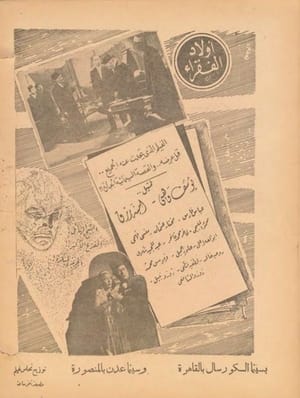
(Atiya Abu Hadid) is a thug and a thief who leads a gang to commit his crimes. He loves one of the neighborhood girls (Naana’a), who is engaged to her cousin (Al-Atra), a soldier in the army, who goes to participate in the Palestine war, so the atmosphere is clear for Atiya. He devises a plan to make the master (Hassan), Naana’a’s brother, fall in love with Zenouba, a girl whom Atiya exploits for his own despicable purposes.
On one of his trips, Wahid, a forty-year-old journalist, meets Sawsan, a young flight attendant. Admiration grows between them, and love grows, but the age difference between them is an obstacle, as she fears repeating the experience of her mother, who married her father, who was twenty years older than her, and then he died. Sawsan falls ill and is admitted to a hospital, and Wahid goes to visit her. The mother is surprised that he is her lover, whom she loved when she was young, and was unable to marry him.
A wealthy man with a circle of friends falls seriously ill. The son quickly arrives with his fiancée, who discovers that he left her in a hotel and went to see his father alone. His father scolds him when he learns that he completed his engagement without seeing his fiancée and insists on seeing her. The son returns to the hotel and does not find his fiancée, so he agrees with a girl to play the role of his fiancée.
Raqia loves her neighbor Fouad and they promise to get married, but unfortunately for the girl, her father and mother divorce. Her uncle comes to live with her and she finds his fanaticism very difficult, which forces her to leave the house and seek refuge with her father. She finds him tolerant, but her stepmother causes trouble between her and Fouad and attracts him to her. Raqia gets the chance to take revenge and exposes her frivolous stepmother.
Dr. Sami is subjected to harassment and arrogance from his wife, Munira. One of his patients is the singer Nadia, who visits his clinic for treatment. From here, Dr. Sami feels how gentle Nadia is. Dr. Sami's conditions change, and he even becomes preoccupied with Munira. Munira tries to find out the reason for this change, but fails to bring him back home, so she begins to spread rumors and scandals about him.
Jalal is a busy doctor with his patients all the time. His wife, Wafiya, decides to travel to Alexandria and he will join them in a few days. However, on his way back after dropping his wife off, he meets a beautiful girl with whom he spends most of his days.
Necropolis
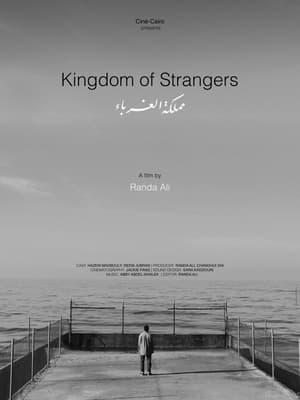
Two people attempt to connect over a great distance.
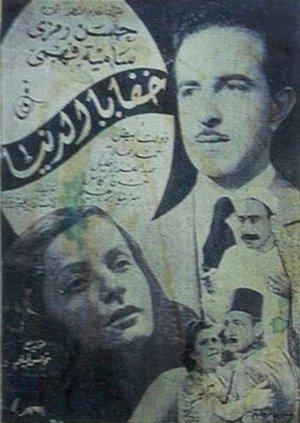
Professor Mahmoud loves the dancer Samia, who discovered her talent even with the age difference between them, but she treats him as a friend. When singer Adel comes to work with them, Samia is attracted to him, which causes Mahmoud's jealousy, and makes him sign with another casino.
شجرة العائلة
أصل وصورة
Energy cannot be created or destroyed. When we die, where does our energy go? Inspired by Vauhini Vara's essay "Ghosts", in which she prompted Al to help her write about her sister's passing, "GHOSTS" takes us on the emotional journey of grief. We see a ghost figure trying to get through to her sister, who is still alive, and let her know she's still around somehow. There are two poems in this piece, one is a poem written by GPT 3, and the next is the director's (Oriana Mejer) response to it. This film uses spoken word poetry, TouchDesigner motion graphics, and is originally scored by French musician Taime.