At a peculiar dinner party, an actress tries to survive amidst visions of her darkest nightmares. Without the slightest notion of space-time, the bewildered actress faces her fears and addictions, lost between what could be real or a figment of her imagination, dinner takes on a life of its own.
Pigpen has a snore. Bailey has a lot of nerve. And Curt Garrish has a gun.
Filmed in a decaying housing estate in east London, "Rhythm 06" renders the outer trappings of internal collapse, a choreography of layers of the real. This new reworking of "Rhythm 93" transposes Michael Whitmore's ethereal score for 10-string guitar and overtones on Carolyn Roy's original riveting hypernaturalist performance.
Casa Loma was the unfinished dream mansion of Canadian industrial magnate Henry Pellatt. A self-made millionaire, Pellatt was derided by fellow aristocrats for nouveau-riche pretentions: the house and its décor considered by many an ornate fake. Its original contents were sold at Pellatt’s bankruptcy auction in 1924. Today the building is a museum. The movie has three sections—the first in a cellar tunnel, the next in a first-story workroom near the stables, the third in the tower’s summit.
Three characters unknown to each other, experience a supernatural entity slowly unveil itself.
This audio-visual tone poem uses the language of filmmaking to offer a first-hand evocation of the turbulent psychological effects one can experience due to prolonged lack of sunlight.
Born in Los Angeles but a New Yorker by choice, Barbara Hammer is a whole genre unto herself. Her pioneering 1974 short film Dyketactics, a four-minute, hippie wonder consisting of frolicking naked women in the countryside, broke new ground for its exploration of lesbian identity, desire and aesthetic.
Cormac McCarthy has spent the last 25 years writing his novels at the mountain top retreat of the Santa Fe Institute (SFI) in New Mexico. An institute dedicated to the formal analysis of complex systems. In this documentary filmed at the library at SFI (and in the desert), Cormac in conversation with his colleague David Krakauer, reflects on isolation, mathematics, character, and the nature of the unconscious
Deemed "too ambient for broadcast" by MTV's AMP, Thaemlitz' first video "Silent Passability (Ride to the Countryside)" contrasts cinematic footage from drag performances in upstate New York with highly processed digital audio from his CD "Couture Cosmetique" (US: Caipirinha/Japan: Daisyworld, 1997). Thaemlitz is known for his fusion of computer synthesis techniques with non-essentialist transgenderism as two methodoligies which appropriate and critically recontextualize cultural signifiers, whether they be audio sources or gender constructs. The audio for "Silent Passability" deals with fears of violence while travelling in 'passable' drag between safe zones, and Thaemlitz' unsettling compulsion to remain silent in such circumstances so as to avoid confrontation. Antithetically beatific images from the transgendered stage question posturing as a means for alieviating and/or concealing such oppressive circumstances.
Die Schachtel (The Box), 1968. 35mm film transfer to videotape, black-and-white, sound; 29 minutes.
Five lonesome cowboys get all hot and bothered at home on the range after confronting Ramona Alvarez and her nurse.
While Trevor and Sam are smoking pot, Trevor’s mom comes home. When she finds out, Trevor reveals his father’s adulterous ways and destroys his family.
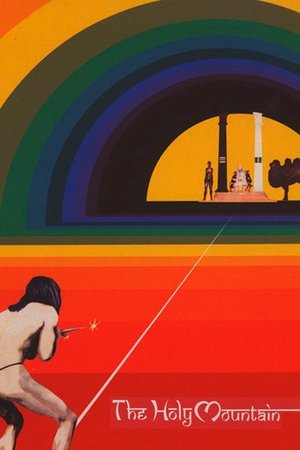
The Alchemist assembles together a group of people from all walks of life to represent the planets in the solar system. The occult adept's intention is to put his recruits through strange mystical rites and divest them of their worldly baggage before embarking on a trip to Lotus Island. There they ascend the Holy Mountain to displace the immortal gods who secretly rule the universe.
Snow Search finds four performers searching for each other, each carrying one quarter of a photographic portrait of Michael Snow. A lyrical exploration through the city and an homage to Michael Snow.
Rain
An animated short based on a scene from "The Long Walk" by Stephen King
Inside a bathroom, a woman dissolves. Not into water—but into identity. Set in an oneiric, liminal space, this experimental short dissects the most banal of routines—eliminate, change, wash—and refracts them through the prism of identity. What do we flush away, what do we conceal with powder and polish, what residue do we scrub from the self? The film doesn't offer answers. It exists in the space between viewer and image, where meaning is slippery and selfhood runs down the drain.
In this cyclical fever dream, a woman struggles to win over the crowd.
A silent succession of black-and-white photographs of the city of Montreal.