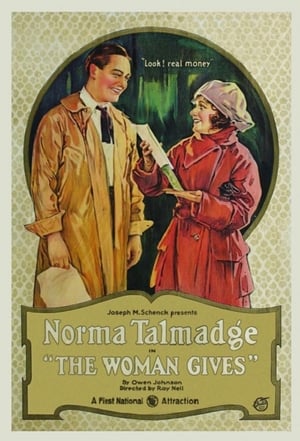
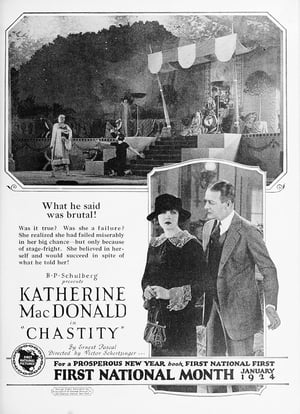
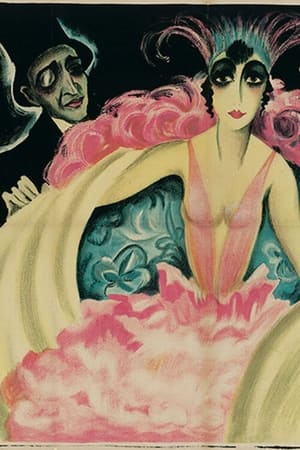
Victor Stowell, son of the deemster of the Isle of Man, is engaged to Fenella Stanley. He becomes involved in an intrigue with local girl Bessie Collister, becomes the deemster on his father's death, and is forced to try Bessie for killing her illegitimate child.
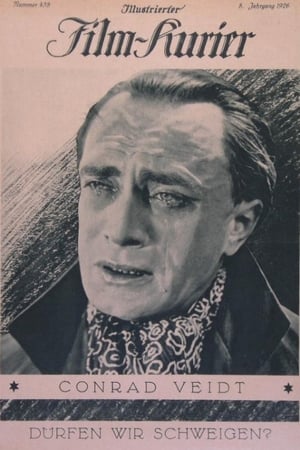
A man covers his head with several headscarfs, one by one... .
This film begins with the invocation of 'almighty god' at a river where several people are gathered. The child god Krishna rises out of the water astride the demon snake Kaliya. Then we see Yashoda as she rocks the sleeping Krishna's crib and imagines the god as Gopala. The next scene shows Kamsa fantasizing about Krishna threateningly duplicated many times around him. Kamsa then imagines himself dead as his severed head rises up and descends again. People of all castes pay obeisance to the deity with the title-card: 'may this humble offering be accepted by the Lord'.
An old knight weds his dead friend's daughter but she gives herself to an Italian Don to bear an heir.
A British army officer refuses to avenge the death of a general who was murdered years earlier. He is awarded three feathers by his officers. When his fiancée fails to defend his stance, he plucks a feather from her fan. He proves his courage by rescuing his comrades in dangerous and life-threatening situations. Later he returns each feather as proof of his redemption and courage.
Martin Hollmann, a young gardener meets his significantly older wife's daughter from her first marriage. Liesbeth Kröger is from his generation and they both get along well straight away. Shortly after his wife's death, Martin brings Liesbeth into his house as a housekeeper, and they both fall in love. The couple live together and soon decide to get married when Liesbeth becomes pregnant by Martin. But now the tragedy begins, because when registering at the registry office, Martin and Liesbeth, in the form of a strict bailiff, are officially declared that they have committed incest in accordance with Section 173 of the Criminal Code.
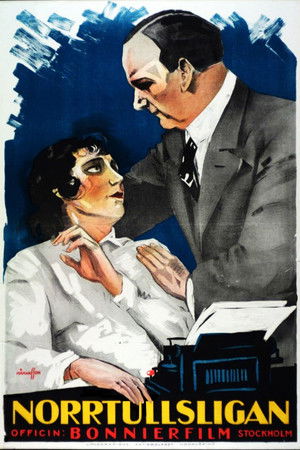
Karin, a young girl, gets an hour free from school. She spends it across the street from the school, in the apartment of an older photographer.
The dashing but arrogant Prince Michael Fedor Lubimoff has to flee Tsarist Russia after falling into disgrace and settles in Monte Carlo, where he resumes his life of debauchery while World War I ravages the fields of Europe… (Partially lost film; reels 3 and 9 of a total of 11 are missing.)
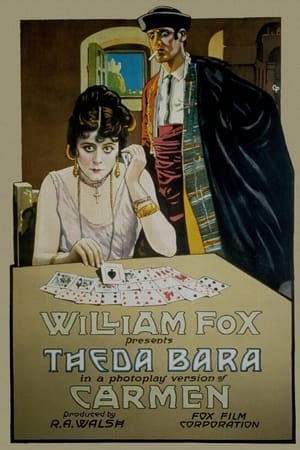
Silent film from 1915 which draws on the story of Carmen
The film tells the story of a man and woman who don't know each other. After being matched by a matchmaker, after going through a series of red tape, they were sent to the bridal chamber and began a difficult life as a couple. Despite the primitive shooting methods and lack of training of the actors, the film has a very important place in the history of Chinese film.
Against the backdrop of New York City of the early 1850s, a young woman -- naively seeking to win the love she reads about in the romance novels she devours -- finds one prospect in an earnest denizen of the Bowery, and another in an elegant young aristocrat. Focusing on the bygone era's fashions, the novelty of the bicycle-built-for-two, and an inventor's quest for the horseless carriage, the film gently stirs the audiences' nostalgia for simpler times.
In 15th century France, a gypsy girl is framed for murder by the infatuated Chief Justice, and only the deformed bellringer of Notre Dame Cathedral can save her.
During a game of hide and seek, a new bride hides in a chest and remains undiscovered until a strange visitation thirty years later.
Just as Galeen and Wegener's Der Golem (1915) can be seen as a testament to early German film artistry, The Story of the Kelly Gang (1906) symbolizes both the birth of the Australian film industry and the emergence of an Australian cinema identity. Even more significantly, it heralds the emergence of the feature film format. However, only fragments of the original production of more than one hour are known to exist, preserved at the National Film and Sound Archive, Canberra; Efforts at reconstruction have made the film available to modern audiences.
A fisherman and a rising lawyer who grew up together as brothers fall in love with the same woman.
It's a classic boy-meets-girl story, boy-loses-girl, boy gets mistaken for an escaped convict and ruthlessly chased by armies of cops across the countryside in a thrill-packed stunt-addled climax.
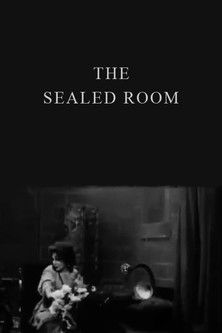
The Count sets out to make a private room for him and his Countess, built in such a way no one can see, hear, and most importantly, disturb them. But unbeknownst to the Count, his wife has set her eyes on the court minstrel. Based on Edgar Allan Poe's “The Cask of Amontillado” and Honoré de Balzac's “La Grande Breteche”.
The first part tells the story of Moses leading the Jews from Egypt to the Promised Land, his receipt of the tablets and the worship of the golden calf. The second part shows the efficacy of the commandments in modern life through a story set in San Francisco. Two brothers, rivals for the love of Mary, also come into conflict when John discovers Dan used shoddy materials to construct a cathedral.
A gang of crooks evade the police by moving their operations to a small town. There the gang's leader encounters a faith healer and uses him to scam gullible public of funds for a supposed chapel. But when a real healing takes place, a change comes over the gang. Lost film, only the most famous scene has survived.
Therese Roger, daughter of a West Indian planter, whose parents are murdered while she is a baby, becomes the adopted daughter of her aunt, Madame Roger, keeper of a haberdashery shop in one of the smaller villages in southern France. She grows up with Camille, Madame Roger's son, a sickly, sexless creature, whom she ultimately marries in deference to her aunt's wishes.