Orquesta Los Bengalas
Teen Andrea uses a male stripper to gain the respect and admiration of cool girl Daphne. Hot Seat, which is based on a true story, explores coming-of-age sexuality and the complexities of relationships between teen girls.
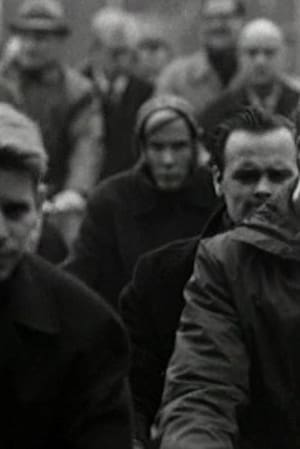
Working men and women leave through the main gate of the Lumière factory in Lyon, France. Filmed on 22 March 1895, it is often referred to as the first real motion picture ever made, although Louis Le Prince's 1888 Roundhay Garden Scene pre-dated it by seven years. Three separate versions of this film exist, which differ from one another in numerous ways. The first version features a carriage drawn by one horse, while in the second version the carriage is drawn by two horses, and there is no carriage at all in the third version. The clothing style is also different between the three versions, demonstrating the different seasons in which each was filmed. This film was made in the 35 mm format with an aspect ratio of 1.33:1, and at a speed of 16 frames per second. At that rate, the 17 meters of film length provided a duration of 46 seconds, holding a total of 800 frames.
A two parts making of documentary, following José Augusto Silva and his film crew during the shooting of a university short film called Castelo.
A lyrical recreation of Lightnin’ Hopkins’ decision at age eight to stop chopping cotton and start singing for a living. Preserved by the Academy Film Archive in 2013.
When Ethel is threatened with eviction from her retirement community, her friends Vivian and Ruth become co-conspirators in the heist of the century. Their target: the local bingo hall.
Kyle, a college dropout, risks it all to make it big as a Viewr videogame streamer.
An oil-rich rube who aspires to stardom is bilked by a phony acting school.
Hyun, Sung-gu and Min-cheol, who decided to do group projects at Min-cheol's house. Hyun hates senseless Sung-gu.
Nos restaurants : Une grande histoire française
Introducing Hellarious: a once-in-a-lifetime feature collection that brings together seven of the most legendary horror comedy shorts ever made. The stories, from some of the world’s best genre filmmakers, feature a hilarious menagerie of zombie wives, amateur satanists, reverse werewolves, cannibal lunch ladies and more -- along with gust-busting gags, gross-outs and gore. Included in Hellarious: Lunch Ladies by Clarissa Jacobson and J.M. Logan, Horrific by Robert Boocheck (ABCs of Death 2), Death Metal by Chris McInroy, Born Again and ‘Til Death by Jason Tostevin and Randall Greenland, Killer Kart by James Feeney, and Bitten by Sarah K. Reimers.
A mockumentary following the troubled production of Clockmen: The Musical, focusing on a cosplayer-turned-actress who reacts to the stress of the production in a rather unusual way.
Agent 327 is investigating a clue that leads him to a shady barbershop in Amsterdam. Little does he know that he is being tailed by mercenary Boris Kloris.
Wes Hurley's autobiographical tale of growing up gay in Soviet Union Russia, only to escape with his mother, a mail order bride, to Seattle to face a whole new oppression in his new Christian fundamentalist American dad.
The family of Eusebio, a sick old man, believes that he has begun to lose his mind and that the stories he tells, which nobody listens to, are those of a crazy person.
Young men are faced with a medical commission for army recruits and asked to choose where they want to get to, at least theoretically.
The 1966 visit of Hollywood movie star Kirk Douglas at the legendary Polish State Film School in Lódz.
Piwowski's documentary debut is a satirical reportage, referring to the poetics of the Czech school at the time. The starting point was an order from a film studio to join a project proposed by the Germans: what do teenagers in your country do on Saturday at 5 pm? Images from the lives of teenagers from Kętrzyn make up a contrasting slice of free time in a small town. Firemen maneuvering to start a fire outside working hours, bodybuilders training, choir rehearsal, dancing in Hitler's former headquarters...
A satirical look at the Soviet-block hairdressing contest which was held in Warsaw in 1971.
Director Peter Judson's semifictitious tale opens a revealing window into the indie filmmaking process, capturing the trivialities, aggravations and enthusiasm that go into completing a picture. Using footage from an indie movie set, e-mails constructing a plotline about distributor difficulties and interviews with indie mainstays such as Steve Buscemi and Sam Rockwell, the film provides a riveting look at one producer's rejections and rewards.