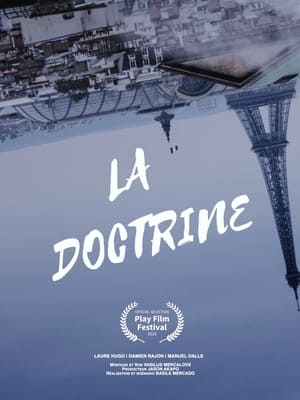
Ruben has been living in the tourist centre of Paris for several years. He's never managed to make a niche for himself. Instead, he has been living in his little hideaway. August, Ruben is suffocating, and is forced to resurface.
Bienvenue au grand magasin
The National Library of France is the guardian of priceless treasures that tell our history, our illustrious thinkers, writers, scholars and artists. Telling the story of the exceptional treasures of the National Library of France is like opening a great history book rich in many twists and turns. Without the love of the kings of France for books and precious objects, this institution would never have seen the light of day. The story begins in the 14th century under the reign of a passionate writer, Charles V, who set up a library in his apartments in the Louvre. But it was not until the 17th century, and the reign of Louis XIV, a lover of the arts and letters, that the royal library took over its historic quarters in the rue Vivienne in Paris, which it still occupies.
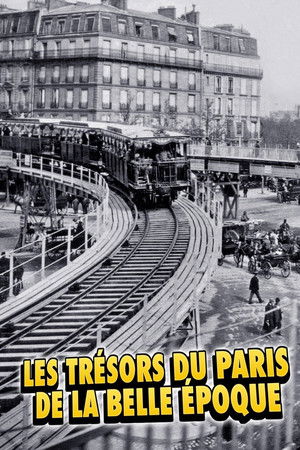
The Bokelberg photographic collection brings to life the Paris of the Belle Époque (1871-1914), an exhibition of workshops and stores with extremely beautiful shop windows before which the owners and their employees proudly pose, hiding behind their eyes the secret history of a great era.
TGV, 30 ans de vitesse
From May 10, 1940, France is living one of the worst tragedies of it history. In a few weeks, the country folds, and then collapsed in facing the attack of the Nazi Germany. On June 1940, each day is a tragedy. For the first time, thanks to historic revelations, and to numerous never seen before images and documents and reenacted situations of the time, this film recounts the incredible stories of those men and women trapped in the torment of this great chaos.
While Paris, the City of Lights, shines brightly, hidden in its shadows are fascinating installations, put in place nearly two centuries ago: the sewers. Even today, this 2,600-kilometer-long labyrinth of streets and infrastructure ensures the sanitation of the entire capital. In 1854, during Haussmann's grand urban renewal projects in Paris, the French engineer Eugène Belgrand undertook one of the century's largest construction projects: the renovation of the Paris sewers. His main innovation: an ingenious dual network that simultaneously treats wastewater and delivers drinking water to Parisians.
After her divorce is final, socialite Helen Hollander heads to Paris and finds herself caught up in an international terrorist plot in this thriller. When Helen comes into possession of information vital to a terrorist organization, nefarious characters begin tailing her through Paris. A hunky private eye offers to help her, but Helen isn't sure whether he's on the up-and-up.
Through the experiences of two women in Paris and London, Ghost Dance offers an analysis of the complexity of our conceptions of ghosts, memory and the past. The film focuses on the French philosopher Jacques Derrida, who observes, 'I think cinema, when it's not boring, is the art of letting ghosts come back.' He also says that 'memory is the past that has never had the form of the present.'
Johan van der Keuken's first film is a uniquely beautiful portrait of Paris at dawn.
A fictional documentary on Notre Dame de Paris, produced in 2019.
A modern Cinderella in Paris: While the plain Kelly Carter works as a dresser for the famous fashion designer Francesco, she dreams of designing shoes for him. However she can't win his attention... until she helps a good fairy on the street who, unbeknownst to Kelly, enchants a pair of Kelly's shoes so that she turns into a supermodel whenever she wears them. She attends Francesco's Ball and immediately wins his heart. Now, how can she make him love her real self?
In this drama, an American art student is trapped amidst the political turmoil of war-torn Europe while visiting Paris and staying at the fabulous Ritz hotel. Rather than cope constructively with it all, the fellow opts to ignore it and continue living the high-life for as long as possible.
The story of Le Palace, the famous parisian night club in the late seventies. The documentary is a conversation between ex-clients, founders and workers of the place. Owned by Fabrice Emaer, this nightclub became in 1978 the center of the french social life.
Paris, France, February 2, 1922. The novel Ulysses, by Irish writer James Joyce (1882-1941), is published by US poet Sylvia Beach (1887-1962), owner of the small bookstore Shakespeare & Co. The book, whose writing consumed seven years of Joyce's life, years in which his family was in financial need, would have a profound and unprecedented impact on 20th century literature and culture.
Narrator dreams of Madrid while being caught in a repetitive loop somewhere in Paris. He questions if his interlocutor is a real human being, as their dialogue, mostly built of citations, doesn't seem to be helping with breaking the loop.
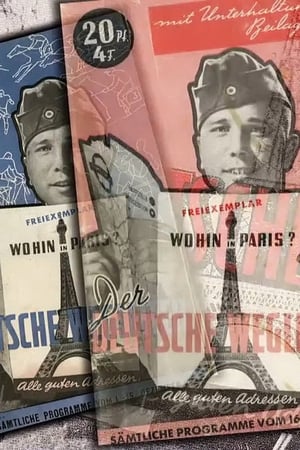
Paris : Les Lieux secrets de l'occupation
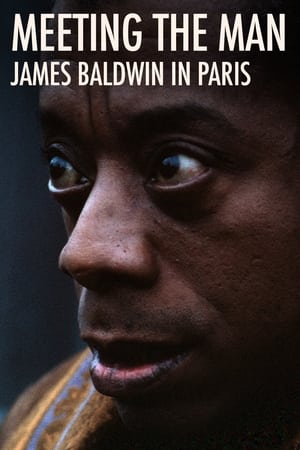
In 1970, a British film crew set out to make a straightforward literary portrait of James Baldwin set in Paris, insisting on setting aside his political activism. Baldwin bristled at their questions, and the result is a fascinating, confrontational, often uncomfortable butting of heads between the filmmakers and their subject, in which the author visits the Bastille and other Parisian landmarks and reflects on revolution, colonialism, and what it means to be a Black expatriate in Europe.
Lucy Jarvis -- the plucky camerawoman known for becoming the first Westerner to film inside communist China -- breaks barriers once again with this exclusive look at the world-famous Musée du Louvre, a place that previously barred access to all filmmakers. Charles Boyer is your host on this personalized tour of the museum's most prized possessions, including works by da Vinci, Michelangelo, Vermeer and Van Eyck.
Czech painter and illustrator Alphonse Mucha (1860-1939) ranks among the pioneers of the Art Nouveau movement at the end of the 19th century. Virtually overnight, he becomes famous in Paris thanks to the posters that he designs to announce actress Sarah Bernhardt’s plays. But at the height of his fame, Mucha decides to leave Paris to realize his lifetime project.