This film documents the yearly cycle of the great blue heron, its migration from Central America and the West Indies to the St. Lawrence River in Québec, and the breeding and rearing of its young. Outstanding footage shot by the filmmaker perched high in a tree affords close-ups of the birds' intricate courtship rituals. A sensitive, beautifully photographed nature film with much to tell us of ecology and wildlife.
Swedish documentary on African birds.
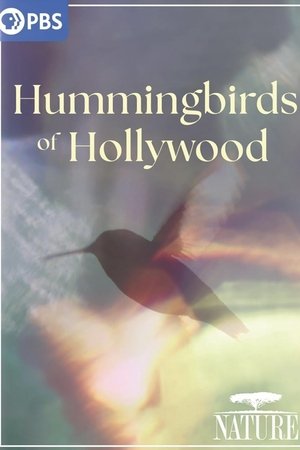
It is a documentary about mostly inner-city birds. It is meant to examine their lives in a more metropolitan context as they become increasingly tangled in our everyday lives.
Some of the world's most majestic birds display delightfully captivating mating rituals, from flashy dancing to flaunting their colorful feathers.
"Harupoy sa Hangin" takes viewers to Olango Island, a sanctuary for migratory birds on the East Asian-Australasian Flyway. Locals recount the island’s past and narrate the present. While, a longtime bird watcher and author of Birds of Cebu and Bohol Philippines, presents the importance of Olango Island.
You don't have to travel to faraway countries to observe wildlife, because the fauna of the big city also provides surprises every day. Contrary to expectations, many bird, mammal and insect species have adapted to the concrete jungle. They have become experts of the urban space. “My Wild Neighbors” takes a poetic look at the lives of animals in the city.
Voir l'automne, une saison en France
In the first half of the 19th century, the French ornithologist Jean-Jacques Audubon travelled to America to depict birdlife along the Mississippi River. Audubon was also a gifted painter. His life’s work in the form of the classic book ‘Birds of America’ is an invaluable documentation of both extinct species and an entire world of imagination. During the same period, early industrialisation and the expulsion of indigenous peoples was in full swing. The gorgeous film traces Audubon’s path around the South today. The displaced people’s descendants welcome us and retell history, while the deserted vistas of heavy industry stretch across the horizon. The magnificent, broad images in Jacques Loeuille’s atmospheric, modern adventure reminds us at the same time how little - and yet how much - is left of the nature that Audubon travelled around in. His paintings of the colourful birdlife of the South still belong to the most beautiful things you can imagine.
In Pica Pica Kristersson invites the viewer to be enthralled for an hour and a half by the vicissitudes of magpie life. Opposing himself to the current nature films that tend to highly compress time in order to end up with a concentrated sequence of action-elements Kristersson leaves rhythm and tempo almost completely up to the magpies themselves. With great integrity he filmed the daily, social and emotional life of a species of birds that has many points of contact with human life. Thus, the movie offers us the oppurtunity to view our own everyday existence through other eyes, from a world right above our heads, but yet so far away.
Annedore takes care of orphan birds. They give her that which humans througout her turbulent life could never give her: love.
Pták roháč
Luňáci a černí čápi
Na bílých křídlech
Mezi volavkami
Did Cartier dream of making a country from this land of a million birds? In his records of his exploration he certainly marvelled at seeing the great auks that have since disappeared from Isle aux Ouaiseaulx, the razor-bills and gannets that are gone from Blanc-Sablon, and the kittiwakes from Anticosti, all the winged creatures of all the islands which he described as being "as full of birds as a meadow is of grass". And that's not even counting the countless snow geese.
On the eve of her 70th birthday, Canadian writer Margaret Atwood set out on an international tour criss-crossing the British Isles and North America to celebrate the publication of her new dystopian novel, The Year of the Flood. Rather than mount a traditional tour to promote a book's publication, Atwood conceived and executed something far more ambitious and revelatory--a theatrical version of her novel. Along the way she reinvented what a book tour could (and maybe should) be. But Atwood wasn't selling books as much as advocating an idea: how humanity must respond to the consequences of an environmentally compromised planet before her work of speculative fiction transforms into prophesy.
Some champion exhibits from the National Cat Club Show and the Combined Bird and Aquaria Show, described by W. Cox-Ife, F. Hopkins, and L.C. Mandeville.
Volavky na Velkém Tisém
Ostrovy milionů ptáků
Na ostrove kormoránov