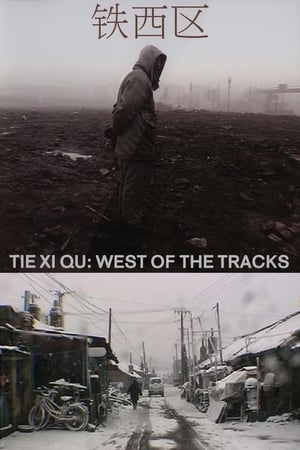
A detailed look at the gradual decline of Shenyang’s industrial Tiexi district, an area that was once a vibrant example of China’s socialist economy. But industry is changing, and the factories of Tiexi are closing. Director Wang Bing introduces us to some of the workers affected by the closures, and to their families.
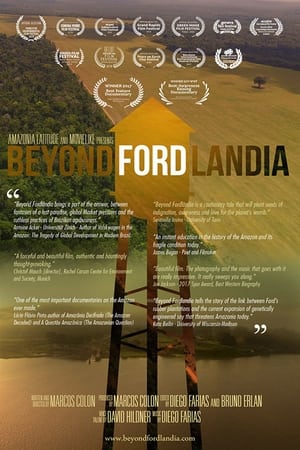
An environmental account of Henry Ford’s Amazon experience decades after its failure. The story addressed by the film begins in 1927, when the Ford Motor Company attempted to establish rubber plantations on the Tapajós River, a primary tributary of the Amazon. This film addresses the recent transition from failed rubber to successful soybean cultivation for export, and its implication for land usage.
A unique mix of natural resources, daring investment, the fierce 'Merthyr spirit', global wars and a drive to innovate all transformed this valley town from rural idyl into an industrial superpower.
After completing jail time for beating up a man who tried to seduce his mentally-handicapped teenage daughter, the Butcher wants to start life anew. He institutionalizes his daughter and moves to the Lille suburbs with his mistress, who promises him a new butcher shop. Learning that she lied, the Butcher returns to Paris to find his daughter.
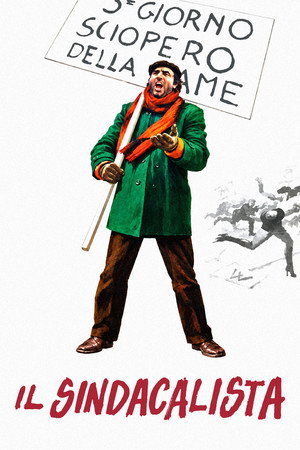
A Sicilian worker, a member of the internal commission in a factory in Bergamasco, believes he has won it over the owner because he has obtained important improvements, but the astute employer sells the company to a multinational company.
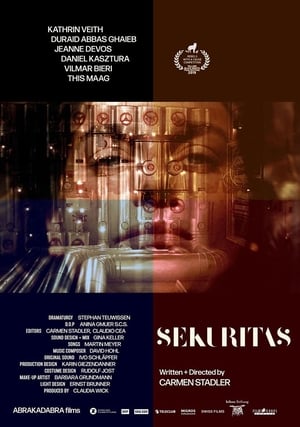
Before an office complex is set to be demolished, it expresses one last wish: a love story. It centers around desire, security, and a melody that runs through the entire fabric of the building. So when darkness descends and everything falls silent, the routine lives of those within its walls sparkle like stars, paving the way for intimate chance encounters and absurd humor to unfold. A nocturnal kaleidoscope of longing, loneliness and freedom.
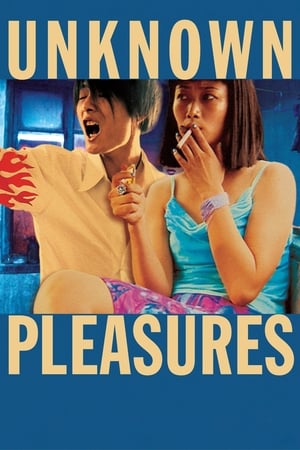
Two disaffected, unemployed Chinese youth drift through life on the streets of their industrial town, their paths crossing with that of a local young singer and dancer working for a liquor company as a spokesmodel.
Born into a family of farmers in the mid-19th century, Karoline Augusta Antonsen moves to a nearby industrial city in her late teens, driven by the dream of building a large family and owning a big house. This short film follows her journey of hope, and her struggle to survive in a tough economy. Will she achieve her lifelong ambition or will her story end in tragedy?
On the eve of the Israeli attack on Egypt in 1956, Israel declares martial law in all the occupied Arab territories without any previous notice. When the villagers of Kafr Kassem returned home from the fields, they were butchered and killed in what is known today as the massacre of “Kafr Kassem”.
In this heartwarming docudrama, Chilean immigrant Marilú Mallet strives to make a film about her experience of deep isolation. Her English-speaking husband, a prominent film director, criticizes her subjective approach to filmmaking; her young son, raised in Quebec, speaks only French. Interviews with Isabel Allende and other Chilean exiles reveal a deep bond in this powerful and resonant film about language and genre, exile and immigration.
The life and work of New York artist Jean-Michel Basquiat have been marked by a long quest for identity, by his Haitian and Puerto Rican family origins and by a founding trip to Africa. To portray this major painter of the 20th century, who died in 1988 at only 27 years old, is also to evoke the place of black American artists in the conservative and racist America of the Reagan years.
In The Past Goes Fast, Robert De Niro opens the doors of his father’s studio, preserved for almost thirty years, to JR. He discusses his complex relationship with his father, Robert De Niro Sr (1922-1993), an abstract expressionist painter.
A documentation of the live Action Ulay performed in Berlin in 1976. It shows step by step his arranged "art theft" of Carl Spitzweg's painting "The Poor Poet" from the Neue Nationalgalerie and his reception in commentaries and reactions from the press.
Writer, journalist, explorer, filmmaker, communist militant, freedom fighter. Truths and lies. A plot twist. Politician. General De Gaulle's shadow. Overwhelmed by the weight of power. The numerous exploits of André Malraux (1901-1976).
Jubilee special celebrating Evert Taube's 100th birthday with performances and interviews with friends and family.
Vietnamese alleged victims of Agent Orange read a letter to the American people appealing for justice and help. Their class action case moves through the U.S. Court system as scientists, military historians and doctors take us to a new battlefield.
Today, you're more likely to go to prison in the United States than anywhere else in the world. So in the unfortunate case it should happen to you - this is the Survivors Guide to Prison.
The youngest protagonist of the documentary is Wartburg, an automobile over 50 years of age. The car is still on the road, driven by Bogdan, a 70-year-old who is taking his mother to visit the German factory where she was forced to work during WWII. In this road movie which takes place between Majdanpek and Germany, the trip becomes a journey into the past, retracing memories from the war and revealing a unique relationship between an old son and his elderly mother.
Created from a treasure trove of archive, Queerama traverses a century of gay experiences, encompassing persecution and prosecution, injustice, love and desire, identity, secrets, forbidden encounters, sexual liberation and pride. The soundtrack weaves the lyrics and music of John Grant, Goldfrapp and Hercules & Love Affair with the images and guides us intimately into the relationships, desires, fears and expressions of gay men and women in the 20th century – a century of incredible change.
The notion that oil motivates America's military engagements in the Middle East is often disregarded as nonsense or mere conspiracy theory. In Blood and Oil, bestselling author and Nation magazine defense correspondent Michael T. Klare challenges this conventional wisdom and corrects the historical record. The film unearths declassified documents and highlights forgotten passages in prominent presidential doctrines to show how concerns about oil have been at the core of American foreign policy for more than 60 years -- rendering our contemporary energy and military policies virtually indistinguishable. In the end, Blood and Oil calls for a radical re-thinking of US energy policy, warning that unless we change direction, we stand to be drawn into one oil war after another as the global hunt for diminishing world petroleum supplies accelerates.