Power and Paranoia of the Third Reich
Søren Kam: Nazisten, der aldrig fortrød
May 1945. Victory. Triumph over Nazi Germany. And already, history is being rewritten. The story of a France liberated by its people, resistant at heart, united against oppression. In our memories, we see the faces of heroes: Gaullists and Communists. We forget the origins of the struggle. That of the very first men and women, left-wing, right-wing, communists, far-right, apolitical... who, individually and from June 17, 1940, said "no." A visceral and spontaneous "no" in a France that said "yes," rallying behind Pétain. A "no" from the heart and courage, fueled by the will to act in the name of freedom. They started from nothing, had to invent everything, risk their lives and those of their loved ones. They are the heroes, those who, in isolation, stood up at once and chose to disobey, whatever the cost, even to the point of self-sacrifice. Alone against all...
Explore how one man's relentless drive and invention of the atomic bomb changed the nature of war forever, led to the deaths of hundreds of thousands of people and unleashed mass hysteria.
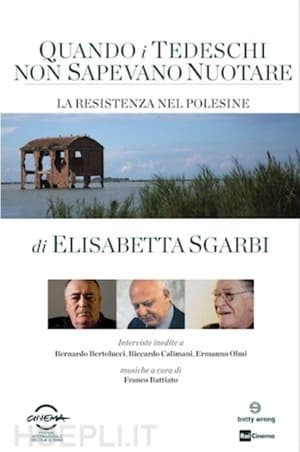
When Italy capitulated 1943 and joined the allied forces, some soldiers from the German Wehrmacht also changed sides and joined the Italians in their fight to liberate the country. This film tells the story of Rudolf Jacobs, Walter Fischer and Heinz Brauers, three of the ‘Good Germans’ remembered in Italy for their efforts in fighting the Nazis.
In August 1936, the Olympic Games, orchestrated by Joseph Goebbels, the Third Reich's Minister of Propaganda, took place in Berlin. This was a vast charm offensive designed to present Germany as a nation that respected the Olympic principles of equality and fraternity. This documentary reveals the political strategies of the Third Reich, which benefited from the complicity of the International Olympic Committee in thwarting calls for a boycott by several countries. Once the games were over, Nazi policy intensified. How could the civilized world turn a blind eye to this "great illusion"? Gretel Bergmann, the German Jewish athlete at the center of a bargaining chip between the German authorities and the US government, and Noël Vandernotte, who won a bronze medal in rowing, share their stories.
70 years after a body is found floating in a Sydney river, middle aged Jewish doctor Jack learns his father, a Holocaust survivor, is responsible for the unsolved murder of an alleged Nazi and sets out on a quest to find the truth.
The story of the iconic WW2 bomber told through the words of the last surviving crew members, re-mastered archive material and extraordinary aerial footage of the RAF’s last airworthy Lancaster.
This chilling, vitally important documentary was produced to mark the 40th anniversary of the liberation of Auschwitz Concentration Camp. The film contains unedited, previously unavailable film footage of Auschwitz shot by the Soviet military forces between January 27 and February 28, 1945 and includes an interview with Alexander Voronsov, the cameraman who shot the footage. The horrifying images include: survivors; camp visit by Soviet investigation commission; criminal experiments; forced laborers; evacuation of ill and weak prisoners with the aid of Russian and Polish volunteers; aerial photos of the IG Farben Works in Monowitz; and pictures of local people cleaning up the camp under Soviet supervision. - Written by National Center for Jewish Film
A documentary examining possible historical and modern conspiracies surrounding Christianity, the 9/11 terrorist attacks, and the Federal Reserve bank.
The Soviet occupation of Bulgaria (1944-1947) causing the greatest political, financial and moral turning point in the new Bulgarian history.
In May 1943, Ernst Kaltenbrunner, the new head of the Reich Central Security Office, gave Hitler a report describing in detail the organization of the French Resistance. Indeed, during the Second World War, most of the Resistance networks had been infiltrated by traitors, the "V Man" (trusted men) in the service of the occupier. The Germans had established treason as a system and recruiting Frenchmen ready to inform on them was one of their priorities. It was these Frenchmen, whose number is estimated at between 20,000 and 30,000, who dealt terrible blows to the Resistance.
Father Edward J. Flanagan is a familiar name to many Americans, often for the Oscar-winning 1938 film starring Spencer Tracy about Flanagan’s groundbreaking child welfare organization. But the story extends far beyond that, to a man whose name and legacy are still well-known as far as Germany and Japan. Flanagan gained influence and admiration over the course of his life from Presidents, CEOs, celebrities and more, but none mattered more to him than that of the children for whom he tirelessly worked. A sobering reminder of this was during WWII, as Flanagan saw droves of former Boys Town citizens go off to war. In fact, so many former Boys Town boys named Flanagan as their next of kin that the American War Dads Association named him as America’s No. 1 War Dad.
39-45 L'histoire des bases sous-marines
To commemorate the 75th anniversary of D-Day, this special presents the key events of the Allied invasion of Nazi-held Europe and the subsequent battles that captured the control of the Normandy coast. Some of the last surviving veterans recall in detail the terror, patriotism and drama from the frontlines of war. This special also honors the diverse backgrounds of all who served.
They were going to become heroes, but they didn't know it. Most of them were not yet twenty years old in June 1940, when France found itself on the ground. They were starting careers, studies, had families, friends. None had heard General de Gaulle's call on June 18, but all listened to Marshal Pétain's speech on the 17th, asking to stop fighting. They immediately rebelled and joined London or the Resistance. Through the testimonies of seven of the last Companions of the Liberation (made in 2013), this film tells us about their unwavering commitment and takes us in their footsteps until the Liberation.
This documentary re-examines the story of the Red Orchestra: the most important resistance network in Nazi Germany, whose operations extended from Berlin and Brussels to Paris.
Churchill, a name typically associated with braveness and altruism. Recently found evidence from Soviet and British sources however brings up questions about Churchill's doings in the conferences of Tehran, Yalta and Potsdam. Why did he agree to give Stalin large parts of Poland? The story of two world leaders in times of war - it is also the story of Poland.
If Only I Were That Warrior is a feature documentary film focusing on the Italian occupation of Ethiopia in 1935. Following the recent construction of a monument dedicated to Fascist general Rodolfo Graziani, the film addresses the unpunished war crimes he and others committed in the name of Mussolini’s imperial ambitions. The stories of three characters, filmed in present day Ethiopia, Italy and the United States, take the audience on a journey through the living memories and the tangible remains of the Italian occupation of Ethiopia — a journey that crosses generations and continents to today, where this often overlooked legacy still ties the fates of two nations and their people.
The incredible story of the Avro Lancaster, one of the finest bombers of the Second World War, which played a crucial role in the long and savage campaign to defeat Hitler's Third Reich. This documentary features interviews with surviving veterans of Bomber Command, who share frank personal accounts of their part in an aerial battle of attrition which claimed the lives of 55'000 aircrew.