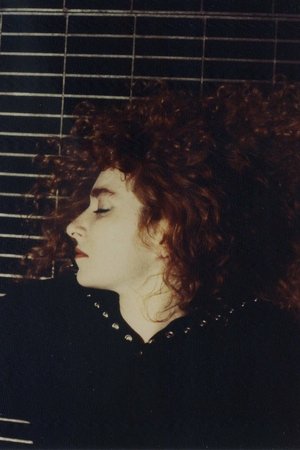
Pictures taken between France and Mexico running at 8 frames per second.
It was one of the great crimes of the Second World War: from 1941 to 1944, a total of 872 days, the siege and starvation of Leningrad by the German Wehrmacht on Hitler's orders lasted. Over a million people fell victim to the blockade, most of them dying of hunger. Countless of these starving people wrote diaries with the last of their strength, and cameramen filmed in the paralyzed city. Evidence from the hell of the siege, many of the film recordings, but above all the written memories on which this documentary on the occasion of the 80th anniversary of the liberation is based, remained under lock and key after the war. The voices of those who had suffered through this terrible time should not be heard by anyone, because they did not fit the pathos of the Leningrad heroic song that was officially sung. Most of the recordings come from women. The writers feared neither the enemy nor the Communist Party or Stalin, who often proved incompetent in providing for the population.
A seagull, a dog, a child, a call to prayer; Looking through a window, the corridor of a train, the wall of a medina; Everyday life is momentarily paused through the eyes of a stranger in an unknown land.
L'Odyssée des Jeux olympiques
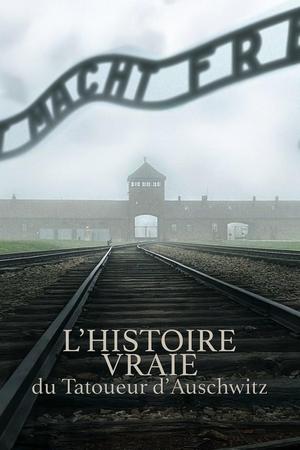
L'Histoire Vraie Du Tatoueur D'Auschwitz
Here's a little story they're about to tell... Mike Diamond and Adam Horovitz share the story of their band and 40 years of friendship in a live documentary experience directed by friend, collaborator, and their former grandfather, Spike Jonze.
An experimental odyssey through altered realities and reconstructed archives, where wandering voices of the past, present, and future unravel the elusive nature of time and memory.
Jacques Villeret, drôlement tragique
With a maddening sensuality, the unforgettable actress of the film "A Special Day" embodies the golden age of Italian cinema. From the suburbs of Naples to Hollywood, this biographical documentary looks back at the flamboyant career and destiny of Sophia Loren.
France is at the heart of Madonna's life. She is inspired by French culture and its values and has surrounded herself with French artists for many years. To celebrate the 40th anniversary of the Queen of Pop's career, this film revisits the close and unique bond between Madonna and France and features testimonials from close collaborators and French friends who have helped create her unique artistic universe: Maripol, Jean Paul Gaultier, Julien d'Ys, Nicolas Huchard, and Marion Motin. Today's artists such as Florence Foresti, Leïla Slimani, Victor Weinsanto and HollySiz talk about the influence of this emancipating figure, which extends far beyond music.
In early 2020, MUTA - International Festival of Audiovisual Appropriation and Cine Íntimo rescued and digitised a Peruvian archive of orphaned 8mm and Super 8 home movies. With the aim of restoring these lost memories, we sent the images around the world. This omnibus film is the result of the intervention of this material, by 14 experimental filmmakers. Fourteen perspectives and ways of experiencing appropriation. Fourteen variations on the intimate.
After so many generational repetitions and beneath so many layers is a territory to be negotiated beyond each person’s skin, inside: the cavity that echoes the intimate and singular identity of everyone. The voice that populate this film bring us to various spaces in Matera, from tourist agglomerations to the town’s internal spaces (grottes, caves, cisterns, lanes, rooms) and the body’s own unassailable space: pleasure and desire for other bodies that no one can cancel.
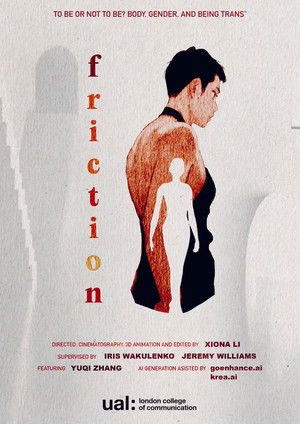
Two transgender individuals reshape themselves using creative tools to sculpt the bodies that feel right for them.
Albert Camus died at 46 years old on January 4, 1960, two years after his Nobel Prize in literature. Author of “L'Etranger”, one of the most widely read novels in the world, philosopher of the absurd and of revolt, resistant, journalist, playwright, Albert Camus had an extraordinary destiny. Child of the poor districts of Algiers, tuberculosis patient, orphan of father, son of an illiterate and deaf mother, he tore himself away from his condition thanks to his teacher. French from Algeria, he never ceased to fight for equality with the Arabs and the Kabyle, while fearing the Independence of the FLN. Founded on restored and colorized archives, and first-hand accounts, this documentary attempts to paint the portrait of Camus as he was.
From teen comedian to Hollywood legend, Eddie Murphy revisits his extraordinary showbiz ride with raw honesty and humor.
The story of the first century of Japanese cinema from the point of view of the controversial Japanese filmmaker Nagisa Ōshima.
Balavoine, enquête sur un destin tragique
Killer Teens is a one-hour crime series exploring the frightening phenomenon of murder committed by teenagers.
Would you sell your soul for a bit of visual stimulation? Follow this dreamlike journey that represents our lost generation.
Born in 1932, Keiko Kishi has been one of the first Japanese actresses known worldwide. Her decision to move to France and to marry director Yves Ciampi in 1957 – after he filmed her in Typhoon Over Nagasaki starring Jean Marais and Danielle Darrieux – caused a huge scandal in Japan. Despite this transgression, Keiko Kishi continued acting in her home country with Kon Ichikawa, Yasujiro Ozu, Masaki Kobayashi… building unique bridges between Japanese and European cultures. Free and rebellious, she emancipated herself from the many obstacles she encountered in the film industry, and created her own production company in her early twenties. Let’s look back at the story of a pioneer, an inspiration for many generations.