A documentary on the rise and fall of Project Cybersyn, an attempt at a computer-managed centralized economy undertaken in Chile during the presidency of Salvador Allende.
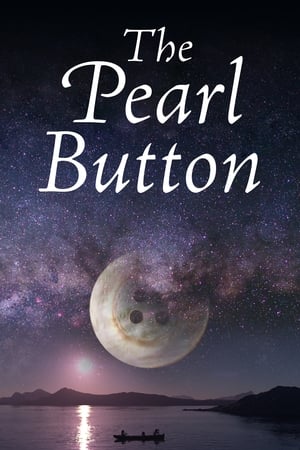
The ocean contains the history of all humanity. The sea holds all the voices of the earth and those that come from outer space. Water receives impetus from the stars and transmits it to living creatures. Water, the longest border in Chile, also holds the secret of two mysterious buttons which were found on its ocean floor. Chile, with its 2,670 miles of coastline and the largest archipelago in the world, presents a supernatural landscape. In it are volcanoes, mountains and glaciers. In it are the voices of the Patagonian Indigenous people, the first English sailors and also those of its political prisoners. Some say that water has memory. This film shows that it also has a voice.
An interview with the president of Chile conducted by Roberto Rossellini in 1971, but broadcast only after his death.
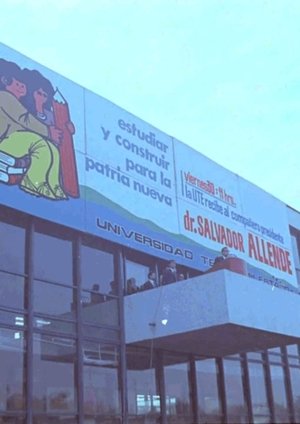
Made by Fernando Balmaceda in 1972, it is a documentary that shows the presence of the State Technical University throughout Chile through its provincial headquarters, with teaching, scientific research, technological development, cultural extension and the relationship with the historical moment of the country.
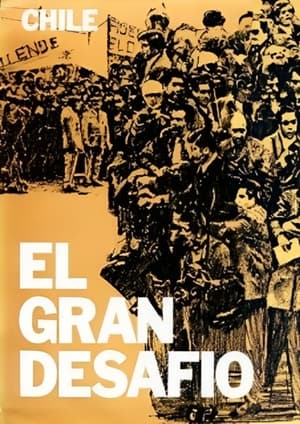
After providing a pictorial vision of Chile, from north to south, President Salvador Allende's tour of the following countries is recorded: Mexico, Algeria, USSR, USA and Cuba. In each place, scenes of welcoming demonstrations, official acts and typical archive notes are presented.
Perros Bastardos
De vuelta a casa
An intimate collection of highlights, high-jinx, and memories spanning the five years of magic that made A New Day the hottest ticket in Las Vegas history.
This poetic story-documentary shows the death of a tradition as a man reflects on a certain spring of his boyhood. We see a Greek community and culture as it is assimilated into an American city. Filmed in the neighborhoods surrounding the present day site of UIC.
The only novel written by Giuseppe Tomasi di Lampedusa, The Leopard (Il Gattopardo, 1958), just like its screen adaptation by Luchino Visconti, is considered a masterpiece. This film tells about the life of Tomasi and his German-Baltic wife Alexandra von Wolff-Stomersee – their unusual love story. The chaos of the Russian Revolution of 1917 and World War II forced Alexandra to leave St. Petersburg and later on – the family's castle in Stāmeriena, Latvia. During the war, in 1943, she fled to her husband in Palermo, where she would live until the day she died.
As Pope Benedict XVI, Joseph Ratzinger wanted to lead the Church back to its former strength, but instead he plunged it into a deep crisis. He reacted largely inactive to the revelations of multiple cases of abuse by clergy. In order to understand the thinking of this unconditional hardliner, documentary filmmaker Christoph Röhl delves deep into Ratzinger's past - but what really leaves us speechless are the testimonies of how the church, on a large and small scale, dealt with the crimes of its priests.
An intimate behind the scenes short film while shooting the Black Adder special Back and Forth.
A look at the methane gas ships that come to the UK from the Sahara Desert.
Despite a war raging close by, mud treatments and electroshock therapies continue at Kuyalnik Sanatorium, an enormous 1970s brutalist building on the shores of Odesa, where a small group search for love, healing, and happiness.
Trottoirs de Paris
Le Dos au mur
Are midwifery and its tradition's dying out or is midwifery the hope of the future? GIVE LIGHT shares penetrating interviews of indigenous midwives from five continents. In their These women relate their stories with confidence, humor, and faith in the capabilities of the women that they serve. The documentary compares and contrasts the birth experiences by indigenous midwives with contemporary methods to explore the current rite of passage in childbirth in our modern world.
An experimental short film dedicated to the Mother of the French New Wave, Agnès Varda. Highly inspired by Agnès Varda's Along the Coast (1958).
Forty years after the release of Michael Jackson’s ‘Thriller,’ the best-selling album of all-time, director Nelson George takes fans back in time to the making of a pop masterpiece, featuring never-before-seen footage and candid interviews.
This pioneering documentary film depicts the lives of the indigenous Inuit people of Canada's northern Quebec region. Although the production contains some fictional elements, it vividly shows how its resourceful subjects survive in such a harsh climate, revealing how they construct their igloo homes and find food by hunting and fishing. The film also captures the beautiful, if unforgiving, frozen landscape of the Great White North, far removed from conventional civilization.