A handful of prisoners in WWII camps risked their lives to take clandestine photographs and document the hell the Nazis were hiding from the world. In the vestiges of the camps, director Christophe Cognet retraces the footsteps of these courageous men and women in a quest to unearth the circumstances and the stories behind their photographs, composing as such an archeology of images as acts of defiance.
This film undertakes a journey into the amazing parallel universe of East Berlin’s fashion designers and experts in the art of survival. For, in the midst of the constraints of life in the GDR, there existed a fantasy world where it was possible to dance to another tune, be individual and even provocative. The most important characteristic of this bohemian scene was one’s per- sonal style. But this certainly wasn’t something that could be bought off the peg in the GDR. In this parallel universe it was up to you to create your own individual image – with your own hands. This film tells the story of the desires, the passion and the dreams that were tried and tested, lived and performed in the shadow of the Berlin Wall.
The NFL has staged 48 Super Bowls. Four photographers have taken pictures at every one of them. In KEEPERS OF THE STREAK, director Neil Leifer tells the story of this exclusive club, made up of John Biever, Walter Iooss, Mickey Palmer and Tony Tomsic. With their cameras, they have captured football's biggest game of the year for almost five decades.
Bunny Yeager, once heralded as the world's prettiest photographer, had a huge influence in 20th-century pop culture though few people know her name. Whether by popularizing the bikini, helping discover Bettie Page, shaping the image of Playboy or inventing the selfie, Bunny was a trailblazer whose work bucked against conservative 1950s America and helped pave the way for the feminist movement and the sexual revolution. Yet the very changes she helped usher in would soon render her a forgotten relic...till now.
France is at the heart of Madonna's life. She is inspired by French culture and its values and has surrounded herself with French artists for many years. To celebrate the 40th anniversary of the Queen of Pop's career, this film revisits the close and unique bond between Madonna and France and features testimonials from close collaborators and French friends who have helped create her unique artistic universe: Maripol, Jean Paul Gaultier, Julien d'Ys, Nicolas Huchard, and Marion Motin. Today's artists such as Florence Foresti, Leïla Slimani, Victor Weinsanto and HollySiz talk about the influence of this emancipating figure, which extends far beyond music.
The film tells the story of the intimate and unprecedented encounter between the photojournalists of the Magnum Agency and the world of cinema. The confrontation of two seemingly opposite worlds – fiction and reality. For 70 years their paths crossed: a family of photographers, amongst them the biggest names in photography, and a family of actors and filmmakers who helped write the history of cinema, from John Huston to Marilyn Monroe to Orson Welles, Kate Winslet and Sean Penn.
A contemplation of art and adventure in the southern wilds of New Zealand by both a landscape photographer and an adventure filmmaker. This film is the unexpected result of their two unique perspectives.
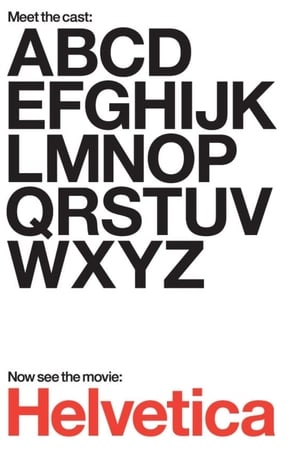
Helvetica is a feature-length independent film about typography, graphic design and global visual culture. It looks at the proliferation of one typeface (which will celebrate its 50th birthday in 2007) as part of a larger conversation about the way type affects our lives. The film is an exploration of urban spaces in major cities and the type that inhabits them, and a fluid discussion with renowned designers about their work, the creative process, and the choices and aesthetics behind their use of type.
The life of internationally renowned artist and activist Nan Goldin is told through her slideshows, intimate interviews, ground-breaking photography, and rare footage of her personal fight to hold the Sackler family accountable for the overdose crisis.
The world of fashion, between the end of the Sixties and the beginning of the Noughties, had a key character that embodied its spirit and told the tale: journalist Anna Piaggi, living witness of that contamination between art, society and culture that changed fashion and sanctioned its success on a global scale. The daughter of a manager for La Rinascente (Milan's iconic high-end shopping mall whose foundation goes back to 1865), Karl Lagerfeld's muse, "a poet with her clothes" in the words of Bill Cunningham, her life is retraced through interviews with designers (Jean-Charles de Castelbajac, Stephen Jones, Manolo Blahnik, and more) together with archival images from four decades of fashion history.
The Holocaust began with the indiscriminate mass shootings by the Einsatzgruppen in the bloodlands of Eastern Europe and was perfected in the gas chambers at Auschwitz. “Bullets And Blueberries” explores the motives, methods and madness of the perpetrators, using never-before-seen images captured by the killers themselves — images that fully capture the banality of evil.
Stockholm Syndrome chronicles the meteoric rise of contemporary trendsetter A$AP Rocky, capturing the exuberance of youth and urgency of hip-hop in equal parts, before taking a detour into darkness. With amazing access, the film reveals Rocky’s experience with the inequities of the Swedish judicial system and the dangers of stardom and scapegoating through a series of twists and turns, ultimately paralleling the need for prison reform in our own backyard. Directed by The Architects, the film blends archival footage with contemporary interviews, animation, and electrifying live concert footage to tell the astonishing story of how one of rap’s biggest superstars became embroiled in an international incident, leading to an unexpected political awakening.
A beautiful collection of pictures ties Frank Cancian, an elderly photographer and retired professor of anthropology, American with origin from Veneto, to the people of Lacedonia, a small town in southern Italy. Thanks to the rediscovery of the photos taken in 1957 by the young Cancian in that rural village where he had arrived almost by chance, the story resumes there where it was interrupted 60 years earlier. And the thread of memories ties back to people and places, bringing with itself some essential reflections on how photography can become an ethnographic look at small communities.
Today, few people's clothes attract as much attention as the royal family, but this is not a modern-day paparazzi-inspired obsession. Historian Dr. Lucy Worsley, Chief Curator at Historic Royal Palaces, reveals that it has always been this way. Exploring the royal wardrobes of our kings and queens over the last four hundred years, Lucy shows this isn't just a public fascination, but an important and powerful message from the monarchs. From Elizabeth I to the present Queen Elizabeth II, Lucy explains how the royal wardrobe's significance goes far beyond the cut and color of the clothing. Royal fashion is, and has always been, regarded as a very personal statement to reflect their power over the reign. Most kings and queens have carefully choreographed every aspect of their wardrobe; for those who have not, there have sometimes been calamitous consequences. As much today as in the past, royal fashion is as much about politics as it is about elegant attire.
Walker Evans/America profiles the great American photographer Walker Evans (1903-1975), whose style influenced a entire generation of photographers. He is best known for his collaboration with writer James Agee on the book "Let Us Now Praise Famous Men", which illustrated the plight of tenant farmers during the Great Depression. A pioneer of the documentary style of photography, Evans was the first photographer to have a one-man retrospective at The Museum of Modern Art. His photographs, from southern sharecroppers to New York subway riders, are point-of-view images that reflect his distinctive vision of America. Walker Evans/America contains rare interviews with Evans himself, recorded by filmmaker Sedat Pakay while a student at Yale University in the late 1960s.
Follow the animated journey of an Indigenous photographer as she travels through time. The oral and written history of her family reveals the story — we witness the impact and legacy of the railways, the slaughter of the buffalo and colonial land policies.
“There’s a bus stop I want to photograph.” This may sound like a parody of an esoteric festival film, but Canadian Christopher Herwig’s photography project is entirely in earnest, and likely you will be won over by his passion for this unusual subject within the first five minutes. Soviet architecture of the 1960s and 70s was by and large utilitarian, regimented, and mass-produced. Yet the bus stops Herwig discovers on his journeys criss-crossing the vast former Soviet Bloc are something else entirely: whimsical, eccentric, flamboyantly artistic, audacious, colourful. They speak of individualism and locality, concepts anathema to the Communist doctrine. Herwig wants to know how this came to pass and tracks down some of the original unsung designers, but above all he wants to capture these exceptional roadside way stations on film before they disappear.
Photographer and make-up artist François Nars reveals his visually stunning inner world in this feature-length documentary by filmmaker Lisa Immordino Vreeland. Mr. Nars takes us on a tour of the fashions, designers and models of '70s Paris, the underground of '90s New York, and the timeless world of cinema, filled with actors, actresses, and directors who have shaped his visual aesthetics.
Following stylish IT GIRLS filmed during New York Fashion Week.
A merger of megastar music. Discover the story of multi-genre performer and fashion promoter, Beyonce Knowles sand the world's first hip hop billionaire, Jay-Z.