The professional mercenary Sir William Walker instigates a slave revolt on the Caribbean island of Queimada in order to help improve the British sugar trade. Years later he is sent again to deal with the same rebels that he built up because they have seized too much power that now threatens British sugar interests.
The study of a youth on the edge of adulthood and his aunt, ten years older. Fabrizio is passionate, idealistic, influenced by Cesare, a teacher and Marxist, engaged to the lovely but bourgeois Clelia, and stung by the drowning of his mercurial friend Agostino, a possible suicide. Gina is herself a bundle of nervous energy, alternately sweet, seductive, poetic, distracted, and unhinged. They begin a love affair after Agostino's funeral, then Gina confuses Fabrizio by sleeping with a stranger. Their visits to Cesare and then to Puck, one of Gina's older friends, a landowner losing his land, dramatize contrasting images of Italy's future. Their own futures are bleak.
Lena, aged twenty, wants to know all she can about life and reality. She collects information on everyone and everything, storing her findings in an enormous archive. She experiments with relationships, political activism, and meditation. Meanwhile, the actors, director and crew are shown in a humorous parallel plot about the making of the film and their reactions to the story and each other. Nudity, explicit sex, and controversial politics kept this film from being shown in the US while its seizure by Customs was appealed.
During the French Revolution, a surprising company shares a coach, trying to catch up something - the time itself, perhaps.
In a dystopian America dominated by a tyrannical police state, a stirring revolution clashes with a forbidden romance.
Joaquín Góñez, a novelist in his sixties recalls his emotions, his wild years in Buenos Aires, the memories of old friends, the meaning of loyalty and the intimate relationship with his mother, Roma.
A patriot (René Lavan) with a rebellious brother falls in love with a dissident's daughter (Mayte Vilán) in Castro's Cuba.
The young Austrian princess Marie Antoinette is arranged to marry Louis XVI, future king of France, in a politically advantageous marriage for the rival countries. The opulent Marie indulges in various whims and flirtations. When Louis XV passes and Louis XVI ascends the French throne, his queen's extravagant lifestyle earns the hatred of the French people, who despise her Austrian heritage.
Whilst the first shots ring out between pro-Russian government forces and members of the opposition in the winter of 2013, young Nina leaves Crimea. She was raped by a corrupt policeman, her friend was killed, and now she seeks refuge with the protesters on Maidan Square. Revolutionary chaos prevails, and it‘s not at all clear who remains loyal to whom and which means can be regarded as legitimate in the struggle for freedom. Ultimately Nina and her tormentors come face to face again and the spiral of violence is stepped up a further notch. The film was shot to a genuine backdrop, the result of which is a multifaceted allegory on the tragedy currently playing out in Ukraine.
In 1876 Bulgaria, a desperate revolutionary must convince a room of suspecting Ottoman soldiers that he is innocent. Based on the history of the April Uprising -- a struggle for independence between Bulgaria and the immense Ottoman Empire.
A story set in the Philippine Republic in the 1900s where a lass, a Spanish mestizo, and a fisherman are caught up by Macabebe soldiers who are trying to capture Emilio Aguinaldo.
Pulipaarvai, also called Puli Paarvai, is a Tamil film about Balachandran Prabhakaran directed by Praveen Gandhi. It is based on the real life of the 12 year old youngest son of the LTTE leader ,Velupillai Prabhakaran who disappeared after the destruction of the LTTE and the death of his father during the end of the Ealam war is widely believed to be executed after he surrendered to the Sri Lankan Army. Praveen Gandhi was inspired make the movie after seeing documentaries about Balachandran Prabhakaran's execution in Channel 4 and BBC.
In a loose retelling of the Revolutionary Girl Utena TV series, Utena Tenjou arrives at Ohtori Academy, only to be immediately swept up in a series of duels for the hand of her classmate Anthy Himemiya and the power she supposedly holds. At the same time, Utena reunites with Touga Kiryuu, a friend from her childhood who seems to know the secrets behind the duels. Utena must discover those secrets for herself, before the power that rules Ohtori claims her and her friends, new and old.
Li Zizhou, a young revolutionary builds a secret network in northern Shaanxi to spread communist ideals and train future leaders. Despite facing betrayal, arrest, and ultimate sacrifice, his efforts ignite a revolutionary fire that inspires the next generation to continue the fight for justice and freedom.
David Carr is a British Communist who is unemployed. In 1936, when the Spanish Civil War begins, he decides to fight for the Republican side, a coalition of liberals, communists and anarchists, so he joins the POUM militia and witnesses firsthand the betrayal of the Spanish revolution by Stalin's followers and Moscow's orders.
In the midst of a climate of political repression, Ernesto is a student who believes that the "revolution" will only begin if there is a martyr for the cause; Isaac, his best friend and his student leader, seems like the ideal candidate.
During the 1980s civil war in El Salvador, a rebel group of leftist guerrillas fight to expose its government's death squads via an underground radio network and hope to end their government's reign of terror with the help of an American journalist.
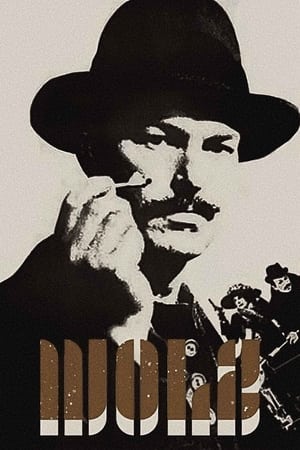
Soldier Ignaz Wolz returns from WWI with an immeasurable hatred of capitalist war profiteers. He decides to start his own revolution, but tries to stay away from the organized class struggle. He steals from the rich men and divides the wealth among the poor. One day, Wolz is arrested and sentenced to life in prison; seven years later he is released due to mass protests. More than ever, it is hard for him to fit in. He severs ties with his former companions, who reject his ideas, and leaves Germany.
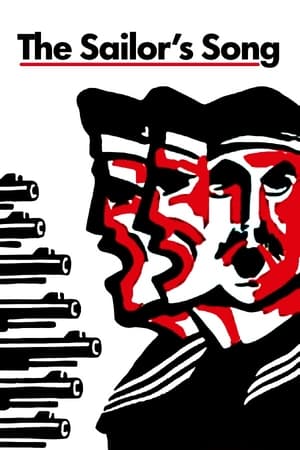
October 1918: Karl Liebknecht is released from prison and Berlin workers celebrate his release. Although WWI is almost over, the German Kaiserreich in vain sends its last reserves to the slaughter. The working class is in a rebellious mood; the uprising of Kiel’s sailors against war and militarism sets off a call for revolution led by Liebknecht. On November 9, Liebknecht declares the Free Socialist Republic of Germany. But pro-Kaiser military and right wing Social Democrats oppose him.
Queer twins of a deceased political figure become the unwanted face/scapegoat for a rebellion against a government that threatens to take their basic human rights to build their false utopia.